Fifth generation
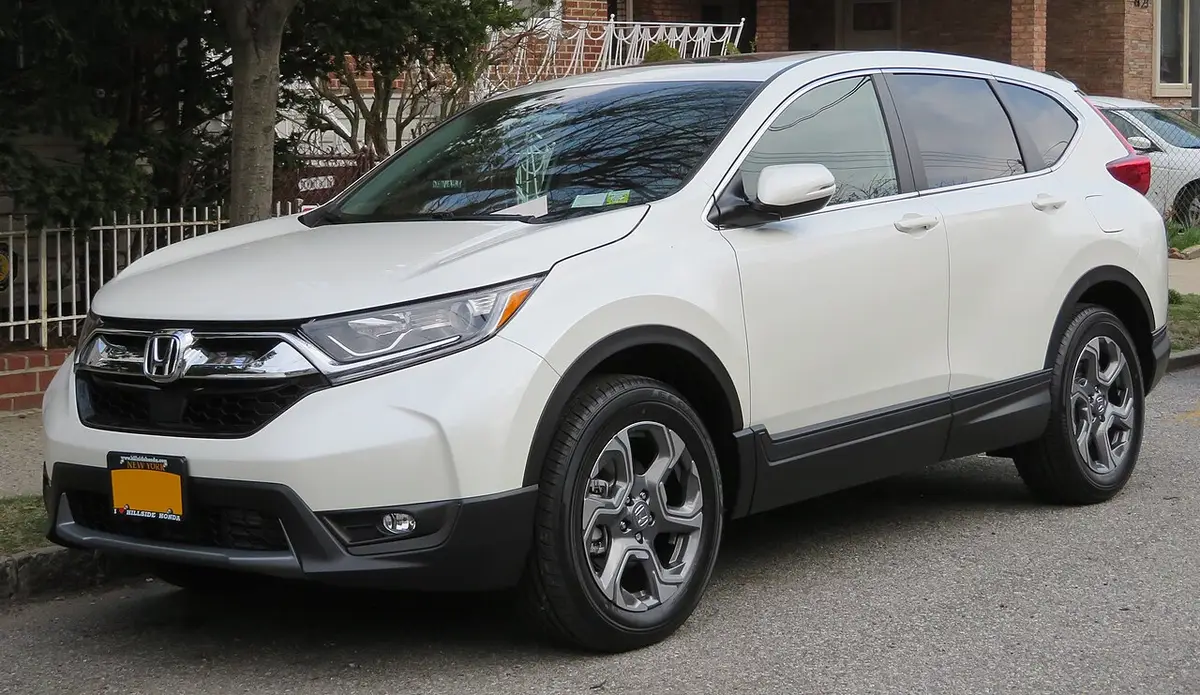
2018 Honda CR-V
The most reported problem on the 2018 Honda CR-V is phantom braking, with 244 complaints, usually around 25,000 miles.
- 2,145owner complaints
- 5recalls
- 46involved a crash
- 18,371median miles at failure
Newest report Sep 28, 2026 · checked Oct 2, 2026
What is your CR-V doing?
Each one opens a sheet built from the owner reports of that problem on the 2018 model year.
- Phantom braking244 reports
- Stalling219 reports
- Sticky steering212 reports
- Brake wear196 reports
- Oil consumption130 reports
- Misfire128 reports
- Engine rattle126 reports
- Warning lights109 reports
- False collision warning96 reports
- Infotainment94 reports
- Fuel pump89 reports
- Driver assist84 reports
- Power steering loss80 reports
- Fuel tank problems77 reports
- Turbo problems73 reports
- Dead battery70 reports
- A/C failure58 reports
- Overheating51 reports
- Engine failure46 reports
- Steering noise44 reports
- Seat belt32 reports
- Traction control light30 reports
- Windshield29 reports
Is the 2018 Honda CR-V reliable?
The 2018 Honda CR-V has 2,145 owner complaints on file with NHTSA, 6.5 times the median of 331 for 2018 SUVs on this site. Of the 13 CR-V model years since 2014, it has the most complaints. Complaint counts rise with sales as well as faults, so read what owners report below before deciding.
At a glance
- Next to the 2017 and 2019
- At 238 complaints for each year on the road, the 2018 runs above both the 2017 (177) and the 2019 (138).
- Top problem
- Two problems run close. Phantom braking has 244 complaints and stalling has 219, out of 2,145 in all. A quarter of the 77 owners who gave a mileage for phantom braking saw it by about 14,000 miles, and half by about 25,000.
- Crash, fire and injury reports
- 67 of the 2,145 complaints (3%) report a crash, a fire or an injury, a little under the 6% typical of vehicles on this site. Counted separately (one report can carry more than one), 46 reports mention a crash, 2 mention a fire and 47 people were hurt.
- Recalls behind the top problems
- Sticky steering has a recall on the same system (18V-663). Phantom braking and stalling have none. A recall on the same system doesn't always cover the failure owners describe, so compare its summary with the complaints.
- When owners filed
- Filings peaked in 2024 at 397 (full calendar years only). In 2025 there were 281. So far in 2026, 195 more have come in.
When each problem shows up
Each bar covers the middle half of the mileages owners reported for that problem. A quarter saw it earlier, a quarter later. The tick is the median. Most reported: brakes on its own (automatic emergency braking), 244 complaints.
middle half of reports, median tick. The heavier grey bars have 75 or more reports.
Behind you
Around your mileage
Ahead of you
How this compares
2,145 complaints is 7.8 times the median 2018 model on this site and 6.5 times the median 2018 SUV. Among the 13 CR-V model years here it ranks 1st for complaints. Counts follow sales volume as much as reliability, so a truck that sells 700,000 a year draws more reports than a sedan that sells 200,000.
Service bulletins for the 2018 Honda CR-V
Honda filed 268 bulletins and other notices with NHTSA that list the 2018 Honda CR-V. 28 of them deal with a problem owners have reported on this car. Newest first.
Federal rules make a manufacturer send NHTSA a copy of any notice about a defect that goes to more than one dealer or owner. Most of these are service bulletins, the repair instructions manufacturers send to dealers. NHTSA generally leaves safety recall bulletins out of this file, and recalls are listed separately.
Brakes on its own (automatic emergency braking) 1 bulletin · 244 complaints
American Honda has identified a condition that may affect Collision Mitigation Braking System (CMBS) operation. Due to software programming issues of the Advanced Driver Assistance System (ADAS), unexpected vehicle deceleration may occur.
Engine stalls or loses power while driving 1 bulletin · 219 complaints
Due to swelling of the fuel pump motor impeller, the fuel pump may seize and stop working. If this occurs, the check engine light may be displayed with DTC P0087 (Fuel Rail Pressure Too Low) stored, the engine may not start, or the engine could stall while ...
Brakes grind, pulse or wear early 5 bulletins · 196 complaints
American Honda Motor Co., Inc. (AHM) is searching for certain 2018-2021 Accords, 2019-2017 Civics, 2017-2021 CR-Vs, 2018-2021 Odysseys & 2018-2021 Pilots with a customer complaint of an unexpected CMBS operation or a brake application.
American Honda Motor Co., Inc. (AHM) is searching for certain 2017-2020 CR-Vs with a customer complaint of a brake fluid leak.
3 more on this problem
American Honda Motor Co., Inc. (AHM) is searching for certain 2018-2020 Accords, 2017-2020 CR-Vs & 2018-2020 Odysseys with a customer complaint of an unexpected CMBS operation or a brake application.
American Honda Motor Co., Inc. (AHM) is investigating certain 2017-2020 CR-Vs with a customer complaint of a brake fluid leak.
Servicenews article - If you're replacing the VSA modulator-control unit, make sure you connect the brake lines according to the service information. If you don't, during panic braking, one wheel could lock up while the others pulse normally.
Burns oil or oil level rises 4 bulletins · 130 complaints
In October American Honda announced a product update campaign for certain 2017-18 CR-V vehicles with the 1.5L turbo engine that were sold in certain cold-weather states: This product update addresses concerns related to engine oil dilution due to various ...
On October 22nd, American Honda announced a product update campaign for certain 2017-18 CR-V vehicles with the 1.5L turbo engine that were sold in the following cold-weather states: Maine, Minnesota, North Dakota, South Dakota, and Wisconsin.
2 more on this problem
Today American Honda is announcing a product update campaign for certain 2017-18 CR-V vehicles with the 1.5L turbo engine that were sold in the following cold-weather states: Maine, Minnesota, North Dakota, South Dakota, and Wisconsin.
We've released a special Tech2Tech video Understanding Oil Dilution? that you need to watch. It concerns the engine oil level reading above the full mark on the dipstick in 2017-18 CR-Vs with the 1.5-liter turbo engine.
Check engine light or misfire 3 bulletins · 128 complaints
The MIL comes on with DTCs P0441 (EVAP System Purge Flow Malfunction) P04F1 (EVAP System Low Purge Flow Detected).
American Honda Motor Co., Inc. (AHM) is searching for certain 2018 CR-V AWDs with a customer complaint of the Malfunction Indicator Light (MIL) on with the DTC P0441 (EVAP System Purge Flow Malfunction) stored.
1 more on this problem
American Honda Motor Co., Inc. (AHM) is investigating certain 2017-2020 CR-Vs with a customer complaint of the Malfunction Indicator Light (MIL) on with the DTC P0441 (EVAP System Purge Flow Malfunction) stored.
Infotainment, screen or backup camera fails 8 bulletins · 94 complaints
American Honda Motor Co., Inc. (AHM) is searching for certain 2017-2021 Civics & CR-Vs with a customer complaint of a inop, blank, or black meter display (gauge cluster) with no prior repairs made to the vehicle.
American Honda Motor Co., Inc. (AHM) is searching for certain 2017-2021 Civics & CR-Vs with a customer complaint of an inop, blank, or black meter display (gauge cluster) with no prior repairs made to the vehicle.
6 more on this problem
American Honda Motor Co., Inc. (AHM) is searching for certain 2017-2021 Civics & CR-Vs with a customer complaint of a inop, blank, or black meter display with no prior repairs made to the vehicle.
American Honda Motor Co., Inc. (AHM) is searching for certain 2017-2020 Civics & CR-Vs with a customer complaint of a inop, blank, or black meter display with no prior repairs made to the vehicle.
American Honda Motor Co., Inc. (AHM) is searching for certain 2017-2018 Civics & CR-Vs with a customer complaint of a inop, blank, or black meter display with no prior repairs made to the vehicle.
American Honda Motor Co., Inc. (AHM) is searching for certain 2017-2018 Civic, & CRVs with a customer complaint of a inop, blank, or black meter display with no prior repairs made to the vehicle.
The Center Display Unit has one or more of the following symptoms: - The Center Display Unit goes dim or dark. - Hear beeping. - Screen changes. - Channels change.
The ACC, LKAS, ROM, Collision Mitigation Brake System, and BRAKE Indicators come on with a OTC B2A60-49 (multipurpose camera unit internal electronic failure).
Adaptive cruise or lane keeping misbehaves 3 bulletins · 84 complaints
Service News - If an Adaptive Cruise Control System Problem comes back on when the vehicle is driven in freezing conditions, inform the customer it is likely due to snow or ice buildup on the radar.
ServiceNews Article - When returning the vehicle to the client, inform them that if the message Adaptive Cruise Control System Problem comes back on when the vehicle is driven in freezing conditions, it is likely because of snow or ice buildup on the radar.
1 more on this problem
American Honda Motor Co., Inc. (AHM) is investigating certain 2017-2018 CR-Vs with a customer complaint of various warning lights such as the brake system, lane departure, ACC & forward collision warning illuminated on the dash with the DTC P2583-76 ...
Turbo failure or loss of boost 3 bulletins · 73 complaints
Followup Notice - Our records indicate that a PRODUCT UPDATE has not been completed on this vehicle; refer to the address card for the affected VIN.
Customer letter - On 2017-18 CR-V vehicles equipped with the 1.5 liter turbocharged engine, there are reports of vehicles experiencing drivability concerns. These concerns can result in the malfunction indicator lamp (MIL) turning on.
1 more on this problem
Video message - It concerns the engine oil level reading above the full mark on the dipstick in 2017-18 CR-Vs with the 1.5-liter turbo engine. Please let us know if you would like a copy of the video sent to you on a DVD or thumb drive.
Complaints filed by year
397 complaints came in 2024, 1.9 times the year before. Owners file in waves when a problem gets press or an investigation, so a spike measures attention as much as failures.
NHTSA investigations
Inadvertent automatic emergency braking. Open.
NHTSA summary
Rear differential seizure. Closed jul 22, 2024.
NHTSA summary
Inadvertent automatic emergency braking. Closed apr 18, 2024.
NHTSA summary
Recalls that include the 2018 Honda CR-V
Whether your car is included depends on its VIN. Check yours at nhtsa.gov/recalls.
Honda (American Honda Motor Co.) is recalling certain 2018-2021, 2023 Acura TLX, 2019-2024 RDX, 2017-2020, 2022-2026 MDX, 2017-2021, 2023, 2025 Honda Ridgeline, 2017-2022 Pilot, 2019-2021 Passport, 2018-2026 Odyssey, 2019-2022 Insight, 2019-2021 HR-V, 2018-2020 Fit, 2020-2022 CR-V Hybrid, 2017-2022 CR-V, 2017-2018, 2021 Civic Type R, 2017-2021 Civic hatchback, 2016-2020 Civic coupe, 2016-2022 Civic, 2017-2022 Accord Hybrid, and 2016-2022 Accord vehicles. The front passenger seat weight sensor may crack and short circuit, which can cause the air bags to deploy unintentionally during a crash.
Risk and remedy
Remedy: Dealers will replace the seat weight sensors, free of charge. Owner notification letters were mailed July 7, 2026. Owners may contact Honda's customer service at 1-888-234-2138. Honda's numbers for this recall are BOL, WO9, OOA, WOM, XOH, NOC, POD, BOE, UOF, POB, EOG, AOI, QO8, TOJ, DO7, and SOK. This recall expands previous NHTSA recall number 24V064. Vehicle Identification Numbers (VINs) involved in this recall will be searchable on NHTSA.gov beginning May 29, 2026.
Honda (American Honda Motor Co.) is recalling certain 2013-2023 Honda Accord, Civic Coupe, Civic Sedan, Civic Hatchback, Civic Type R, CR-V, HR-V, Ridgeline, Odyssey, Acura ILX, MDX, MDX Hybrid, RDX, RLX, TLX, 2019-2022 Honda Insight, Passport, 2020 Honda CR-V Hybrid, 2018-2019 Honda Clarity PHEV, Fit, and 2015-2020 Honda Accord Hybrid, Pilot, Acura NSX vehicles. The fuel pump inside the fuel tank may fail.
Risk and remedy
Remedy: Dealers will replace the fuel pump module, free of charge. Owner letters were mailed September 6, 2024. Owners may contact Honda customer service at 1-888-234-2138. Honda's numbers for this recall are KGC and KGD. This recall is an expansion of NHTSA recall numbers 21V-215 and 20V-314.
Honda (American Honda Motor Co.) is recalling certain 2017-2020 CR-V, 2018-2019 Accord and Accord Hybrid, 2018-2020 Odyssey, 2019 Insight, and 2019-2020 Acura RDX vehicles. A manufacturing issue with the front seat belts may cause the seat belt buckle channel to interfere with the release button, preventing the seat belt buckle from latching.
Risk and remedy
Remedy: Dealers will replace the driver and front passenger seat belt buckle release buttons or the buckle assemblies as necessary, free of charge. Owner notification letters were mailed April 18, 2023. Owners may contact Honda customer service at 1-888-234-2138. Honda's numbers for this recall are NDA, QDB, BDC, MDD, LD9. TDF, FDG, ODH, YDI, ZDE.
Honda (American Honda Motor Co.) is recalling certain 2019-2020 Acura MDX, MDX Sport Hybrid, RDX, TLX, Honda Accord, Civic Hatchback, Insight, 2019 Acura ILX, Honda Accord Hybrid, Civic Coupe, Civic Coupe Si, Civic Sedan, Civic Sedan Si, Civic Type R, Fit, HR-V, Odyssey, Passport, Pilot and Ridgeline, and 2018-2019 CR-V vehicles. The low-pressure fuel pump inside the fuel tank may fail.
Risk and remedy
Remedy: Honda will notify owners, and dealers will replace the fuel pump assembly, free of charge. Owner letters were mailed May 18, 2021. Owners may contact Honda customer service at 1-888-234-2138. Note: This recall is an expansion of recall 20V-314.
Honda (American Honda Motor Co.) is recalling certain 2017-2018 Honda Civic and CR-V vehicles. The magnet that controls the torque sensor output signal for the electronic power steering system may not be properly secured, allowing the magnet to become dislodged. During a full lock turn, the dislodged magnet may cause steering assist to be applied in the opposite direction.
Risk and remedy
Remedy: Honda will notify owners, and dealers will replace the steering gearbox assembly, free of charge. The recall began November 9, 2018. Owners may contact Honda customer service at 1-888-234-2138. Honda's numbers for this recall are C2N, P2O.
All 5 recalls on the 2018 Honda CR-V, with the owner complaints on each recalled system
Guide NHTSA has an open investigation on this car. What the investigation stages mean
Questions
What is the most common problem on the 2018 Honda CR-V?
Phantom braking, with 244 of the 2,145 complaints. Owners who gave a mileage for it put the median at about 25,000 miles.
At what mileage do 2018 Honda CR-V problems start?
Of the 987 complaints that give a mileage, a quarter came by about 6,000 miles and half by about 18,000.
Is the 2018 Honda CR-V better or worse than the 2017 and 2019?
Counted per year on the road, the 2018 has more complaints than both the 2017 and the 2019: 238 a year against 177 and 138.
How many 2018 Honda CR-V complaints involve a crash, fire or injury?
67 of them (3%). The typical vehicle on this site is at 6%.
Is there a recall for phantom braking on the 2018 Honda CR-V?
No recall on file for the 2018 Honda CR-V is on the same system as phantom braking. Another recall may still cover your car, so check its VIN at nhtsa.gov/recalls.