Fourth generation
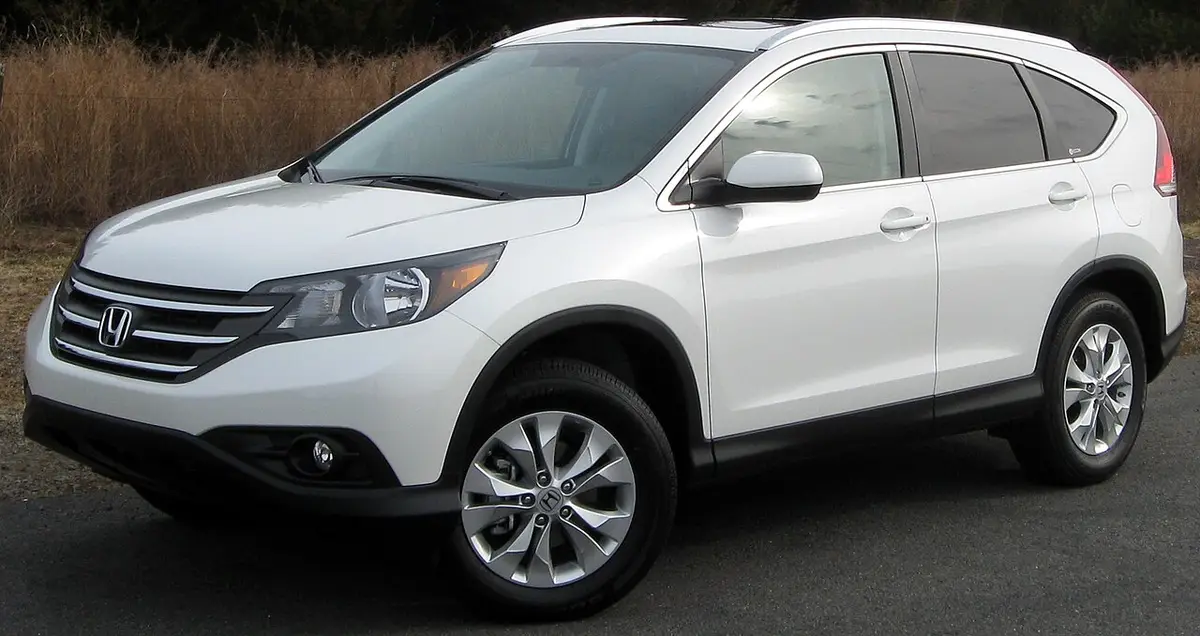
2014 Honda CR-V
The most reported problem on the 2014 Honda CR-V is engine rattle, with 55 complaints, usually around 50,000 miles.
- 498owner complaints
- 1recalls
- 32involved a crash
- 32,000median miles at failure
Newest report Sep 10, 2026 · checked Oct 2, 2026
What is your CR-V doing?
Each one opens a sheet built from the owner reports of that problem on the 2014 model year.
Is the 2014 Honda CR-V reliable?
The 2014 Honda CR-V has 498 owner complaints on file with NHTSA, 1.4 times the median of 366 for 2014 SUVs on this site. Of the 13 CR-V model years since 2014, it has the 6th most complaints. Complaint counts rise with sales as well as faults, so read what owners report below before deciding.
At a glance
- Next to other model years
- Complaints filed before 2015 aren't in the files this site reads, so the 2014 count runs short and isn't compared with the model years next to it.
- Top problem
- No problem dominates. The largest, engine rattle, covers 55 of the 498 complaints (11%), and wheels is next with 38 (one complaint can fall under more than one problem, so these overlap). A quarter of the 42 owners who gave a mileage for engine rattle saw it by about 28,000 miles, and half by about 50,000.
- Crash, fire and injury reports
- 40 of the 498 complaints (8%) report a crash, a fire or an injury, a little above the 6% typical of vehicles on this site. Counted separately (one report can carry more than one), 32 reports mention a crash, 6 mention a fire and 29 people were hurt. The reports record 3 deaths. The most crash reports, 14 of 32, fall under airbag.
- Recalls behind the top problems
- No recall on file is on the same system as engine rattle, wheels and timing chain failure. For those, the complaints are all there is.
- When owners filed
- Filings peaked in 2015 at 92 (full calendar years only). In 2025 there were 15. So far in 2026, 8 more have come in. Filings on record start in 2015.
When each problem shows up
Each bar covers the middle half of the mileages owners reported for that problem. A quarter saw it earlier, a quarter later. The tick is the median. Most reported: engine rattles or ticks, 55 complaints.
middle half of reports, median tick. The heavier grey bars have 75 or more reports.
Behind you
Around your mileage
Ahead of you
How this compares
498 complaints is 1.6 times the median 2014 model on this site and 1.4 times the median 2014 SUV. Among the 13 CR-V model years here it ranks 6th for complaints. Counts follow sales volume as much as reliability, so a truck that sells 700,000 a year draws more reports than a sedan that sells 200,000.
Service bulletins for the 2014 Honda CR-V
Honda filed 108 bulletins and other notices with NHTSA that list the 2014 Honda CR-V. 11 of them deal with a problem owners have reported on this car. Newest first.
Federal rules make a manufacturer send NHTSA a copy of any notice about a defect that goes to more than one dealer or owner. Most of these are service bulletins, the repair instructions manufacturers send to dealers. NHTSA generally leaves safety recall bulletins out of this file, and recalls are listed separately.
Engine rattles or ticks 3 bulletins · 55 complaints
SERVICE BULLETIN AT COLD START-UP, THE ENGINE RATTLES LOUDLY FOR ABOUT 2 SECONDS. THIS MAY BE INTERMITTENT AND OCCURS WHEN THE OUTSIDE TEMPERATURE IS BELOW 40° F. THE VARIABLE VALVE TIMING CONTROL (VTC) ACTUATOR IS DEFECTIVE.
TECHLINE SUMMARY ARTICLE EDITORS NOTE: THIS ARTICLE REPLACES THE ONE POSTED IN SEPTEMBER 2015 TO EXTEND THAT ARTICLES SHELF LIFE. THE ISSUES COVERED ARE STILL BEING ADDRESSED.
1 more on this problem
SERVICE NEWS ARTICLE DOES THE ENGINE RATTLE AT COLD STARTUP FOR 1 TO 2 SECONDS WHEN ITS COLD OUTSIDE? CHANCES ARE THE VTC ACTUATOR IS THE CULPRIT.
Wheel bearing, tires or wheels 2 bulletins · 38 complaints
The Low Tire Pressure/TPMS indicator is on with VSA DTC 151-11 (low tire pressure threshold refinement) and the tire pressures were properly set to the driver?s doorjamb label. A second software update is needed for different driving conditions.
The low tire pressure/TPMS indicator is on with no DTC, or with VSA DTC 151-11 (low tire pressure threshold refinement), and the tire pressures were properly set to the driver?s doorjamb label. A software update is needed for different driving conditions.
Engine failure, knocking or rod bearing 1 bulletin · 16 complaints
The water pump seized or the drive belt shredded. The water pump bearing is out of specification.
Battery dies or the car will not start 1 bulletin · 14 complaints
The customer states the vehicle did not start due to a low state battery charge. The vehicle?s battery sensor monitors battery condition and the PCM determines charging mode.
Takata airbag inflator recall 2 bulletins · 7 complaints
DEALER MESSAGE WEVE BEEN WORKING TO ADDRESS THE QUESTIONS AND CONCERNS WEVE RECEIVED FROM THE NATIONAL DEALER ADVISORY BOARD AND MEMBERS OF ADVISORY COMMITTEES, AS WELL AS FROM MANY OF YOU THROUGH OUR FIELD REPRESENTATIVES RELATED TO THE DRIVER AIRBAG INFLATOR STOP SALE ...
DEALER MESSAGE ON FRIDAY, JANUARY 29TH, AMERICAN HONDA NOTIFIED NHTSA OF A STOP SALE AND SAFETY RECALL FOR APPROXIMATELY 1.7 MILLION MODEL YEAR 2007-2015 HONDA VEHICLES.
Tailgate or liftgate will not open or close 2 bulletins · 6 complaints
The tailgate won?t open from the outside handle in temperatures near freezing or colder, but will open in warmer temperatures. There is an internal failure of the tailgate outer handle switch.
SERVICE BULLETIN THE POWER TAILGATE WONT OPEN IN TEMPERATURES NEAR FREEZING OR COLDER, BUT WILL OPEN IN WARMER TEMPERATURES. THE CAUSE IS THE POWER TAILGATE OUTER HANDLE SWITCH DOESNT WORK IN COLD WEATHER.
Complaints filed by year
92 complaints came in 2015. Owners file in waves when a problem gets press or an investigation, so a spike measures attention as much as failures.
NHTSA investigations
Desiccated air bag inflator rupture. Open.
NHTSA summary
Electrical overstress. Closed sep 19, 2024, led to recall 20V-024.
NHTSA summary
Recalls that include the 2014 Honda CR-V
Whether your car is included depends on its VIN. Check yours at nhtsa.gov/recalls.
Honda (American Honda Motor Co.) is recalling certain 2013-2023 Honda Accord, Civic Coupe, Civic Sedan, Civic Hatchback, Civic Type R, CR-V, HR-V, Ridgeline, Odyssey, Acura ILX, MDX, MDX Hybrid, RDX, RLX, TLX, 2019-2022 Honda Insight, Passport, 2020 Honda CR-V Hybrid, 2018-2019 Honda Clarity PHEV, Fit, and 2015-2020 Honda Accord Hybrid, Pilot, Acura NSX vehicles. The fuel pump inside the fuel tank may fail.
Risk and remedy
Remedy: Dealers will replace the fuel pump module, free of charge. Owner letters were mailed September 6, 2024. Owners may contact Honda customer service at 1-888-234-2138. Honda's numbers for this recall are KGC and KGD. This recall is an expansion of NHTSA recall numbers 21V-215 and 20V-314.
The recall on the 2014 Honda CR-V, with the owner complaints on each recalled system
Guide NHTSA has an open investigation on this car. What the investigation stages mean
Questions
What is the most common problem on the 2014 Honda CR-V?
Engine rattle, with 55 of the 498 complaints. Owners who gave a mileage for it put the median at about 50,000 miles.
At what mileage do 2014 Honda CR-V problems start?
Of the 333 complaints that give a mileage, a quarter came by about 16,000 miles and half by about 32,000.
How many 2014 Honda CR-V complaints involve a crash, fire or injury?
40 of them (8%). The typical vehicle on this site is at 6%.
Is there a recall for engine rattle on the 2014 Honda CR-V?
No recall on file for the 2014 Honda CR-V is on the same system as engine rattle. Another recall may still cover your car, so check its VIN at nhtsa.gov/recalls.