Fourth generation
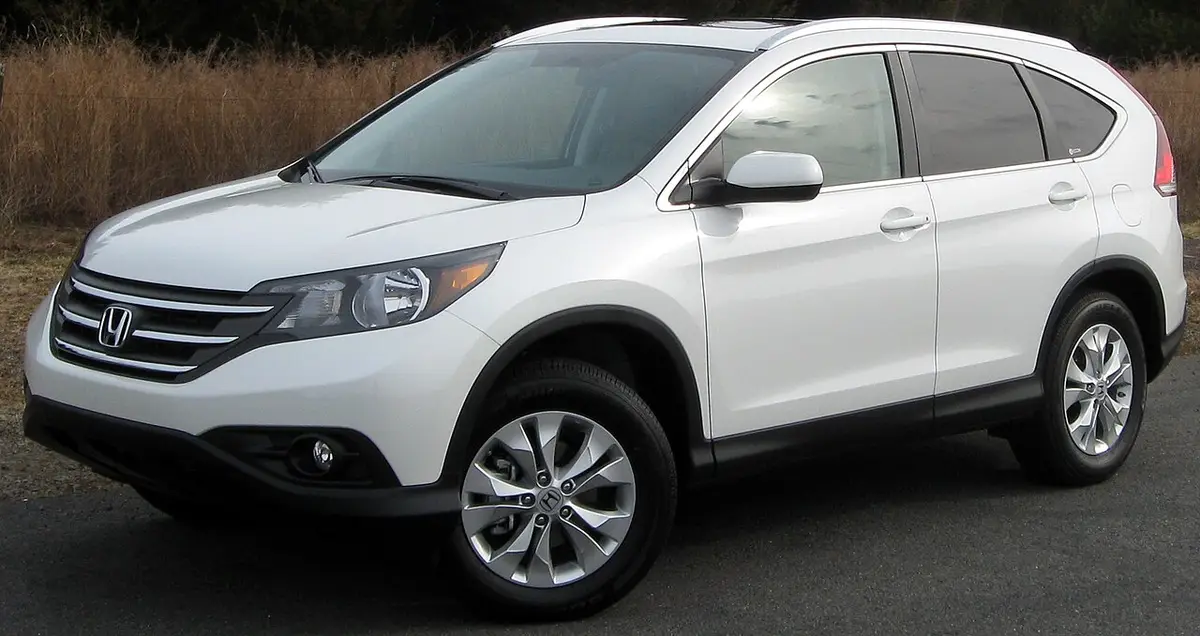
2015 Honda CR-V
The most reported problem on the 2015 Honda CR-V is stalling, with 85 complaints, usually around 30,000 miles.
- 667owner complaints
- 3recalls
- 38involved a crash
- 17,000median miles at failure
Newest report Sep 7, 2026 · checked Oct 2, 2026
What is your CR-V doing?
Each one opens a sheet built from the owner reports of that problem on the 2015 model year.
Is the 2015 Honda CR-V reliable?
The 2015 Honda CR-V has 667 owner complaints on file with NHTSA, 2.1 times the median of 314 for 2015 SUVs on this site. Of the 13 CR-V model years since 2014, it has the 4th most complaints. Complaint counts rise with sales as well as faults, so read what owners report below before deciding.
At a glance
- Next to other model years
- Complaints filed before 2015 aren't in the files this site reads, so the 2015 count runs short and isn't compared with the model years next to it.
- Top problem
- No problem dominates. The largest, stalling, covers 85 of the 667 complaints (13%), and seat belt is next with 42 (one complaint can fall under more than one problem, so these overlap). A quarter of the 57 owners who gave a mileage for stalling saw it by about 11,000 miles, and half by about 30,000.
- Crash, fire and injury reports
- 46 of the 667 complaints (7%) report a crash, a fire or an injury, about the 6% typical of vehicles on this site. Counted separately (one report can carry more than one), 38 reports mention a crash, 4 mention a fire and 23 people were hurt. The most crash reports, 14 of 38, fall under brake wear.
- Recalls behind the top problems
- Stalling has a recall on the same system (15V-121 and 17V-305). Seat belt and dead battery have none. A recall on the same system doesn't always cover the failure owners describe, so compare its summary with the complaints.
- When owners filed
- Filings jumped in 2015, with 244 complaints, 2.7 times the next busiest year. So far in 2026, 15 more have come in. Filings on record start in 2015.
When each problem shows up
Each bar covers the middle half of the mileages owners reported for that problem. A quarter saw it earlier, a quarter later. The tick is the median. Most reported: engine stalls or loses power while driving, 85 complaints.
middle half of reports, median tick. The heavier grey bars have 75 or more reports.
Behind you
Around your mileage
Ahead of you
How this compares
667 complaints is 2.4 times the median 2015 model on this site and 2.1 times the median 2015 SUV. Among the 13 CR-V model years here it ranks 4th for complaints. Counts follow sales volume as much as reliability, so a truck that sells 700,000 a year draws more reports than a sedan that sells 200,000.
Service bulletins for the 2015 Honda CR-V
Honda filed 133 bulletins and other notices with NHTSA that list the 2015 Honda CR-V. 13 of them deal with a problem owners have reported on this car. Newest first.
Federal rules make a manufacturer send NHTSA a copy of any notice about a defect that goes to more than one dealer or owner. Most of these are service bulletins, the repair instructions manufacturers send to dealers. NHTSA generally leaves safety recall bulletins out of this file, and recalls are listed separately.
Engine stalls or loses power while driving 1 bulletin · 85 complaints
When cold-starting the engine and shifting to Reverse, the engine stalls in the first 10 to 14 seconds. There is too much oil clearance between the input and stator shafts, which allows ATF to drain out of the torque converter during extend off periods.
Seat belt or seat problems 2 bulletins · 42 complaints
SERVICE BULLETIN WHEN THE RIGHT REAR SEAT RELEASE LEVER IS PULLED, THE SEAT BOTTOM IS SLOW TO FLIP UP, CAUSING THE REAR SEAT TO NOT FOLD CORRECTLY. THE RIGHT REAR LOWER SEAT BRACKET IS BINDING.
SERVICE BULLETIN SOME CUSTOMERS HAVE REPORTED FEELING ONE OR MORE DIFFERENT VIBRATIONS FELT PRIMARILY THROUGH THE DRIVERS SEAT. THE IDENTIFIED VIBRATIONS MAY OCCUR UNDER THESE CONDITIONS: DRIVING MODE 1: WHILE STOPPED WITH VEHICLE IN GEAR.
Steering wheel shakes or the "death wobble" 1 bulletin · 31 complaints
On December 2, 2015, Honda issued Service Bulletin 15-046 "Vibration While Driving and/or Stopped in Gear." This Service Bulletin and the product enhancements provided therein were intended to address complaints by some 2015 CR-V customers that they were ...
Transmission shudders, slips or shifts hard 2 bulletins · 25 complaints
SERVICE BULLETIN AN INCORRECT LEARNING VALUE IN THE PCM MAY CAUSE A PRESSURE PROBLEM IN THE CVT UNDER CERTAIN DRIVING CONDITIONS, CAUSING A SURGE IN RPM BECAUSE THE CVT BELT SLIPS AT HIGHWAY SPEEDS AND EVENTUALLY SETTING DTC P1890 (CVT SPEED CONTROL SYSTEM).
CUSTOMER LETTER UNDER CERTAIN DRIVING CONDITIONS, THE SOFTWARE IN THE PCM CAUSES A LOW PRESSURE PROBLEM IN THE CVT. THIS MAY ALLOW THE BELT IN THE CVT TO SLIP. IF THE BELT SLIPS, YOU MAY SEE A SURGE IN RPM WHEN DRIVING AT HIGHWAY SPEEDS.
Airbag warning light or recall 1 bulletin · 25 complaints
THIS COMMUNICATION IS INFORMING HONDA OF A DELAMINATION ISSUES WITHIN AN I.C. PRODUCED BY NXP AND ASSEMBLED INTO AIRBAG SENSOR SUPPLIED BY DENSO INTERNATIONAL AMERICA, INC.
Check engine light or misfire 2 bulletins · 23 complaints
MIL Comes on with DTC P0335 AND/OR P0339
SERVICE BULLETIN THERE IS CORROSION BETWEEN THE ENGINE WIRE HARNESS AND THE CKP SENSOR CONNECTOR, WHICH MAY RESULT IN MIL ILLUMINATION WITH DTC P0335 (CKP SENSOR NO SIGNAL) AND OR P0339 (CKP SENSOR CIRCUIT INTERMITTENT INTERRUPTION).
A/C blows warm or the compressor fails 2 bulletins · 23 complaints
TECHLINE SUMMARY ARTICLE DOES THE ENGINE RATTLE AT STARTUP FOR ABOUT 1 TO 3 SECONDS? WHATS HAPPENING IS THE LOCK PIN INSIDE THE VTC ACTUATOR ISNT HOLDING THE ACTUATOR PROPERLY. THIS LETS THE VANE TURN WITHIN THE HOUSING, CAUSING A SHORT RATTLE AT STARTUP.
DEALER MESSAGE AMERICAN HONDA (AHM) IS INVESTIGATING CERTAIN 2015-2016CR-VS WITH A CUSTOMER COMPLAINT OF A RATTLE NOISE COMING FROM THE CENTER DASH AREA (E.G. RADIO AREA OR AC VENT AREA).
Suspension noise, struts or alignment 2 bulletins · 20 complaints
On December 2, 2015, Honda issued Service Bulletin 15-046 "Vibration While Driving and/or Stopped in Gear." This Service Bulletin and the product enhancements provided therein were intended to address complaints by some 2015 CR-V customers that they were ...
Some customers have reported feeling one or more different vibrations felt primarily through the driver?s seat. The identified vibrations may occur under these conditions: ? Driving Mode 1: While stopped with vehicle in gear.
Complaints filed by year
244 complaints came in 2015. Owners file in waves when a problem gets press or an investigation, so a spike measures attention as much as failures.
NHTSA investigations
Desiccated air bag inflator rupture. Open.
NHTSA summary
Electrical overstress. Closed sep 19, 2024, led to recall 20V-024.
NHTSA summary
Recalls that include the 2015 Honda CR-V
Whether your car is included depends on its VIN. Check yours at nhtsa.gov/recalls.
Honda (American Honda Motor Co.) is recalling certain 2013-2023 Honda Accord, Civic Coupe, Civic Sedan, Civic Hatchback, Civic Type R, CR-V, HR-V, Ridgeline, Odyssey, Acura ILX, MDX, MDX Hybrid, RDX, RLX, TLX, 2019-2022 Honda Insight, Passport, 2020 Honda CR-V Hybrid, 2018-2019 Honda Clarity PHEV, Fit, and 2015-2020 Honda Accord Hybrid, Pilot, Acura NSX vehicles. The fuel pump inside the fuel tank may fail.
Risk and remedy
Remedy: Dealers will replace the fuel pump module, free of charge. Owner letters were mailed September 6, 2024. Owners may contact Honda customer service at 1-888-234-2138. Honda's numbers for this recall are KGC and KGD. This recall is an expansion of NHTSA recall numbers 21V-215 and 20V-314.
Honda (American Honda Motor Co.) is recalling certain 2015-2016 Honda CR-V vehicles that recently received a replacement engine. The replacement engine may have been built with the wrong pistons, potentially affecting the engine's performance.
Risk and remedy
Remedy: Honda will notify owners, and dealers will inspect the engines and replace the incorrect components, as necessary, free of charge. The recall began June 20, 2017. Owners may contact Honda customer service at 1-888-234-2138. Honda's number for this recall is KF6.
American Honda Motor Co. (Honda) is recalling certain model year 2014 Accord L4 vehicles manufactured July 29, 2014, to July 31, 2014, 2015 Accord L4 vehicles manufactured August 14, 2014, to January 30, 2015, and 2015 CR-V vehicles manufactured September 9, 2014, to February 6, 2015. The affected vehicles may have been assembled with improperly torqued connecting rod bolts, which can cause the engine to lose power or leak oil.
Risk and remedy
Remedy: Honda will notify owners, and dealers will replace the engine short block, free of charge. The recall began on March 27, 2015. Owners may contact Honda customer service at 1-888-234-2138. Honda's number for this recall is JP2 (for Accord models) and JP3 (for CR-V models).
All 3 recalls on the 2015 Honda CR-V, with the owner complaints on each recalled system
Guide NHTSA has an open investigation on this car. What the investigation stages mean
Questions
What is the most common problem on the 2015 Honda CR-V?
Stalling, with 85 of the 667 complaints. Owners who gave a mileage for it put the median at about 30,000 miles.
At what mileage do 2015 Honda CR-V problems start?
Of the 365 complaints that give a mileage, a quarter came by about 4,000 miles and half by about 17,000.
How many 2015 Honda CR-V complaints involve a crash, fire or injury?
46 of them (7%). The typical vehicle on this site is at 6%.
Is there a recall for stalling on the 2015 Honda CR-V?
Yes, NHTSA lists 2 recalls on the same system: 15V-121 and 17V-305. Its summary says which failure it covers, and that isn't always the one owners describe.