Compact SUVs · model years 2014 to 2026
Honda CR-V vs Hyundai Tucson: problems and reliability
On the 7 measures below that do not grow with sales, the Tucson looks better on 4 and the CR-V on 1, with 2 too close to call.
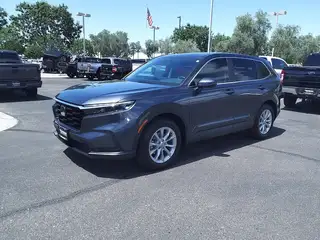
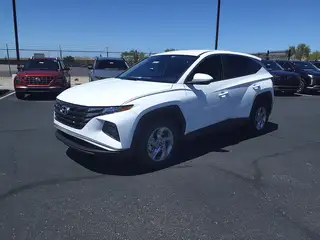
Newest report Sep 24, 2026 · checked Sep 27, 2026
Scorecard
| Measure, 2014 to 2026 | CR-V | Tucson |
|---|---|---|
| Complaints that report a crash | 4.0% | 3.3% |
| Complaints that report a fire | 0.4% | 1.8% |
| Complaints that report an injury | 2.7% | 1.8% |
| Median miles when problems are reported | 20,000 | 37,000 |
| Recall campaigns per model year | 1.6 | 1.7 |
| Do-not-drive recalls | 0 | 0 |
| NHTSA investigations | 6 | 3 |
The shaded side is lower (for miles, higher). Values within about a tenth of each other count as too close to call.
What owners complain about
The system CR-V owners complain about most is engine, and it is the same for the Tucson. Complaints citing steering make up 17% of all CR-V complaints, against 1.3% on the Tucson. The Tucson leans the other way on engine: 38% of its complaints, against 21% for the CR-V.
Honda CR-VHyundai Tucson
Share of each model's complaints that cite each system, from NHTSA's own component codes. One complaint can cite several systems, so the shares add up to more than 100%.
The most reported problems
The most reported problem on the CR-V is sticky steering (9.5% of its complaints). On the Tucson it is engine failure (16% of its complaints), against 1.9% on the CR-V.
| Problem | CR-V | Tucson |
|---|---|---|
| Engine stalls or loses power while driving | 8.6% 754most in 2018 · 26k mi | 16% 798most in 2017 · 40k mi |
| Brakes grind, pulse or wear early | 8.1% 709most in 2018 · 16k mi | 11% 556most in 2019 · 29k mi |
| Engine failure, knocking or rod bearing | 1.9% 171most in 2017 · 38k mi | 16% 833most in 2017 · 74k mi |
| Check engine light or misfire | 5.0% 443most in 2017 · 56k mi | 11% 583most in 2017 · 70k mi |
| Brakes on its own (automatic emergency braking) | 9.3% 819most in 2018 · 22k mi | 3.1% 160most in 2025 · 6k mi |
| Burns oil or oil level rises | 3.6% 318most in 2017 · 9k mi | 7.9% 404most in 2017 · 65k mi |
| Steering sticks, feels notchy or jerks | 9.5% 839most in 2023 · 34k mi | 0 |
| Transmission shudders, slips or shifts hard | 0.7% 62most in 2015 · 18k mi | 8.1% 415most in 2016 · 13k mi |
Share of each model's own complaints, with the count beside it. "Most in" links to the symptom sheet for the model year with the most reports of it, and the mileage is the median from reports that gave one.
When problems start
CR-V owners report problems earlier. Half the CR-V complaints that give a mileage come before 20,000 miles; for the Tucson the halfway point is 37,000. 78% of CR-V reports and 57% of Tucson reports come before 50,000 miles. Older model years have had longer to reach high mileage, so a window that runs to recent years pulls both medians down.
Honda CR-VHyundai Tucson
Share of the complaints that state a mileage: 3,869 for the CR-V and 2,259 for the Tucson.
Worst and best years
The 2018 CR-V draws 4.3 times the complaints of a typical CR-V year for its age. The 2016 Tucson draws 4.4 times the complaints of a typical Tucson year for its age.
Honda CR-VHyundai Tucson
Each bar is that model year's complaints for each year on the road, divided by the same figure for a typical year of the same model (the dashed line). Measuring each model against itself takes the sales gap between the two out of the picture, so they can share a scale. Years too new to judge are left out.
Recalls and investigations
The two draw recalls at about the same rate: 1.6 campaigns per model year for the CR-V and 1.7 for the Tucson. A recall counts once however many cars it covers, so this figure does not grow with sales the way complaint totals do.
Honda CR-V
21 recall campaigns and 6 NHTSA investigations across these model years. Most recalled: fuel system (5), airbags (4) and equipment (3).
- 23V-858 (fuel system) covers 10 model years
- 26V-332 (airbags) covers 6 model years
Investigations
- EA24002: Inadvertent automatic emergency braking (open)
- EA23003: Momentary increased steering effort (closed, led to a recall)
- PE22011: Rear differential seizure (closed)
Hyundai Tucson
22 recall campaigns and 3 NHTSA investigations across these model years. Most recalled: electrical (5), airbags (3) and service brakes, hydraulic (2).
- 20V-543 (service brakes, hydraulic) covers 6 model years
- 25V-893 (trailer hitches) covers 3 model years
Investigations
- DP22005: Pedestrian alert sounds (closed, led to a recall)
- DP22003: Loss of motive power (closed)
- EA21003: Engine fires (closed, led to a recall)
Whether a particular car is included depends on its VIN. Check yours at nhtsa.gov/recalls.
Crashes, fires and injuries
A larger share of CR-V complaints report a crash: 4.0%, against 3.3% for the Tucson. Fire reports: 36 for the CR-V and 93 for the Tucson. Complaints on file report 5 deaths in the CR-V and 1 in the Tucson for these model years.
Honda CR-VHyundai Tucson
Share of each model's complaints in which the owner reported it. These are owners' own accounts as filed with NHTSA, and one report on its own doesn't prove a defect.
Questions
Is the Honda CR-V or the Hyundai Tucson more reliable?
On the 7 measures below that do not grow with sales, the Tucson looks better on 4 and the CR-V on 1, with 2 too close to call. NHTSA complaint totals cannot settle it alone: the CR-V has 8,804 complaints and the Tucson 5,110 for model years 2014 to 2026, and those totals follow how many of each were sold.
Which has more recalls, the CR-V or the Tucson?
The CR-V has 21 recall campaigns and the Tucson 22 across model years 2014 to 2026. The two draw recalls at about the same rate: 1.6 campaigns per model year for the CR-V and 1.7 for the Tucson.
What are the most common problems on the CR-V and the Tucson?
The most reported problem on the CR-V is sticky steering (9.5% of its complaints). On the Tucson it is engine failure (16% of its complaints), against 1.9% on the CR-V.
More comparisons
- Toyota RAV4 vs Honda CR-V2014 to 2025
- Toyota RAV4 vs Hyundai Tucson2014 to 2025
- Honda CR-V vs Nissan Rogue2014 to 2026
- Honda CR-V vs Mazda CX-52014 to 2026
- Honda CR-V vs Subaru Forester2014 to 2026
- Honda CR-V vs Kia Sportage2014 to 2026
- Honda CR-V vs Subaru Outback2014 to 2026
- Volkswagen Tiguan vs Honda CR-V2018 to 2026
- Hyundai Tucson vs Kia Sportage2014 to 2026
- Hyundai Tucson vs Nissan Rogue2014 to 2026