Third generation (YF5/YF6)
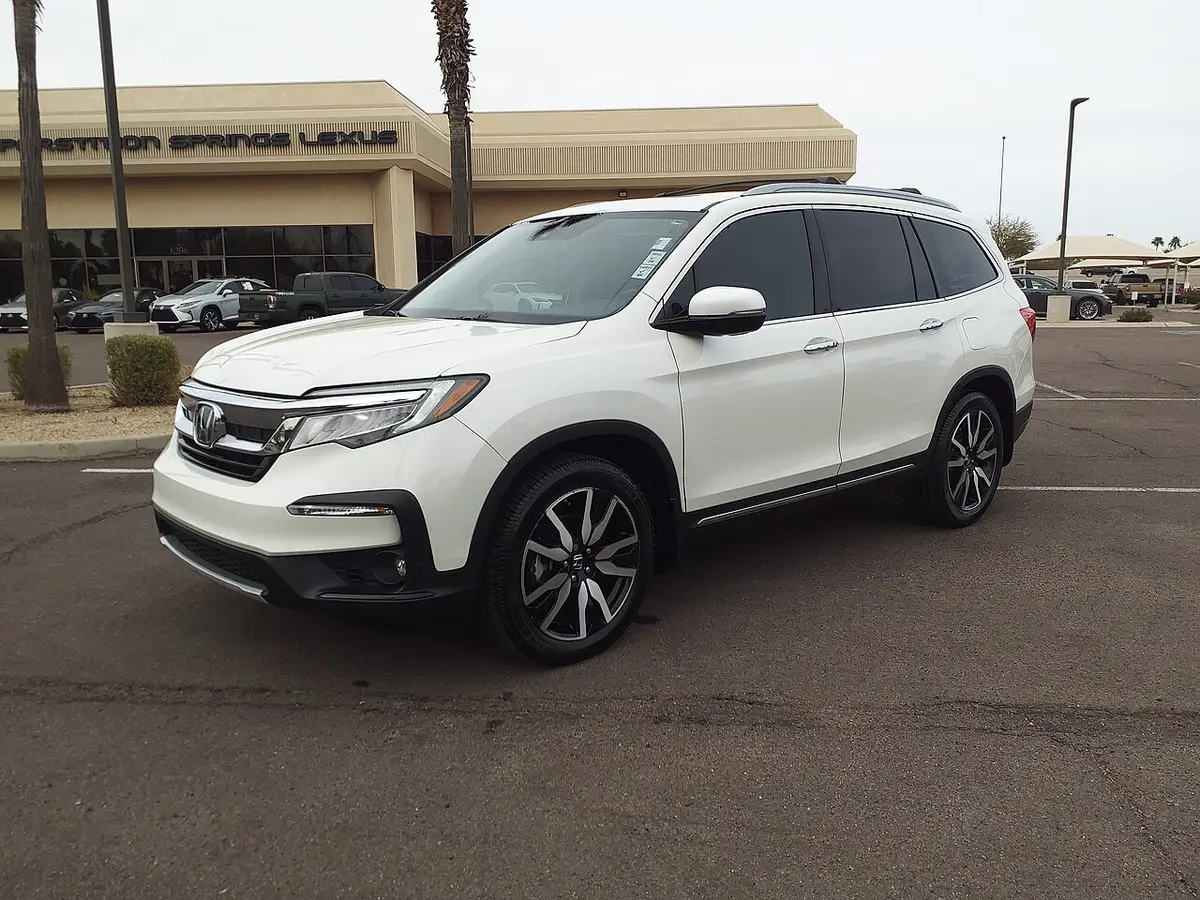
2020 Honda Pilot
The most reported problem on the 2020 Honda Pilot is infotainment, with 169 complaints, usually around 4,000 miles.
- 489owner complaints
- 11recalls
- 10involved a crash
- 9,800median miles at failure
Newest report Sep 29, 2026 · checked Oct 2, 2026
What is your Pilot doing?
Each one opens a sheet built from the owner reports of that problem on the 2020 model year.
Is the 2020 Honda Pilot reliable?
The 2020 Honda Pilot has 489 owner complaints on file with NHTSA, 2.1 times the median of 233 for 2020 SUVs on this site. Of the 13 Pilot model years since 2014, it has the 4th most complaints. Complaint counts rise with sales as well as faults, so read what owners report below before deciding.
At a glance
- Next to the 2019 and 2021
- At 70 complaints for each year on the road, the 2020 runs below the 2019 (113) and close to the 2021 (72).
- Top problem
- Infotainment leads with 169 of the 489 complaints (35%), ahead of stalling at 93. Infotainment tends to show up early. Of the 77 owners who gave a mileage for it, half were under about 4,000 miles and a quarter under about 1,000.
- Crash, fire and injury reports
- 18 of the 489 complaints (4%) report a crash, a fire or an injury, a little under the 6% typical of vehicles on this site. Counted separately (one report can carry more than one), 10 reports mention a crash, 5 mention a fire and 13 people were hurt. The most crash reports, 4 of 10, fall under brake wear.
- Recalls behind the top problems
- Infotainment and dead battery share a recall on the same system (20V-440). Stalling has none. A recall on the same system doesn't always cover the failure owners describe, so compare its summary with the complaints.
- When owners filed
- Filings peaked in 2020 at 98 (full calendar years only). In 2025 there were 79. So far in 2026, 66 more have come in.
When each problem shows up
Each bar covers the middle half of the mileages owners reported for that problem. A quarter saw it earlier, a quarter later. The tick is the median. Most reported: infotainment, screen or backup camera fails, 169 complaints.
middle half of reports, median tick. The heavier grey bars have 75 or more reports.
Behind you
Around your mileage
Ahead of you
How this compares
489 complaints is 2.2 times the median 2020 model on this site and 2.1 times the median 2020 SUV. Among the 13 Pilot model years here it ranks 4th for complaints. Counts follow sales volume as much as reliability, so a truck that sells 700,000 a year draws more reports than a sedan that sells 200,000.
Service bulletins for the 2020 Honda Pilot
Honda filed 149 bulletins and other notices with NHTSA that list the 2020 Honda Pilot. 21 of them deal with a problem owners have reported on this car. Newest first.
Federal rules make a manufacturer send NHTSA a copy of any notice about a defect that goes to more than one dealer or owner. Most of these are service bulletins, the repair instructions manufacturers send to dealers. NHTSA generally leaves safety recall bulletins out of this file, and recalls are listed separately.
Infotainment, screen or backup camera fails 8 bulletins · 169 complaints
Audio sound will stop and No Audio Connection message appears in the audio display. NOTE: This is not related to MOST Ring break conditions." "Service Bulletin - Audio sound will stop and No Audio Connection message appears in the audio display.
Audio sound will stop and No Audio Connection message appears in the audio display. NOTE: This is not related to MOST Ring break conditions.
6 more on this problem
There is a popping or crackling from the speakers or no sound from the audio system. You may also see a Network Loss message and/or display issues.
Owner Notification Letter - On some 2019-20 Passport/Pilot models, a loose connection in the MOST bus network is causing a popping or crackling from the speakers or no sound from the audio system.
A loose connection in the MOST bus network is causing a popping or crackling from the speakers or no sound from the audio system. You may also see a Network Loss message and/or display issues.
ServiceNews Article - We have received information from the vendor (Alpine) that display panels are being replaced for cracks on the center display screen.
The Bluetooth HandsFreeLink (HFL) system freezes after a phone call and stored voice tags are missing when the ignition is turned ON.
On Monday July 27th, American Honda released Service Bulletin 20-049 for 19-20 Odyssey. Service Bulletin 20-058 for 19-21 Pilot and Passport is forthcoming.
Infotainment screen freezes or goes black 1 bulletin · 40 complaints
Video Message - It concerns the MOST Bus Network Failure Log covered in service bulletin 19-097. The log helps troubleshoot intermittent MOST bus network failures.
Brakes grind, pulse or wear early 1 bulletin · 26 complaints
American Honda Motor Co., Inc. (AHM) is searching for certain 2018-2021 Accords, 2019-2017 Civics, 2017-2021 CR-Vs, 2018-2021 Odysseys & 2018-2021 Pilots with a customer complaint of an unexpected CMBS operation or a brake application.
Check engine light or misfire 4 bulletins · 17 complaints
Under certain circumstances, after coming to a stop and engaging idle stop, the vehicle may not restart automatically due to excessive cylinder pressure and/or low cranking torque.
Due to variations in the purge control solenoid valve spring, the valve wears unevenly and intermittently sticks. This may result in setting DTC P0441 (Evaporative Emission (EVAP) System Purge Flow Malfunction).
2 more on this problem
American Honda Motor Co., Inc. (AHM) is investigating certain 2020-2022 Accords, CR-Vs, Odysseys, Passports, Pilots, Ridgelines, 2020 Fits, 2020-2021 Civic Hatchbacks, 2020-2023 Civic Sedans/Coups with a customer complaint of the Check Engine Light (CEL) on & ...
American Honda Motor Co., Inc. (AHM) is searching for certain 2018-2020 Odysseys, Passports, Pilots & Ridgelines with a customer complaint of the Malfunction Indicator Light (MIL) on with the DTC P0441 (EVAP System Purge Flow Malfunction) stored.
A/C blows warm or the compressor fails 5 bulletins · 8 complaints
Customer complaint of the A/C not blowing cold air due to Oil/Refrigerant leak from the A/C compressor shaft seal.
Customer complaint received regarding the A/C not blowing cold air due to an oil/refrigerant leak from the A/C compressor shaft seal.
3 more on this problem
Customers have complained that the air conditioning system is not blowing cold air due to Oil/Refrigerant leaking from the A/C compressor shaft seal.
Honda has received customer complaints of the air conditioning system not blowing cold air due to an Oil/Refrigerant leak from the A/C compressor shaft seal.
There are several A/C leak detection tools available. -Refrigerant Gas Leak Detector -Ultrasonic Leak Detector -Leak Dye
Transmission jerks, lurches or bangs into gear 1 bulletin · 7 complaints
The transmission has intermittent harsh or jerky upshifts with steady acceleration.
Seat belt or seat problems 1 bulletin · 5 complaints
American Honda Motor Co., Inc. (AHM) is searching for certain 2020-2022 Pilots with a customer complaint of the driverâs side 3rd row headrest not staying upright.
Complaints filed by year
98 complaints came in 2020, 32.7 times the year before. Owners file in waves when a problem gets press or an investigation, so a spike measures attention as much as failures.
NHTSA investigations
Engine failure. Open.
NHTSA summary
No restart after auto start/stop engages. Open.
NHTSA summary
Engine failure. Closed aug 20, 2025.
NHTSA summary
No restart after auto start/stop engages. Closed mar 26, 2025.
NHTSA summary
Recalls that include the 2020 Honda Pilot
Whether your car is included depends on its VIN. Check yours at nhtsa.gov/recalls.
American Honda Motor Company (Honda) is recalling certain 2016-2022 Honda Pilot, 2017-2023 Ridgeline, 2019-2023 Passport, and 2014-2020 Acura MDX vehicles that were sold in Connecticut, Delaware, District of Columbia, Illinois, Indiana, Iowa, Kentucky, Maine, Maryland, Massachusetts, Michigan, Minnesota, Missouri, New Hampshire, New Jersey, New York, Ohio, Pennsylvania, Rhode Island, Vermont, Virginia, West Virginia, or Wisconsin. The rear subframe may corrode at the suspension mounting points, which can result in rear suspension component failure.
Risk and remedy
Remedy: Dealers will inspect the rear subframe and install a rear subframe reinforcement kit and, as necessary, repair or replace the rear subframe components, free of charge. Interim letters notifying owners of the safety risk were mailed July 27, 2026. Additional letters will be sent once the final remedy is available, anticipated in the fall of 2026. Owners may contact Honda's customer service at 1-888-234-2138. Honda's numbers for this recall are AOU and AOT. Vehicle Identification Numbers (VINs) involved in this recall will become searchable on NHTSA.gov beginning June 10, 2026.
Honda (American Honda Motor Co.) is recalling certain 2018-2021, 2023 Acura TLX, 2019-2024 RDX, 2017-2020, 2022-2026 MDX, 2017-2021, 2023, 2025 Honda Ridgeline, 2017-2022 Pilot, 2019-2021 Passport, 2018-2026 Odyssey, 2019-2022 Insight, 2019-2021 HR-V, 2018-2020 Fit, 2020-2022 CR-V Hybrid, 2017-2022 CR-V, 2017-2018, 2021 Civic Type R, 2017-2021 Civic hatchback, 2016-2020 Civic coupe, 2016-2022 Civic, 2017-2022 Accord Hybrid, and 2016-2022 Accord vehicles. The front passenger seat weight sensor may crack and short circuit, which can cause the air bags to deploy unintentionally during a crash.
Risk and remedy
Remedy: Dealers will replace the seat weight sensors, free of charge. Owner notification letters were mailed July 7, 2026. Owners may contact Honda's customer service at 1-888-234-2138. Honda's numbers for this recall are BOL, WO9, OOA, WOM, XOH, NOC, POD, BOE, UOF, POB, EOG, AOI, QO8, TOJ, DO7, and SOK. This recall expands previous NHTSA recall number 24V064. Vehicle Identification Numbers (VINs) involved in this recall will be searchable on NHTSA.gov beginning May 29, 2026.
Honda (American Honda Motor Co.) is recalling certain 2020-2022 Pilot, Accord, Civic sedan, HR-V, Odyssey, 2020 Civic coupe, Fit, 2021-2022 Civic hatchback, 2021 Civic Type R, Insight, 2020-2021 CR-V, CR-V Hybrid, Passport, Ridgeline, Accord Hybrid, 2020 Acura MDX, 2022 Acura MDX, 2020-2022 Acura RDX, and 2020-2021 Acura TLX vehicles. The front passenger seat weight sensor may crack and short circuit, failing to suppress the air bag as intended.
Risk and remedy
Remedy: Dealers will replace the seat weight sensors, free of charge. Owner notification letters were mailed March 28, 2024. This is a phased recall. Owners may contact Honda customer service at 1-888-234-2138. Honda's numbers for these recalls are XHP and VHQ.
Honda (American Honda Motor Co.) is recalling certain 2013-2023 Honda Accord, Civic Coupe, Civic Sedan, Civic Hatchback, Civic Type R, CR-V, HR-V, Ridgeline, Odyssey, Acura ILX, MDX, MDX Hybrid, RDX, RLX, TLX, 2019-2022 Honda Insight, Passport, 2020 Honda CR-V Hybrid, 2018-2019 Honda Clarity PHEV, Fit, and 2015-2020 Honda Accord Hybrid, Pilot, Acura NSX vehicles. The fuel pump inside the fuel tank may fail.
Risk and remedy
Remedy: Dealers will replace the fuel pump module, free of charge. Owner letters were mailed September 6, 2024. Owners may contact Honda customer service at 1-888-234-2138. Honda's numbers for this recall are KGC and KGD. This recall is an expansion of NHTSA recall numbers 21V-215 and 20V-314.
Honda (American Honda Motor Co.) is recalling certain 2018-2023 Odyssey, 2019-2022 Pilot, and 2019-2023 Passport vehicles. Due to a faulty Media Oriented Systems Transport (MOST) communication coaxial cable connector, the rearview camera image may not appear on the display. As such, these vehicles fail to comply with the requirements of Federal Motor Vehicle Safety Standard number 111, "Rear Visibility."
Risk and remedy
Remedy: Dealers will replace the MOST cable harness and install a straightening cover over the vehicle cable connector, free of charge. Owner notification letters were mailed July 24, 2023. Owners may contact Honda customer service at 1-888-234-2138. Honda's numbers for this recall are EEL, ZEM, and SFC.
Honda (American Honda Motor Co) is recalling certain 2020-2021 Pilot and Ridgeline, and 2020-2022 Passport and Odyssey vehicles. The heating pads behind both side-view mirrors may not be bonded properly, allowing the mirror glass to detach. As such, these vehicles fail to comply with the requirements of Federal Motor Vehicle Safety Standard number 111, "Rear Visibility."
Risk and remedy
Remedy: Dealers will replace both left and right side-view mirrors, free of charge. Owner letters were mailed January 17, 2024. Owners may contact Honda customer service at 1-888-234-2138. Honda's number for this recall is FE5.
Honda (American Honda Motor Co.) is recalling certain 2019-2020 Passport and Pilot vehicles equipped with Continental tires. On the affected vehicles, it is possible that one or more tires were cured for too long during tire production.
Risk and remedy
Remedy: Honda will notify owners, and dealers will inspect all four tires and replace them as necessary, free of charge. The recall began April 22, 2021. Owners may contact American Honda Motor Co. customer service at 1-888-234-2138. Honda's number for this recall is UA2.
Honda (American Honda Motor Co.) is recalling certain 2018-2020 Odyssey, 2019-2020 Passport, and 2019-2021 Pilot vehicles. Incorrect instrument panel control module software can cause the instrument panel to not display critical information, such as engine oil pressure, speedometer, and gear selector position until the next ignition cycle. Additionally, it can prevent the rearview camera image from displaying. As such, these vehicles fail to comply with the requirements of Federal Motor Vehicle Safety Standard (FMVSS) numbers 101, "Control and Displays" and 111, "Rearview Mirrors."
Risk and remedy
Remedy: Honda will notify owners, and dealers will reprogram the instrument panel control module software, free of charge. The recall began September 23, 2020. Owners may contact Honda customer service at 1-888-234-2138. Honda's number for this recall is T89.
Honda (American Honda Motor Co.) is recalling certain 2019-2021 Pilot, 2019-2020 Odyssey and 2019-2020 Passport vehicles. Incorrect central network software programming may cause several errors to occur that can delay or prevent the rearview camera image from displaying. As such, these vehicles fail to comply with the requirements of Federal Motor Vehicle Safety Standard (FMVSS) number 111, "Rearview Mirrors."
Risk and remedy
Remedy: Honda will notify owners that updated software is available. Owners have the option to either follow the mailed instructions to download and update the software for free, or visit a dealer to have the software update performed, free of charge. The recall began September 23, 2020. Owners may contact Honda customer service at 1-888-234-2138. Honda's number for this recall is Y7Y.
Honda (American Honda Motor Co.) is recalling certain 2020 Passport and Pilot vehicles. The certification label may have been printed with ink that can be wiped away with a solvent, removing the Gross Axle Weight Rating (GAWR) and Gross Vehicle Weight Rating (GVWR) information.
Risk and remedy
Remedy: Honda will notify owners, and dealers will replace the certification label, free of charge. The recall began March 24, 2020. Owners may contact Honda customer service at 1-888-234-2138. Honda's number for this recall is B6T.
Honda (American Honda Motor Co.) is recalling certain 2019-2020 Pilot and 2019 Passport vehicles. The front frame left and right side upper members may not have been welded completely to the unibody. As such, these vehicles may fail to comply with the requirements of Federal Motor Vehicle Safety Standard (FMVSS) numbers 208, "Occupant Crash Protection" and 219, "Windshield Zone Intrusion."
Risk and remedy
Remedy: Honda will notify owners, and dealers will inspect the vehicle for missing welds, free of charge. If the vehicle is identified as missing welds, the dealer will offer to repurchase the vehicle or provide a similar replacement vehicle. Owner notification began November 6 2019. Owners may contact Honda customer service at 1-888-234-2138. Honda's number for this recall is X6J.
All 11 recalls on the 2020 Honda Pilot, with the owner complaints on each recalled system
Guide NHTSA has an open investigation on this car. What the investigation stages mean
Questions
What is the most common problem on the 2020 Honda Pilot?
Infotainment, with 169 of the 489 complaints. Owners who gave a mileage for it put the median at about 4,000 miles.
At what mileage do 2020 Honda Pilot problems start?
Of the 171 complaints that give a mileage, a quarter came by about 2,000 miles and half by about 10,000.
Is the 2020 Honda Pilot better or worse than the 2019 and 2021?
Counted per year on the road, the 2020 has fewer complaints than the 2019 and about as many complaints as the 2021: 70 a year against 113 and 72.
How many 2020 Honda Pilot complaints involve a crash, fire or injury?
18 of them (4%). The typical vehicle on this site is at 6%.
Is there a recall for infotainment on the 2020 Honda Pilot?
Yes, NHTSA lists a recall on the same system: 20V-440. Its summary says which failure it covers, and that isn't always the one owners describe.