Third generation (YF5/YF6)
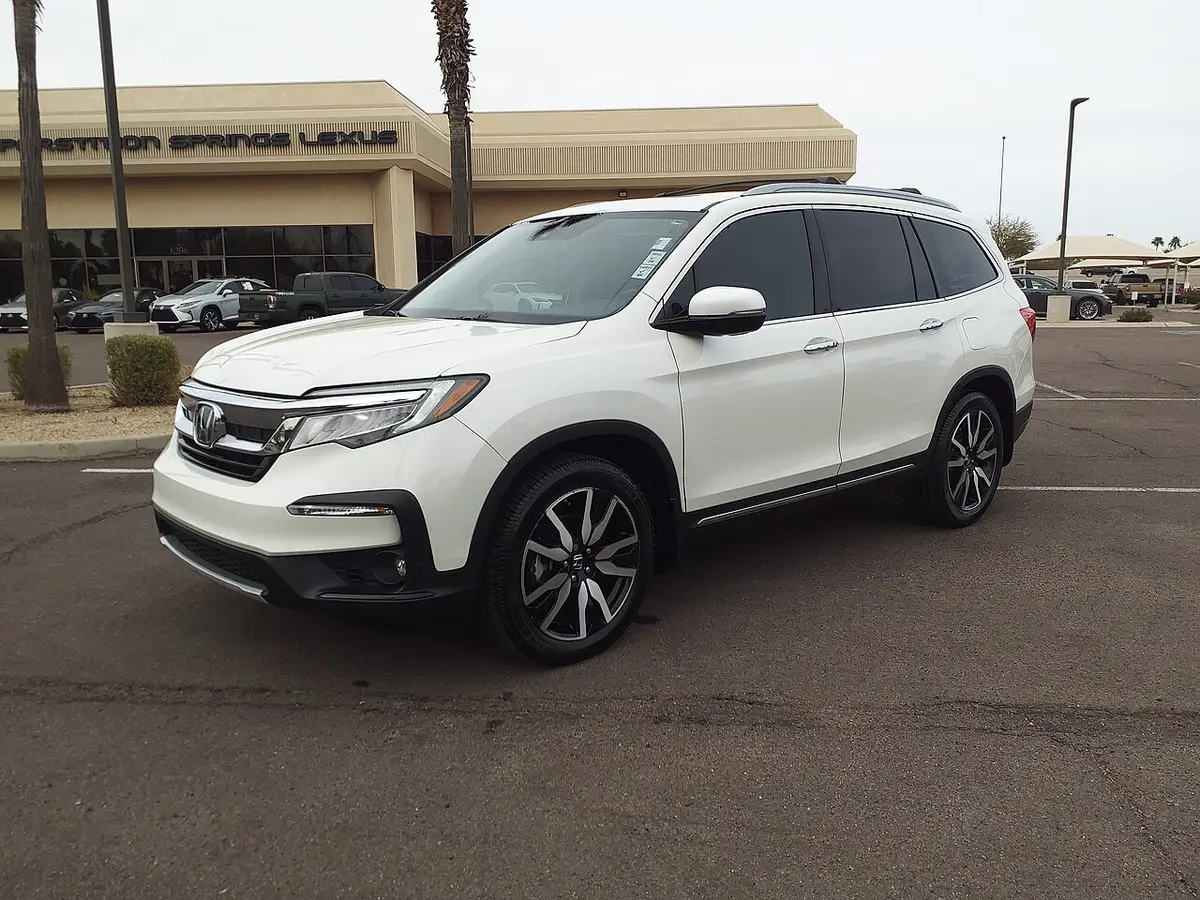
2018 Honda Pilot
The most reported problem on the 2018 Honda Pilot is stalling, with 100 complaints, usually around 75,000 miles.
- 440owner complaints
- 7recalls
- 9involved a crash
- 52,500median miles at failure
Newest report Sep 21, 2026 · checked Oct 2, 2026
What is your Pilot doing?
Each one opens a sheet built from the owner reports of that problem on the 2018 model year.
Is the 2018 Honda Pilot reliable?
The 2018 Honda Pilot has 440 owner complaints on file with NHTSA, 1.3 times the median of 331 for 2018 SUVs on this site. Of the 13 Pilot model years since 2014, it has the 5th most complaints. Complaint counts rise with sales as well as faults, so read what owners report below before deciding.
At a glance
- Next to the 2017 and 2019
- The 2018 is a low point between its neighbors: 49 complaints for each year on the road, where the 2017 has 93 and the 2019 has 113.
- Top problem
- Stalling leads with 100 of the 440 complaints (23%), ahead of fuel pump at 33. A quarter of the 35 owners who gave a mileage for stalling saw it by about 52,000 miles, and half by about 75,000.
- Crash, fire and injury reports
- Only 13 of the 440 complaints (3%) report a crash, a fire or an injury, well under the 6% typical of vehicles on this site. Counted separately (one report can carry more than one), 9 reports mention a crash, 2 mention a fire and 11 people were hurt.
- Recalls behind the top problems
- Each of stalling, fuel pump and misfire has a recall on the same system: stalling and misfire, 19V-298 and 23V-751; fuel pump, 23V-858. A recall on the same system doesn't always cover the failure owners describe, so compare its summary with the complaints.
- When owners filed
- Filings peaked in 2024 at 119 (full calendar years only). In 2025 there were 68. So far in 2026, 33 more have come in.
When each problem shows up
Each bar covers the middle half of the mileages owners reported for that problem. A quarter saw it earlier, a quarter later. The tick is the median. Most reported: engine stalls or loses power while driving, 100 complaints.
middle half of reports, median tick. The heavier grey bars have 75 or more reports.
Behind you
Around your mileage
Ahead of you
How this compares
440 complaints is 1.6 times the median 2018 model on this site and 1.3 times the median 2018 SUV. Among the 13 Pilot model years here it ranks 5th for complaints. Counts follow sales volume as much as reliability, so a truck that sells 700,000 a year draws more reports than a sedan that sells 200,000.
Service bulletins for the 2018 Honda Pilot
Honda filed 140 bulletins and other notices with NHTSA that list the 2018 Honda Pilot. 18 of them deal with a problem owners have reported on this car. Newest first.
Federal rules make a manufacturer send NHTSA a copy of any notice about a defect that goes to more than one dealer or owner. Most of these are service bulletins, the repair instructions manufacturers send to dealers. NHTSA generally leaves safety recall bulletins out of this file, and recalls are listed separately.
Check engine light or misfire 6 bulletins · 31 complaints
Under certain circumstances, after coming to a stop and engaging idle stop, the vehicle may not restart automatically due to excessive cylinder pressure and/or low cranking torque.
Torque converters may not have been manufactured to proper specifications. As a result, the torque converter lock-up clutch cannot provide adequate holding force due to pressure bleeding down through a crack in the lock-up piston.
4 more on this problem
American Honda Motor Co., Inc. (AHM) is searching for certain 2018-2020 Odysseys, Passports, Pilots & Ridgelines with a customer complaint of the Malfunction Indicator Light (MIL) on with the DTC P0441 (EVAP System Purge Flow Malfunction) stored.
Owner Notification Letter - On some 2017-19 Pilot, 2017-19 Ridgeline, and 2018-19 Odyssey models, the malfunction indicator light (MIL) may come on if one or more of the following diagnostic trouble codes (DTCs) are stored: - P0420 (rear bank catalyst system ...
The PCM software may misinterpret sensor inputs as a deteriorated catalytic converter. Additionally, debris from the high pressure pump or the fuel injector machining process can cause internal wear or clogging inside one or more injectors.
MIL Comes On with DTC P0430 or P0430 with P030X, P219A, P219B (Without Software Update)
Battery dies or the car will not start 2 bulletins · 23 complaints
American Honda Motor Co, Inc. (AHM) has been collecting batteries from certain models under certain conditions. If you have replaced an OEM battery on a qualified vehicle, please follow the procedure below.
Servicenews article - There are two types of 12-volt batteries used in Honda vehicles today: the conventional flooded lead acid (FLA) battery and the absorbed glass mat (AGM) battery.
Seat belt or seat problems 1 bulletin · 18 complaints
American Honda Motor Co., Inc. (AHM) is investigating certain 2016-2018 Pilots with a customer complaint of the 2nd row seats false latching.
Infotainment, screen or backup camera fails 1 bulletin · 15 complaints
The Bluetooth HandsFreeLink (HFL) system freezes after a phone call and stored voice tags are missing when the ignition is turned ON.
Transmission jerks, lurches or bangs into gear 1 bulletin · 15 complaints
The transmission has intermittent harsh or jerky upshifts with steady acceleration.
Brakes grind, pulse or wear early 1 bulletin · 10 complaints
American Honda Motor Co., Inc. (AHM) is searching for certain 2018-2021 Accords, 2019-2017 Civics, 2017-2021 CR-Vs, 2018-2021 Odysseys & 2018-2021 Pilots with a customer complaint of an unexpected CMBS operation or a brake application.
"Service Transmission" message or wrench light comes on 2 bulletins · 8 complaints
Torque converters may not have been manufactured to proper specifications. As a result, the torque converter lock-up clutch cannot provide adequate holding force due to pressure bleeding down through a crack in the lock-up piston.
Torque converters may not have been manufactured to proper specifications. As a result, the lock-up clutch cannot provide adequate holding force due to pressure bleeding down through a crack in the lock-up piston.
A/C blows warm or the compressor fails 4 bulletins · 7 complaints
The A/C does not blow cold air, and the lower corner of the condenser around the receiver/dryer cap is stained due to a poor O-ring compression against the receiver/dryer barrel wall.
There are several A/C leak detection tools available. -Refrigerant Gas Leak Detector -Ultrasonic Leak Detector -Leak Dye
2 more on this problem
The A/C does not blow cold air, and the lower corner of the condenser around the receiver/dryer cap is stained.
The A/C does not blow cold air, and the lower corner of the condenser around the receiver/dryer cap is stained. There is poor O-ring compression against the receiver/dryer barrel wall.
Complaints filed by year
119 complaints came in 2024, 2.6 times the year before. Owners file in waves when a problem gets press or an investigation, so a spike measures attention as much as failures.
NHTSA investigations
Engine failure. Open.
NHTSA summary
No restart after auto start/stop engages. Open.
NHTSA summary
Engine failure. Closed aug 20, 2025.
NHTSA summary
No restart after auto start/stop engages. Closed mar 26, 2025.
NHTSA summary
Recalls that include the 2018 Honda Pilot
Whether your car is included depends on its VIN. Check yours at nhtsa.gov/recalls.
American Honda Motor Company (Honda) is recalling certain 2016-2022 Honda Pilot, 2017-2023 Ridgeline, 2019-2023 Passport, and 2014-2020 Acura MDX vehicles that were sold in Connecticut, Delaware, District of Columbia, Illinois, Indiana, Iowa, Kentucky, Maine, Maryland, Massachusetts, Michigan, Minnesota, Missouri, New Hampshire, New Jersey, New York, Ohio, Pennsylvania, Rhode Island, Vermont, Virginia, West Virginia, or Wisconsin. The rear subframe may corrode at the suspension mounting points, which can result in rear suspension component failure.
Risk and remedy
Remedy: Dealers will inspect the rear subframe and install a rear subframe reinforcement kit and, as necessary, repair or replace the rear subframe components, free of charge. Interim letters notifying owners of the safety risk were mailed July 27, 2026. Additional letters will be sent once the final remedy is available, anticipated in the fall of 2026. Owners may contact Honda's customer service at 1-888-234-2138. Honda's numbers for this recall are AOU and AOT. Vehicle Identification Numbers (VINs) involved in this recall will become searchable on NHTSA.gov beginning June 10, 2026.
Honda (American Honda Motor Co.) is recalling certain 2018-2021, 2023 Acura TLX, 2019-2024 RDX, 2017-2020, 2022-2026 MDX, 2017-2021, 2023, 2025 Honda Ridgeline, 2017-2022 Pilot, 2019-2021 Passport, 2018-2026 Odyssey, 2019-2022 Insight, 2019-2021 HR-V, 2018-2020 Fit, 2020-2022 CR-V Hybrid, 2017-2022 CR-V, 2017-2018, 2021 Civic Type R, 2017-2021 Civic hatchback, 2016-2020 Civic coupe, 2016-2022 Civic, 2017-2022 Accord Hybrid, and 2016-2022 Accord vehicles. The front passenger seat weight sensor may crack and short circuit, which can cause the air bags to deploy unintentionally during a crash.
Risk and remedy
Remedy: Dealers will replace the seat weight sensors, free of charge. Owner notification letters were mailed July 7, 2026. Owners may contact Honda's customer service at 1-888-234-2138. Honda's numbers for this recall are BOL, WO9, OOA, WOM, XOH, NOC, POD, BOE, UOF, POB, EOG, AOI, QO8, TOJ, DO7, and SOK. This recall expands previous NHTSA recall number 24V064. Vehicle Identification Numbers (VINs) involved in this recall will be searchable on NHTSA.gov beginning May 29, 2026.
Honda (American Honda Motor Co.) is recalling certain 2013-2023 Honda Accord, Civic Coupe, Civic Sedan, Civic Hatchback, Civic Type R, CR-V, HR-V, Ridgeline, Odyssey, Acura ILX, MDX, MDX Hybrid, RDX, RLX, TLX, 2019-2022 Honda Insight, Passport, 2020 Honda CR-V Hybrid, 2018-2019 Honda Clarity PHEV, Fit, and 2015-2020 Honda Accord Hybrid, Pilot, Acura NSX vehicles. The fuel pump inside the fuel tank may fail.
Risk and remedy
Remedy: Dealers will replace the fuel pump module, free of charge. Owner letters were mailed September 6, 2024. Owners may contact Honda customer service at 1-888-234-2138. Honda's numbers for this recall are KGC and KGD. This recall is an expansion of NHTSA recall numbers 21V-215 and 20V-314.
Honda (American Honda Motor Co.) is recalling certain 2015-2020 Acura TLX, 2016-2020 Acura MDX, 2016 and 2018-2019 Pilot, 2017 and 2019 Ridgeline, and 2018-2019 Odyssey vehicles. Due to a manufacturing error, the connecting rod bearing in the engine may wear and seize, damaging the engine.
Risk and remedy
Remedy: Dealers will inspect and repair, or replace the engine as necessary, free of charge. Owner letters were mailed March 28, 2024. 2016-2017 Acura MDX owner letters were mailed November 1, 2024. 2016-2020 Acura MDX owner letters are expected to be mailed in mid-December 2024. Honda began mailing owner notification letters as of March 18, 2024. 2015-2016 Acura owner letters are expected to be mailed mid-December 2024, 2018 Acura TLX owner letters are expected to be mailed the end of March/early April 2024, 2019 Acura TLX owner letters are expected to be mailed mid-May 2024, 2020 Acura TLX owner letters are expected to be mailed mid-June 2024, and 2016-2020 Acura MDX owner letters are expected to be mailed January 27, 2025. Owners may contact Honda customer service at 1-888-234-2138. Honda's numbers for these recalls are XG1 and GG0.
Honda (American Honda Motor Co.) is recalling certain 2019 Passport, 2016-2019 Pilot, and 2017-2020 Ridgeline vehicles. The hood latch striker may become damaged and separate from the hood, which can result in the hood opening while driving.
Risk and remedy
Remedy: Dealers will either repair the hood latch striker, or replace the hood if necessary, free of charge. Owner notification letters were mailed January 18, 2022. Owners may contact Honda customer service at 1-888-234-2138. Honda's number for this recall is PBV.
Honda (American Honda Motor Co.) is recalling certain 2018-2019 Acura MDX and Honda Pilot vehicles and 2019 Acura RLX, RLX Sport Hybrid, TLX and Honda Odyssey and Ridgeline vehicles. The timing belt teeth may separate from the belt.
Risk and remedy
Remedy: Honda will notify owners, and dealers will inspect the vehicle and replace any affected timing belt free of charge. Vehicles receiving a replacement timing belt will also have the engine inspected and any damaged components will be replaced for free. The recall began June 7, 2019. Honda owners may contact customer service at 1-888-234-2138. Honda's number for this recall is L4M. Acura owners may contact customer service at 1-888-234-2138. Acura's number for this recall is Z4L.
Honda (American Honda Motor Co.) is recalling certain 2018 Honda Pilot and Ridgeline vehicles and 2018 Acura MDX vehicles. The front driver and passenger powered seats in the Honda vehicles and the driver powered seats in the Acura vehicles may have been assembled with improperly manufactured rivets. In the event of a crash, the rivets can break causing the seats not to be secured to the floor. As such, these vehicles may fail to comply with the requirements of Federal Motor Vehicle Safety Standard (FMVSS) number 207, "Seating Systems," and 210, "Seat Belt Assembly Anchorages."
Risk and remedy
Remedy: Honda will notify owners, and dealers will replace the driver seat frame assembly in Acura MDX vehicles, and replace the driver and front passenger seat slide rail frames in Honda Pilot and Ridgeline vehicles, free of charge. The recall began May 30, 2018. Owners may contact Honda customer service at 1-888-234-2138. Honda's numbers for this recall is D0S, and T0T.
All 7 recalls on the 2018 Honda Pilot, with the owner complaints on each recalled system
Guide NHTSA has an open investigation on this car. What the investigation stages mean
Questions
What is the most common problem on the 2018 Honda Pilot?
Stalling, with 100 of the 440 complaints. Owners who gave a mileage for it put the median at about 75,000 miles.
At what mileage do 2018 Honda Pilot problems start?
Of the 130 complaints that give a mileage, a quarter came by about 23,000 miles and half by about 52,000.
Is the 2018 Honda Pilot better or worse than the 2017 and 2019?
Counted per year on the road, the 2018 has fewer complaints than both the 2017 and the 2019: 49 a year against 93 and 113.
How many 2018 Honda Pilot complaints involve a crash, fire or injury?
13 of them (3%). The typical vehicle on this site is at 6%.
Is there a recall for stalling on the 2018 Honda Pilot?
Yes, NHTSA lists 2 recalls on the same system: 19V-298 and 23V-751. Its summary says which failure it covers, and that isn't always the one owners describe.