First generation (Juniper refresh) · first-year watch
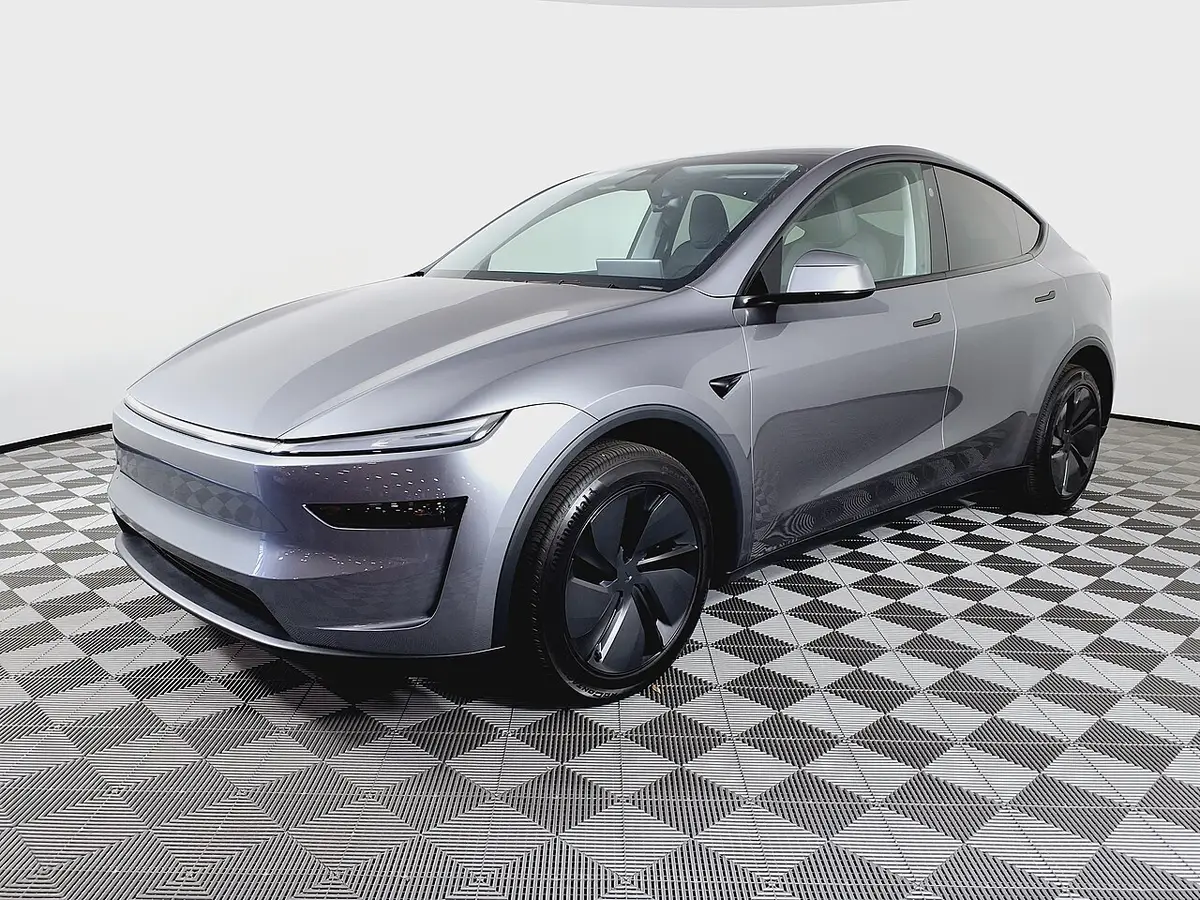
2026 Tesla Model Y, day 515
- 382complaints since May 5, 2025
- 8recalls
- 79involved a crash
- 5,900median miles at failure
Newest report Sep 29, 2026 · checked Oct 2, 2026
Changed since August
- 47 new complaints in September, mostly about collision avoidance, lane keeping and backup camera.
- Recall 26V-558 on suspension, filed Sep 1, 2026.
- Nothing filed yet on sticky steering, transmission failure, engine failure or fire.
- 1st most complaints of the 79 2026 models on this site.
What is your Model Y doing?
Each one opens a sheet built from the owner reports of that problem on the 2026 model year.
What's been reported
NHTSA's own component codes. One report can cite several.
- Collision avoidance146
- Other119
- Electrical55
- Lane keeping55
- Steering44
- Speed control31
- Structure29
- Suspension29
Problems so far
- Full Self-Driving (FSD) does something unsafe 101 reports
- Adaptive cruise or lane keeping misbehaves 34 reports
- Forward collision warning goes off or the camera drops out 34 reports
- Brakes on its own (automatic emergency braking) 30 reports
- Infotainment, screen or backup camera fails 29 reports
- Suspension noise, struts or alignment 29 reports
- Brakes grind, pulse or wear early 27 reports
- Seat belt or seat problems 16 reports
Recent reports
“Car seemed to have no power steering when I tried to leave this morning, brand new car less than 5000 miles and itâs glitching.”
Filed Nov 26, 2025
“I was using FSD the whole time without any issues. As I approached an intersection, I wanted to go straight, but the FSD intended to make a right turn, so I switched to manual mode. After driving halfway through the intersection, I switched back to FSD, and the car suddenly made a sharp right turn, crashing directly into the traffic light.”
Filed Aug 24, 2025
“Passenger Left rear passenger door, Right Driver Side door, Right passenger door, Trunk door would not open..rebooted car still did not open. Open car door intrenally front right..closed would not open. Same with all other doors mentioned, Tesla app show vehicle was unlocked when it was not.”
Filed Aug 16, 2025
“There are distortions, that makes looking through the windshield wavy/rippling. Minor distortion at the top of the windshield at the angle you look at top portion of cars in front of you and traffic lights. Major distortion when looking at the right side of the windshield from the driver seat, covering around 30% of the windshield. When driving it will become significantly noticeable and causes dizziness sometime.”
Filed Aug 5, 2025
At a glance
- Next to the 2024
- The 2026 is too new for a fair per-year comparison. It has 382 complaints so far; the 2024, on sale longer, has 325.
- Top problem
- FSD problems leads with 101 of the 382 complaints (26%), ahead of driver assist at 34. Too few of the FSD problems reports give a mileage to say when it starts.
- Crash, fire and injury reports
- 87 of the 382 complaints (23%) report a crash, a fire or an injury. The typical vehicle on this site sits at 6%, so this one runs well above it. Counted separately (one report can carry more than one), 79 reports mention a crash, 1 mentions a fire and 31 people were hurt. The most crash reports, 38 of 79, fall under FSD problems.
- Recalls behind the top problems
- No recall on file is on the same system as driver assist, false collision warning and phantom braking. For those, the complaints are all there is.
- When owners filed
- Every complaint so far came in during 2025. So far in 2026, 253 more have come in.
Service bulletins for the 2026 Tesla Model Y
Tesla filed 9 bulletins and other notices with NHTSA that list the 2026 Tesla Model Y. 8 of them deal with a problem owners have reported on this car. Newest first.
Federal rules make a manufacturer send NHTSA a copy of any notice about a defect that goes to more than one dealer or owner. Most of these are service bulletins, the repair instructions manufacturers send to dealers. NHTSA generally leaves safety recall bulletins out of this file, and recalls are listed separately.
Infotainment, screen or backup camera fails 1 bulletin · 29 complaints
On some Model Y vehicles, water may ingress into the front fascia camera via the channels on the front fascia harness. This may corrode the camera connector or submerge the camera lens, which results in camera alerts and possible loss of the front fascia ...
Suspension noise, struts or alignment 2 bulletins · 29 complaints
Certain Model Y vehicles may emit rattling or knocking noises when driving over bumps or rough road. The condition can be improved by replacing the front upper control arm mounts, replacing the front damper assemblies, and removing the wiper bracket pencil ...
Some Model Y vehicles may emit rattling or knocking noises when driving over bumps or rough road. The condition can be improved by replacing the front upper control arm mounts, replacing the front damper assemblies (Model Y Premium and Performance only), and ...
Seat belt or seat problems 3 bulletins · 16 complaints
On some vehicles, degraded or excessive glue under the front seat cushion(s) may cause creaking noises during cornering or when pressing on the seat cushion(s). Upon customer complaint, inspect the vehicle for symptoms related to the condition.
On some vehicles, insufficient lubricant at the front seat recliner tube ends may cause creaking noises during weight shifting when the seat is occupied. Upon customer complaint, inspect the vehicle for symptoms related to the condition.
1 more on this problem
On some vehicles, the LH and/or RH front seat backrest blower(s) may emit a loud grinding noise in the shoulder area of the backrest when front seat cooling is enabled. Inspect the vehicle for symptoms related to the condition.
Wheel bearing, tires or wheels 1 bulletin · 13 complaints
On certain Model 3 and Model Y vehicles, the tire pressure monitoring system (TPMS) sensor battery may drain at an accelerated rate. Identify and replace the affected TPMS sensor.
Windshield cracks or distorts 1 bulletin · 7 complaints
On some Model Y Standard vehicles, the gap between the front door glass run seals and the moving glass might not meet Tesla specifications, resulting in high-pitched wind noise from the A-pillar areas when the vehicle is driven at high speed.
NHTSA investigations
Fsd collisions in reduced roadway visibility conditions. Open.
NHTSA summary
Traffic safety violations while full self driving ("fsd") is engaged. Open.
NHTSA summary
Compliance with standing general order 2021-01 reporting requirements. Open.
NHTSA summary
Actually smart summon sessions resulting in low-speed impacts.. Closed apr 3, 2026.
NHTSA summary
Recalls
Whether your car is included depends on its VIN. Check yours at nhtsa.gov/recalls.
Tesla, Inc. (Tesla) is recalling certain 2026 Model Y vehicles. One or more front suspension lateral link fasteners may not have been properly tightened, allowing the lateral link to loosen or separate from the sub-frame.
Risk and remedy
Remedy: Tesla Service will tighten or replace the fasteners and check wheel the alignment, free of charge. In addition, Tesla Service will replace any related parts that may have been damaged as necessary. Owner notification letters are expected to be mailed October 30, 2026. Owners may contact Tesla customer service at 1-877-798-3752. Tesla's number for this recall is SB-26-31-004.
Tesla, Inc. (Tesla) is recalling certain 2026 Model Y and 2024 Model 3 vehicles. The vehicles were originally built for a foreign market and do not have knee air bags, may not be equipped with certain interior safety countermeasures, and may not have been tested for bumper impact resistance procedures. As such, these vehicles fail to comply with the requirements of Federal Motor Vehicle Safety Standard numbers, 208, "Occupant Crash Protection," 201, "Occupant Protection in Interior Impact," and Part 581, "Bumper Standards."
Risk and remedy
Remedy: Tesla will repurchase noncompliant vehicles currently registered in the United States, free of charge. Owner notification letters are expected to be mailed September 5, 2026. Owners may contact Tesla customer service at 1-877-798-3752 or resolutions@tesla.com. Tesla's number for this recall is SB-26-00-004.
Tesla, Inc. (Tesla) is recalling certain 2025-2026 Model Y vehicles. The certification label may not have been installed. As such, these vehicles fail to comply with the requirements of 49 C.F.R. Part 567, "Certification."
Risk and remedy
Remedy: Tesla Service will inspect and install a certification label as necessary, free of charge. Owner notification letters were mailed July 17, 2026. Owners may contact Tesla customer service at 1-877-798-3752. Tesla's number for this recall is SB-26-19-002.
Tesla, Inc. (Tesla) is recalling certain 2025 Model 3 and 2026 Model Y vehicles. The battery pack contactors may fail, causing a loss of drive power.
Risk and remedy
Remedy: Tesla Service will replace the battery pack contactors, free of charge. Owner notification letters were mailed December 9, 2025. Owners may contact Tesla customer service at 1-877-798-3752. Tesla's number for this recall is SB-25-16-005.
Tesla, Inc. (Tesla) is recalling certain 2026 Model Y vehicles. The reverse lights may fail to illuminate while the vehicle is in reverse, due to a defect in the wiring. As such, these vehicles fail to comply with the requirements of Federal Motor Vehicle Safety Standard (FMVSS) number 108, "Lamps, Reflective Devices, and Associated Equipment."
Risk and remedy
Remedy: Tesla Service will replace the reverse lights and reverse facia harness, free of charge. Owner notification letters were mailed November 26, 2025. Owners may contact Tesla customer service at 1-877-798-3752. Tesla's number for this recall is SB-25-17-011.
Tesla, Inc. (Tesla) is recalling certain 2026 Model Y vehicles. The ring terminal of the horn ground wire may be improperly secured, allowing the circuit to open and preventing the horn from sounding.
Risk and remedy
Remedy: Tesla service will replace the steering wheel, free of charge. Owner notification letters were be mailed September 23, 2025. Owners may contact Tesla customer service at 1-877-798-3752. Tesla's number for this recall is SB-25-17-009.
Tesla, Inc. (Tesla) is recalling certain 2026 Model 3 and Model Y vehicles. The fasteners attaching the seat back to the seat bottom may have been improperly tightened.
Risk and remedy
Remedy: Tesla Service Centers will inspect and tighten or replace the seat assembly fasteners as necessary, free of charge. Owner notification letters were mailed August 16, 2025. Owners may contact Tesla customer service at 1-877-798-3752. Tesla's number for this recall is SB-25-13-003.
Tesla, Inc. (Tesla) is recalling certain 2026 Model Y vehicles. The hose connector may block the windshield washer nozzles, preventing washer fluid from reaching the windshield. As such, these vehicles fail to comply with the requirements of Federal Motor Vehicle Safety Standard (FMVSS) number 104, "Windshield Wiping and Washing Systems."
Risk and remedy
Remedy: Tesla service will inspect and replace the wiper arm elbow connector as necessary, free of charge. Owner notification letters were mailed July 25, 2025. Owners may contact Tesla customer service at 1-877-798-3752. Tesla's number for this recall is SB-25-20-001.
All 8 recalls on the 2026 Tesla Model Y, with the owner complaints on each recalled system
Guide Seeing this on your own car? How to file a complaint with NHTSA
The log
Complaints by the month NHTSA received them, newest first. Blue bars mark a month with a recall or an investigation.
Questions
What is the most common problem on the 2026 Tesla Model Y?
FSD problems, with 101 of the 382 complaints.
At what mileage do 2026 Tesla Model Y problems start?
Of the 34 complaints that give a mileage, a quarter came by about 3,000 miles and half by about 6,000.
How many 2026 Tesla Model Y complaints involve a crash, fire or injury?
87 of them (23%). The typical vehicle on this site is at 6%.