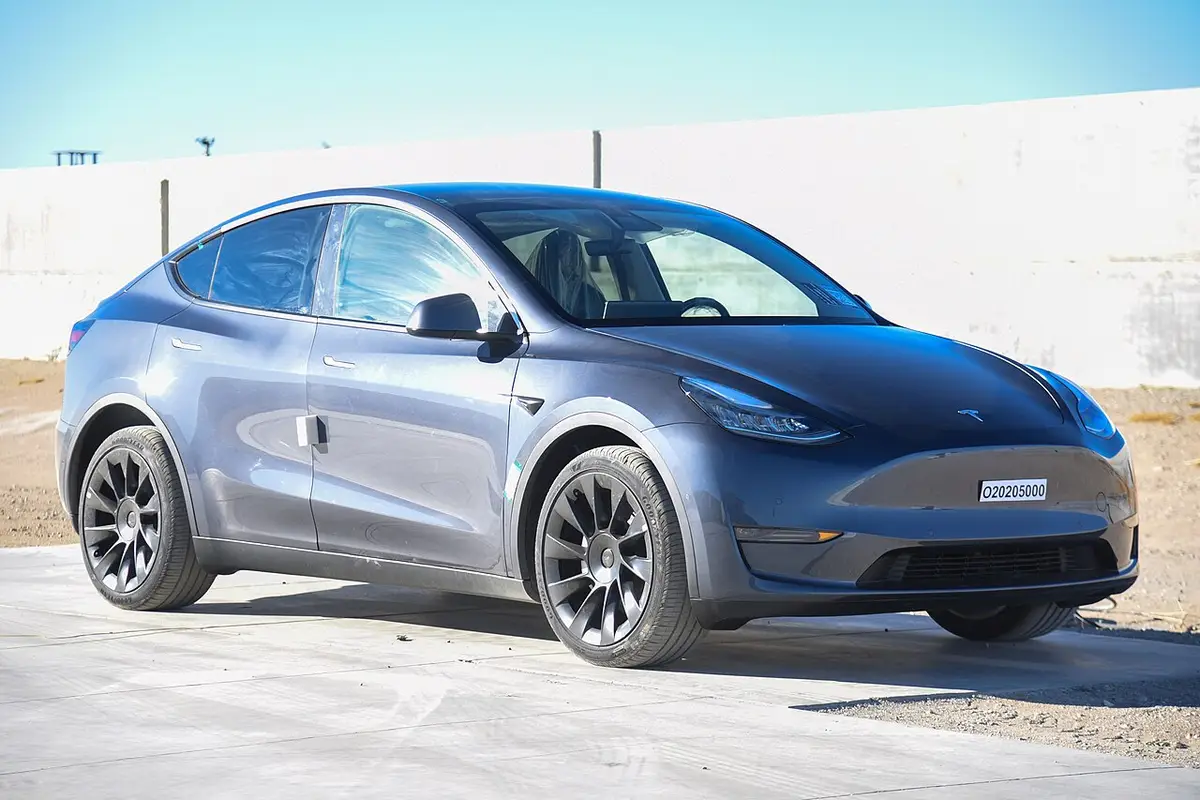
The 2021 Tesla Model Y has 1,079 owner complaints on file with NHTSA, 5.0 times the median of 216 for 2021 SUVs on this site. Of the 7 Model Y model years since 2020, it has the 2nd most complaints. Complaint counts rise with sales as well as faults, so read what owners report below before deciding.
At a glance
Next to the 2020 and 2022
At 180 complaints for each year on the road, the 2021 runs 4.5 times the 2020 (40) and close to the 2022 (173).
Top problem
Two problems run close. Driver assist has 363 complaints and phantom braking has 330, out of 1,079 in all. Driver assist tends to show up early. Of the 28 owners who gave a mileage for it, half were under about 10,000 miles and a quarter under about 4,000.
Crash, fire and injury reports
95 of the 1,079 complaints (9%) report a crash, a fire or an injury, a little above the 6% typical of vehicles on this site. Counted separately (one report can carry more than one), 87 reports mention a crash, 6 mention a fire and 25 people were hurt. The reports record 4 deaths.
Recalls behind the top problems
Phantom braking and brake wear each have a recall on the same system (21V-846, 22V-317 and 24V-153; 21V-387). Driver assist has none. A recall on the same system doesn't always cover the failure owners describe, so compare its summary with the complaints.
When owners filed
Filings jumped in 2022, with 488 complaints, 2.9 times the next busiest year. So far in 2026, 100 more have come in.
When each problem shows up
Each bar covers the middle half of the mileages owners reported for that problem. A quarter saw it earlier, a quarter later. The tick is the median. Most reported: adaptive cruise or lane keeping misbehaves, 363 complaints.
middle half of reports, median tick. The heavier grey bars have 75 or more reports.
Behind you
Around your mileage
Ahead of you
How this compares
2021 Tesla Model Y1,079
Median 2021 model here (80 vehicles)190
Median 2021 SUV here (50)216
1,079 complaints is 5.7 times the median 2021 model on this site and 5.0 times the median 2021 SUV. Among the 7 Model Y model years here it ranks 2nd for complaints. Counts follow sales volume as much as reliability, so a truck that sells 700,000 a year draws more reports than a sedan that sells 200,000.
Service bulletins for the 2021 Tesla Model Y
Tesla filed 95 bulletins and other notices with NHTSA that list the 2021 Tesla Model Y. 3 of them deal with a problem owners have reported on this car. Newest first.
Federal rules make a manufacturer send NHTSA a copy of any notice about a defect that goes to more than one dealer or owner. Most of these are service bulletins, the repair instructions manufacturers send to dealers. NHTSA generally leaves safety recall bulletins out of this file, and recalls are listed separately.
On certain Model S, Model X and Model Y vehicles, the interior camera requires replacement to mitigate reduced driver attentiveness detection performance in low-light conditions.
Over-the-air update2024.26.9_s3xy.pdfSep 30, 2024
Tesla does not provide physical owner's manual copies. Instead, all available owner’s manual content is integrated into the vehicle software, and only the content relevant for a given vehicle, based on vehicle configuration and software version installed, is ...
A firmware diagnosis feature is being introduced on Model 3 and Model Y vehicles that monitors wheel alignment over time.
Complaints filed by year
488 complaints came in 2022, 3.7 times the year before. Owners file in waves when a problem gets press or an investigation, so a spike measures attention as much as failures.
The Office of Defects Investigation (ODI) has received 156 complaints alleging a suspension failure in model year (MY) 2018-2020 Model 3 and MY 2021-2023 Model Y vehicles. The suspension failure involves the detachment of the front lower lateral link, which potentially causes a loss of vehicle directional control. In most cases, there was no advance warning or indication that the suspension failure would occur. Some cases cite noises occurring prior to failure, but note that the vehicle provides no visual warnings. Once the failure occurs, the vehicle may not be drivable, thus requiring a tow. Tesla has previously recalled vehicles for lateral link detachments through two recalls. Recall 21V-835 addressed 2,791 MY2019-2021 Tesla Model 3 vehicles due to a production issue. Recall 23V-235 addressed 422 2018-2019 Tesla Model 3 vehicles that had experienced similar failures to those recalled under 21V-835. The subject failures for this investigation exceed the scope of these recalls and do not appear to be related to the production issue that prompted those recalls. ODI is opening this Preliminary Evaluation to determine the underlying cause, scope, and severity of the potential problem and to fully assess the potential safety-related issues. To review the ODI reports cited in the Opening Resume ODI Report Identification Number document, go to NHTSA.gov.
Fsd collisions in reduced roadway visibility conditions. Open.
NHTSA summary
The Office of Defects Investigation (ODI) is opening this Engineering Analysis to evaluate Teslaâs Full Self Driving Beta and Full Self Driving (Supervised) (collectively, FSD) degradation detection system. The focus of this investigation will be to assess the systemâs ability, when encountering reduced roadway visibility conditions, to detect degradation and alert the driver with sufficient time to respond. ODI will evaluate the performance of FSD in degraded roadway conditions and the updates or modifications by Tesla to the degradation detection system, including the timing, purpose, and capabilities of the updates, and Teslaâs assessment of their safety impact. Teslaâs FSD is an advanced driver assistance system (ADAS) that relies exclusively on vision-based cameras and the related FSD software to detect and respond to the roadway ahead, projecting a path forward based on traffic control devices, vehicles, pedestrians, and the roadway itself. When Tesla began transitioning away from using both cameras and radars to an exclusively camera-based approach, known as Tesla Vision, in mid-2021, it developed and implemented a degradation detection system that it deployed by a software update to existing and new Tesla vehicles. On June 28, 2024, the day after Tesla submitted the SGO report of the November 28, 2023 fatal crash listed in this document, Tesla began developing an update to the degradation detection system. At this time, ODI does not have information on when th
Traffic safety violations while full self driving ("fsd") is engaged. Open.
NHTSA summary
The Office of Defects Investigation (“ODI”) is opening this Preliminary Evaluation (PE) to assess the scope, frequency, and potential safety consequences of FSD executing driving maneuvers that constitute traffic safety violations. This investigation concerns versions of FSD that Tesla has labeled as "FSD (Supervised)" and "FSD (Beta)." Tesla characterizes FSD as an SAE Level 2 partial automation system requiring a fully attentive driver who is engaged in the driving task at all times. Level 2 partial automation systems are designed to support and assist the driver in performing certain aspects of the driving task, requiring a driver to supervise and intervene as necessary. The driver remains fully responsible at all times for driving the vehicle, including complying with applicable traffic laws. ODI’s investigation will therefore focus, in particular, on whether certain driving inputs within the control authority of FSD forestall the driver’s supervision when they are unexpectedly performed. ODI has identified a number of incidents in which the inputs to the dynamic driving task commanded by FSD induced vehicle behavior that violated traffic safety laws. Although reports of this nature span a variety of behaviors, the reports appear to most commonly involve two types of scenarios. The first type of scenario involves a vehicle operating with FSD proceeding into an intersection in violation of a red traffic signal. The second type of scenario involves FSD commandin
The Office of Defects Investigation (ODI) has received nine Vehicle Owners Questionnaires (VOQs) reporting an inability to open doors on Model Year (MY) 2021 Tesla Model Y vehicles. The most commonly reported scenarios involved parents exiting the vehicle after a drive cycle in order to remove a child from the back seat or placing a child in the back seat before starting a drive cycle. In those events, the parents were unable to reopen a door to regain access to the vehicle. Four of these VOQs reported resorting to breaking a window to regain entry into the vehicle. Although Tesla vehicles have manual door releases inside of the cabin, in these situations, a child may not be able to access or operate the releases even if the vehicle’s driver is aware of them. As a result, in these instances, an occupant who remains inside a vehicle in this condition may be unable to be rapidly retrieved by persons outside of the vehicle. Entrapment in a vehicle is particularly concerning in emergency situations, such as when children are entrapped in a hot vehicle. For awareness, NHTSA has a Child Heatstroke Campaign that highlights the dangers to children entrapped in hot vehicles. Based on ODI’s preliminary review, this condition appears to occur when the electronic door locks receive insufficient voltage from the vehicle. Available repair invoices report replacement of the vehicle’s low voltage battery after the incident. However, no VOQs reported seeing a low voltage battery warnin
Compliance with standing general order 2021-01 reporting requirements. Open.
NHTSA summary
The Office of Defects Investigation (âODIâ) has identified numerous incident reports submitted by Tesla, Inc. (âTeslaâ) in response to Standing General Order 2021-01 (the âSGOâ), in which the reported crashes occurred several months or more before the dates of the reports. The majority of these reports involved crashes in which the Standing General Order in place at the time required a report to be submitted within one or five days of Tesla receiving notice of the crash. When the reports were submitted, Tesla submitted them in one of two ways. Many of the reports were submitted as part of a single batch, while others were submitted on a rolling basis. Preliminary engagement between ODI and Tesla on the issue indicates that the timing of the reports was due to an issue with Teslaâs data collection, which, according to Tesla, has now been fixed. NHTSA is opening this Audit Query, a standard process for reviewing compliance with legal requirements, to evaluate the cause of the potential delays in reporting, the scope of any such delays, and the mitigations that Tesla has developed to address them. As part of this review, NHTSA will assess whether any reports of prior incidents remain outstanding and whether the reports that were submitted include all of the required and available data. The SGO reports cited in the Opening Resume, can be found at NHTSA.gov/SGOCrashReporting under the following SGO 2021-01 report IDs: 13781-11020-1 13781-10844-1 13781-10843-1 13781-1
On January 6, 2025, the Office of Defects Investigations (ODI) opened Preliminary Evaluation 24003 (PE24033) to investigate Actually Smart Summon (Summon) sessions resulting in crashes during active sessions. According to Tesla, Summon is a short-distance SAE Level 2 system, controlled by the user from a cell phone within a certain distance and intended for use in parking lots and on private property. ODI analyzed complaint data provided by Tesla as well as complaints submitted to ODI from consumers to identify Summon incidents resulting in crashes. ODI's analysis indicates that almost all Summon reported crashes involved minor property damage claims with no reported incidents involving a vulnerable road user, injury, fatality, or major property damage as indicated by an air bag deployment or vehicle tow away. Out of millions of Summon sessions, a fraction of 1% resulted in an incident. Almost all those incidents took place where, typically early in a Summon session, the system or person using the app failed to fully detect or respond appropriately to vehicle surroundings resulting in minor impacts. Incidents took place when app users did not have a complete 360-degree view of the surroundings in the app to assess situational awareness. This limited the app userâs ability to determine whether an impact was imminent during initial vehicle maneuvers such as reversing in close proximity to an obstacle or a curb. ODI found that the impacts most often occurred with parking gates
Fsd collisions in reduced roadway visibility conditions. Closed mar 18, 2026.
NHTSA summary
On October 17, 2024, NHTSAâs Office of Defects Investigation (ODI) opened a Preliminary Evaluation (PE24031) of Teslaâs Full Self Driving Beta and Full Self Driving (Supervised) (collectively, FSD) to assess: the ability of the FSD system to detect and respond appropriately to reduced roadway visibility conditions; whether any other FSD crashes had occurred under degraded roadway visibility conditions that are similar in nature to the four SGO-reported crashes identified in the opening document, and if so, the contributing circumstances for each of those crashes; and any updates or modifications by Tesla to the FSD system that may affect the performance of FSD in degraded roadway visibility conditions, including the timing, purpose, and capabilities of any such updates, and Teslaâs assessment of their safety impact. Teslaâs FSD is an advanced driver assistance system (ADAS) that relies exclusively on vision-based cameras and the related FSD software to detect and respond to the roadway ahead, projecting a path forward based on traffic control devices, vehicles, pedestrians, and the roadway itself. During this phase of the investigation, ODI reviewed the materials provided by Tesla detailing any actions taken, or changes, modifications, and updates made that may relate to the alleged defect. ODI reviewed information related to Teslaâs transition to a vision-only perception system, and its deployment of the strategy in vehicles. ODIâs findings include information on
The Office of Defects Investigation (ODI) is opening a Recall Query to assess the remedy adequacy of Recall 23V838. On December 12, 2023, Tesla filed a Defect Information Report (Recall 23V838) applicable to all Tesla models produced and equipped with any version of its Autopilot system, which Tesla described as an SAE Level 2 (L2) Advanced Driver Assistance System (ADAS). Autopilot is the simultaneous engagement of Teslaâs Traffic-Aware Cruise Control (TACC) and Autosteer. In describing the safety defect, Teslaâs Defect Information Report (DIR) explained that âthe prominence and scope of the systemâs controls may be insufficient to prevent driver misuse,â and Tesla committed to the deployment of a multipart remedy aimed at improving system and engagement controls and reducing mode confusion. EA22002 (upgraded from PE21020) was opened to investigate whether Teslaâs Autopilot contained a defect that created an unreasonable risk to motor vehicle safety and involved extensive crash analysis, human factors analysis, vehicle evaluations, and assessment of vehicle control authority and driver engagement technologies. The work conducted in these investigations aligns with Teslaâs conclusion in its 23V838 recall filing. During EA22002, ODI identified at least 13 crashes involving one or more fatalities and many more involving serious injuries in which foreseeable driver misuse of the system played an apparent role. Tesla filed Recall 23V838 to address concerns regarding
The Office of Defects Investigation (ODI) received a petition requesting that ODI reevaluate its decision to deny DP20-001 on the basis that intermittent high electrical current demands on the vehicles' 12VDC systems may have caused some or all of the incidents examined by ODI in DP20-001. The petitioner bases this information on a review of open-source research and the DP20-001 denial. The petition and related materials can be reviewed at NHTSA.gov under the following ODI number: 11528471.
Defect petition interlock request. Closed mar 18, 2026.
NHTSA summary
On March 21, 2023, the Office of Defects Investigation (ODI) received a petition requesting a ârecall of all Tesla carsâ produced from 2013 to the date on which the petition was filed due to what Petitioner considers to be the increased likelihood of pedal misapplication. Attached to the Petition is a paper authored by Petitioner. According to Petitioner, the differences in the operator controls between the subject Tesla vehicles and internal combustion engine powered vehicles promote driver pedal misapplication, leading to sudden unintended acceleration (SUA) incidents. To fix this alleged defect, Petitioner argues that the subject vehicles should be equipped with measures that require: (i) occasional removal of the driverâs foot from the pedals; and (ii) application of the brake pedal before fully stopping the vehicle. ODI evaluated the allegations by, among other things, reviewing the Petition and supporting technical paper, and analyzing Teslaâs response to ODIâs Information Request. ODI is denying this Petition. ODI has not found evidence that warrants the opening of a safety defect investigation into the Tesla vehicles as described in the Petition. The use of regenerative braking controlled by the accelerator pedal, or one-pedal driving, is common across most light vehicle manufacturers of electric vehicles and Tesla vehicles are not unique in this respect. Further, ODI identified only a handful of collisions potentially within the scope of the alleged defect;
Pedestrian alert sounds. Closed aug 7, 2023, led to recall 22V-063.
NHTSA summary
NHTSA received a petition on or about July 18, 2022, requesting that Federal Motor Vehicle Safety Standard (FMVSS) 141 be applied to all electric and hybrid vehicles operating in the United States. The petition can be reviewed at NHTSA.gov under ODI Number 11486072. FMVSS 141 establishes performance requirements for pedestrian alert sounds for motor vehicles. The standard applies to hybrid and electric vehicles that have a gross vehicle weight rating of 4,536 KG or less or are defined as low-speed vehicles. The standard became fully applicable to all such vehicles manufactured on or after March 1, 2021.On January 27, 2023, NHTSA opened Defect Petition (DP) 22-005 to evaluate the subject matter described in the petition. On June 24, 2023 and as supplemented on June 25, 2023, the petitioner notified NHTSA he was withdrawing his petition. The petitioner indicated that, based on his review of data, there is no justification for asserting potential benefits that could be derived from actions sought by my petition. Based on the petitioner's withdrawal, DP22-005 is closed. Closure of this DP does not represent a determination by NHTSA regarding the subject matter of the petition.
Autopilot system driver controls. Closed apr 25, 2024, led to recall 23V-085.
NHTSA summary
The Office of Defects Investigation (ODI) upgraded PE21020 to EA22002 on June 8, 2022, to extend work and deepen the PE21020 crash analysis, to supplement that analysis with additional data, and to perform vehicle evaluations to understand how Teslaâs Autopilot system may exacerbate human factors or behavioral safety risks by undermining the effectiveness of the driverâs supervision. To support this work, ODI collected additional crash information and assessed vehicle control authority, driver engagement technologies, and related human factors considerations associated with partial automation via analysis of peer vehicle data and hands-on vehicle evaluation, assessments from NHTSA human factors subject matter experts, and reviews of related publications dedicated to partial driving automation. Autopilot is the simultaneous use of the features that Tesla calls Traffic-Aware Cruise Control (TACC) and Autosteer. TACC is a type of adaptive cruise control that, like traditional cruise control, maintains a set speed but also slows or accelerates as necessary to maintain the vehicleâs following distance from a vehicle in front. As designed, Autosteer detects lane markings and the presence of other nearby vehicles and objects to keep the vehicle in its driving lane. Autopilot is characterized by Tesla as an SAE Level 2 (âL2 systemâ) partial driving automation system that provides driver assistance through steering, propulsion, and braking within a specified driving environm
On February 16, 2022, the Office of Defects Investigation (ODI) opened a Preliminary Evaluation (PE22002) to investigate reports of unexpected deceleration while driving with the adaptive cruise control system engaged in Model Year (MY) 2021 â 2022 Model 3 and Model Y vehicles manufactured by Tesla. The subject systems include Autopilot (all versions), Full Self-Driving (FSD) and Traffic Aware Cruise Control (TACC). These complaints have been colloquially referred to as âphantom brakingâ. ODI opened PE22002 to determine the scope and severity of the potential problem and to assess any resulting safety issues in the subject vehicles. The alleged defect is an unexpected and unrequested vehicle deceleration triggered by the subject system during subject system engagement. The alleged defect does not occur when the subject system is not in use and is separate and distinct from Automated Emergency Braking (AEB). During vehicle operation, AEB is actively monitoring in the subject vehicles regardless of subject system and its intervention is accompanied by audible and visual collision warnings. A Vehicle Owners Questionnaire (VOQ) trend originating in November 2021 prompted ODI to open PE22002. VOQ narratives reported unexpected brake activation while using TACC, Autopilot or FSD. The trend grew from 99 by the end of 2021 to 314 by February 16, 2022, when PE22002 was opened. ODI sent Information Request (IR) Letters to Tesla on May 4, 2022, and July 11, 2024, to request salien
The Office of Defects Investigation (ODI) opened Preliminary Evaluation (PE21-023) on December 21, 2021, to evaluate the driver distraction potential and use frequency / circumstances of in-vehicle game-play functionality referred to as ?Passenger Play? in certain model year (MY) 2017-2022 Tesla Model 3, S, X, and Y vehicles. Distracted driving can result in an increased risk of a crash. PE21-023 was prompted by the receipt of Vehicle Owners Questionnaire (VOQ) 11439598 from the owner of a 2021 Model 3 on November 6, 2021. ODI sent an Information Request (IR) letter to Tesla on January 20, 2022 and received Tesla?s response on March 4, 2022.On December 24, 2020, Tesla introduced Passenger Play to vehicles equipped with the Intel Atom processor (receiving an aftersale software update) via its 2020 holiday release. Passenger Play permitted occupants to play specific games selected by Tesla for primarily turn-based play style and limited gameplay motion with the transmission in Drive and the vehicle in motion. Under these conditions, a notification would display on the screen and the screen area devoted to the game would reduce from 100% to accommodate vehicle controls and driving task data readout. Specific changes varied among models. On December 21, 2022, Tesla voluntarily disabled Passenger Play capability with Firmware Release 2021.44.25.1 in response to NHTSA?s request. Tesla reported a month later that a 97% completion rate was achieved though Tesla?s Over the Air (OTA) u
Autopilot & first responder scenes. Closed jun 8, 2022.
NHTSA summary
On August 13, 2021, NHTSA?s Office of Defects Investigation (ODI) opened a Preliminary Evaluation (PE21-020) to assess the performance of Tesla?s Autopilot system (a system characterized by Tesla as an SAE Level 2 driving automation system designed to support and assist the driver in performing the driving task) available in Tesla vehicles. The investigation opening was motivated by an accumulation of crashes in which Tesla vehicles, operating with Autopilot engaged, struck stationary in-road or roadside first responder vehicles tending to pre-existing collision scenes. Upon opening the investigation, NHTSA indicated that the PE would also evaluate additional similar circumstance crashes of Tesla vehicles operating with Autopilot engaged, as well as assess the technologies and methods used to monitor, assist, and enforce the driver?s engagement with the dynamic driving task during Autopilot operation.PE21-020 is upgraded to an Engineering Analysis (EA) to extend the existing crash analysis, evaluate additional data sets, perform vehicle evaluations, and to explore the degree to which Autopilot and associated Tesla systems may exacerbate human factors or behavioral safety risks by undermining the effectiveness of the driver?s supervision. In doing so, NHTSA plans to continue its assessment of vehicle control authority, driver engagement technologies, and related human factors considerations.The attached Detailed Summary further describes NHTSA?s review to date and the basis fo
Tesla, Inc. (Tesla) is recalling certain 2017-2023 Model 3 and 2020-2023 Model Y vehicles. The headlight low beams may be too bright and exceed the maximum light output. As such, these vehicles fail to comply with the requirements of Federal Motor Vehicle Safety Standard (FMVSS) number 108, "Lamps, Reflective Devices, and Associated Equipment."
Risk and remedy
Risk: Headlight low beams that are too bright can reduce visibility for oncoming drivers, increasing the risk of a crash. Remedy: The remedy is currently under development. Owner notification letters are expected to be mailed October 3, 2026. Owners may contact Tesla customer service at 1-877-798-3752. Tesla's number for this recall is SB-24-17-003.
26V-283May 5, 2026
Back Over Prevention:Software
Tesla, Inc. (Tesla) is recalling certain 2017, 2021-2023 Model 3, 2020-2023 Model Y, 2021-2023 Model S, and Model X vehicles operating software version 2026.8.6. The rearview camera image may be delayed when the vehicle is placed in reverse. As such, these vehicles fail to comply with the requirements of Federal Motor Vehicle Safety Standard number 111, "Rear Visibility."
Risk and remedy
Risk: A delayed rearview image reduces the driver's view behind the vehicle, increasing the risk of a crash. Remedy: Tesla has released an over-the-air (OTA) software update, free of charge. Owner notification letters were mailed July 3, 2026. Owners may contact Tesla customer service at 1-877-798-3752. Tesla's number for this recall is SB-26-00-001.
24V-935Dec 17, 2024
Tires:Pressure Monitoring And Regulating Systems
Tesla, Inc. (Tesla) is recalling certain 2024 Cybertruck, 2017-2025 Model 3, and 2020-2025 Model Y vehicles. The tire pressure monitoring system (TPMS) warning light may not remain illuminated between drive cycles, failing to warn the driver of low tire pressure. As such, these vehicles fail to comply with the requirements of Federal Motor Vehicle Safety Standard number 138, "Tire Pressure Monitoring Systems."
Risk and remedy
Risk: Driving with improperly inflated tires increases the risk of a crash. Remedy: Tesla released an over-the-air (OTA) software update, free of charge. Owner notification letters were mailed February 15, 2025. Owners may contact Tesla customer service at 1-877-798-3752. Tesla's number for this recall is SB-24-00-018.
24V-554Jul 24, 2024
Latches/Locks/Linkages:Hood:Latch
Tesla, Inc. (Tesla) is recalling certain 2021-2024 Model 3, Model S, Model X, and 2020-2024 Model Y vehicles. The hood latch assembly may fail to detect an unlatched hood condition after the hood has been opened.
Risk and remedy
Risk: An unlatched hood can fully open, obstructing the driver's view and increasing the risk of a crash. Remedy: Tesla has released an over-the-air (OTA) software update, free of charge. Owner notification letters were mailed September 24, 2024. Owners may contact Tesla customer service at 1-877-798-3752. Tesla's number for this recall is SB-24-00-012.
24V-376May 28, 2024
Seat Belts:Front:Warning Light/Devices
Tesla, Inc. (Tesla) is recalling certain 2012-2024 Model S, 2015-2024 Model X, 2017-2023 Model 3, and 2020-2023 Model Y vehicles. In the event of an unbelted driver, the seat belt warning light and audible chime may not activate as intended. As such, these vehicles fail to comply with the requirements of Federal Motor Vehicle Safety Standard number 208, "Occupant Crash Protection."
Risk and remedy
Risk: A seat belt warning system that fails to alert occupants of an unbelted seat belt can increase the risk of injury during a crash. Remedy: Tesla will release an over-the-air (OTA) software update. Owner notification letters were mailed July 26, 2024. Owners may contact Tesla customer service at 1-877-798-3752. Tesla's number for this recall is SB-24-00-008.
Tesla, Inc. (Tesla) is recalling certain 2013, 2018-2021 Model S, 2020-2021 Model X, 2018-2022 Model 3, and 2020-2022 Model Y vehicles. A factory reset muted the Pedestrian Warning System (PWS) sounds. As such, these vehicles fail to comply with the requirements of Federal Motor Vehicle Safety Standard number 141, "Minimum Sound Requirements for Hybrid and Electric Vehicles."
Risk and remedy
Risk: Pedestrians may be unaware of an approaching vehicle if the PWS sounds are muted, increasing the risk of a crash. Remedy: Tesla released an over-the-air (OTA) software update, release 2023.44.30.14, free of charge. Owner notification letters were mailed April 27, 2024. Owners may contact Tesla customer service at 1-877-798-3752. Tesla's number for this recall is SB-24-00-006.
24V-051Jan 30, 2024
Electrical System: Instrument Cluster/Panel
Tesla, Inc. (Tesla) is recalling certain 2012-2023 Model S, 2016-2024 Model X, 2017-2023 Model 3, 2019-2024 Model Y, and 2024 Cybertruck vehicles. An incorrect font size is displayed on the instrument panel for the Brake, Park, and Antilock Brake System (ABS) warning lights. As such, these vehicles fail to comply with the requirements of Federal Motor Vehicle Safety Standard number 105, "Hydraulic and Electric Brake Systems" and 135, "Light Vehicle Brake Systems."
Risk and remedy
Risk: Warning lights with a smaller font size can make critical safety information on the instrument panel difficult to read, increasing the risk of a crash. Remedy: Tesla began releasing an over-the-air (OTA) software update, free of charge. Owners may contact Tesla customer service at 1-877-798-3752. Tesla's number for this recall is SB-24-00-003.
Tesla, Inc. (Tesla) is recalling 2012-2023 Model S, 2016-2023 Model X, 2017-2023 Model 3, and 2020-2023 Model Y vehicles equipped with all versions of Autosteer leading up to the version(s) that contains the recall remedy. In certain circumstances when Autosteer is engaged, the prominence and scope of the feature's controls may not be sufficient to prevent driver misuse of the SAE Level 2 advanced driver-assistance feature.
Risk and remedy
Risk: In certain circumstances when Autosteer is engaged, and the driver does not maintain responsibility for vehicle operation and is unprepared to intervene as necessary or fails to recognize when Autosteer is canceled or not engaged, there may be an increased risk of a crash. Remedy: Tesla will release an over-the-air (OTA) software update, free of charge. Owner notification letters were mailed February 10, 2024. Owners may contact Tesla customer service at 1-877-798-3752. Tesla's number for this recall is SB-23-00-008.
23V-085Feb 15, 2023
Steering:Automated/Adaptive Steering
Tesla, Inc. (Tesla) is recalling certain 2016-2023 Model S, Model X, 2017-2023 Model 3, and 2020-2023 Model Y vehicles equipped with Full Self-Driving Beta (FSD Beta) software or pending installation. The FSD Beta system may allow the vehicle to act unsafe around intersections, such as traveling straight through an intersection while in a turn-only lane, entering a stop sign-controlled intersection without coming to a complete stop, or proceeding into an intersection during a steady yellow traffic signal without due caution. In addition, the system may respond insufficiently to changes in posted speed limits or not adequately account for the driver's adjustment of the vehicle's speed to exceed posted speed limits.
Risk and remedy
Risk: FSD Beta software that allows a vehicle to exceed speed limits or travel through intersections in an unlawful or unpredictable manner increases the risk of a crash. Remedy: Tesla will release an over-the-air (OTA) software update, free of charge. Owner notification letters were mailed April 15, 2023. Owners may contact Tesla customer service at 1-877-798-3752. Tesla's number for this recall is SB-23-00-001.
22V-844Nov 15, 2022
Exterior Lighting:Tail Lights
Tesla, Inc. (Tesla) is recalling certain 2023 Model 3 and 2020-2023 Model Y vehicles. One or both taillights may intermittently fail to illuminate.
Risk and remedy
Risk: A taillight that fails to illuminate may reduce the visibility of the vehicle, increasing the risk of a crash. Remedy: Tesla has released an over-the-air (OTA) software update, free of charge. Owner notification letters were mailed January 14, 2023. Owners may contact Tesla customer service at 1-877-798-3752. Tesla's number for this recall is SB-22-00-016.
22V-702Sep 19, 2022
Visibility:Power Window Devices And Controls
Tesla, Inc. (Tesla) is recalling certain 2017-2022 Model 3, 2020-2022 Model Y, and 2021-2022 Model S and Model X vehicles. The window automatic reversal system may not react correctly after detecting an obstruction. As such, these vehicles fail to comply with the requirements of Federal Motor Vehicle Safety Standard number 118, "Power-Operated Window Systems."
Risk and remedy
Risk: A closing window may exert excessive force by pinching a driver or passenger before retracting, increasing the risk of injury. Remedy: Tesla will perform an over-the-air (OTA) software update of the automatic window reversal system, free of charge. Owner notification letters were mailed March 31, 2032. Owners may contact Tesla customer service at 1-877-798-3752. Tesla's number for this recall is SB-22-00-013.
Tesla, Inc. (Tesla) is recalling certain 2020-2021 Model 3 and 2021 Model Y vehicles. The fisheye and narrow camera cable terminals were incorrectly installed in the cable harness connector, resulting in swapped camera views.
Risk and remedy
Risk: Swapped camera views can prevent the vehicle's cameras from detecting crossing objects and high-curvature lane lines, impairing the Autosteer and Automatic Emergency Braking (AEB) performance, and increasing the risk of a crash. Remedy: Tesla Service will correct the swapped terminals and recalibrate the cameras, free of charge. Owner notification letters were mailed July 8, 2022. Owners may contact Tesla customer service at 1-877-798-3752. Tesla's number for this recall is SB-22-17-007.
22V-235Apr 12, 2022
Electrical System:Software
Tesla, Inc. (Tesla) is recalling certain 2020-2022 Model Y, Model X, Model S, and 2017-2022 Model 3 vehicles. The Boombox function allows sounds to be played through an external speaker while the vehicle is in motion, which may obscure the Pedestrian Warning System (PWS) sounds. As such, these vehicles fail to comply with the requirements of Federal Motor Vehicle Safety Standard number 141, "Minimum Sound Requirements for Hybrid and Electric Vehicles."
Risk and remedy
Risk: Pedestrians may be unaware of an approaching vehicle if the PWS sounds are obscured, increasing the risk of a crash. Remedy: Tesla will perform an over-the-air (OTA) software update that will disable the Boombox functionality when the vehicle is in Drive, Neutral and Reverse modes, including Summon and Smart Summon, free of charge. Owner notification letters were mailed June 6, 2022. Owners may contact Tesla customer service at 1-877-798-3752. Tesla's number for this recall is SB-22-00-003. Note: This recall supersedes recall 22V-063. Vehicles configured with Summon or Smart Summon and already remedied under 22V-063 will need to have the new remedy software installed.
22V-063Feb 4, 2022
Electrical System:Software
Tesla, Inc. (Tesla) is recalling certain 2020-2022 Model S, Model X, Model Y, and 2017-2022 Model 3 vehicles. The Boombox function allows sounds to be played through an external speaker while the vehicle is in motion, which may obscure the Pedestrian Warning System (PWS) sounds. As such, these vehicles fail to comply with the requirements of Federal Motor Vehicle Safety Standard number 141, "Minimum Sound Requirements for Hybrid and Electric Vehicles."
Risk and remedy
Risk: Pedestrians may be unaware of an approaching vehicle if the PWS sounds are obscured, increasing the risk of a crash. Remedy: Tesla will perform an over-the-air (OTA) software update that will disable the Boombox functionality when the vehicle is in Drive, Neutral and Reverse modes, free of charge. Owner notification letters are expected to be mailed April 5, 2022. Owners may contact Tesla customer service at 1-877-798-3752. Tesla's number for this recall is SB-22-00-003. Note: This recall has been superseded by Recall 22V-235. Tesla's number for the new recall is SB-22-00-003.
22V-050Feb 2, 2022
Electrical System:Software
Tesla, Inc. (Tesla) is recalling certain 2021-2022 Model 3, Model S, Model X, and 2020-2022 Model Y vehicles. A software error may cause a valve in the heat pump to open unintentionally and trap the refrigerant inside the evaporator, resulting in decreased defrosting performance. As such, these vehicles fail to comply with the requirements of Federal Motor Vehicle Safety Standard number 103, "Windshield Defrosting and Defogging Systems."
Risk and remedy
Risk: Decreased defrosting performance may reduce the driver's visibility, increasing the risk of a crash. Remedy: Tesla will perform an over-the-air (OTA) software update, free of charge. Owner notification letters were mailed April 1, 2022. Owners may contact Tesla customer service at 1-877-798-3752. Tesla's number for this recall is SB-22-18-002.
22V-045Feb 1, 2022
Electrical System:Software
Tesla, Inc. (Tesla) is recalling certain 2021-2022 Model S and Model X, 2017-2022 Model 3, and 2020-2022 Model Y vehicles. The audible chime may not activate when the vehicle starts and the driver has not buckled their seat belt. As such, these vehicles fail to comply with the requirements of Federal Motor Vehicle Safety Standard number 208, "Occupant Crash Protection."
Risk and remedy
Risk: The driver may be unaware that their seat belt is not fastened, increasing the risk of injury during a crash. Remedy: Tesla will perform an over-the-air (OTA) software update, free of charge. Owner notification letters were mailed April 1, 2022. Owners may contact Tesla customer service at 1-877-798-3752. Tesla's number for this recall is SB-22-00-002.
Tesla, Inc. (Tesla) is recalling certain 2016-2022 Model S and Model X, 2017-2022 Model 3, and 2020-2022 Model Y vehicles. The "rolling stop" functionality available as part of the Full Self-Driving (Beta) software may allow the vehicle to travel through an all-way stop intersection without first coming to a stop.
Risk and remedy
Risk: Failing to stop at a stop sign can increase the risk of a crash. Remedy: Tesla will perform an over-the-air (OTA) software update that disables the "rolling stop" functionality, free of charge. Owner notification letters were mailed March 28, 2022. Owners may contact Tesla customer service at 1-877-798-3752. Tesla's number for this recall is SB-22-00-001.
21V-912Nov 21, 2021
Suspension
Tesla, Inc. (Tesla) is recalling certain 2020-2022 Model Y vehicles. The front and rear suspension knuckles may fracture, causing the suspension links to separate.
Risk and remedy
Risk: Suspension links that separate can reduce vehicle stability and control, increasing the risk of a crash. Remedy: Tesla Service will inspect and replace the knuckles as necessary, free of charge. Owner notification letters were mailed January 18, 2022. Owners may contact Tesla customer service at 1-877-798-3752. Tesla's number for this recall is SB-21-31-004.
21V-846Oct 29, 2021
Forward Collision Avoidance: Sensing System: Camera
Tesla, Inc. (Tesla) is recalling certain 2017-2021 Model S, Model 3, Model X, and 2020-2021 Model Y vehicles operating software version 2021.36.5.2. A communication error may cause false forward-collision warning (FCW) or unexpected activation of the automatic emergency brake (AEB) system.
Risk and remedy
Risk: Unexpected activation of the AEB system may cause the car to stop suddenly, increasing the risk of a crash. Remedy: Tesla Service has released an over-the-air (OTA) software update, free of charge. The recall began October 25, 2021. Owners may contact Tesla customer service at 1-877-798-3752. Tesla's number for this recall is SB-21-00-004.
21V-835Oct 25, 2021
Suspension:Critical Fasteners
Tesla, Inc. (Tesla) is recalling certain 2020-2021 Model Y and 2019-2021 Model 3 vehicles. The front suspension lateral link fasteners may loosen, allowing the lateral link to separate from the sub-frame.
Risk and remedy
Risk: A lateral link separation could shift the wheel alignment, causing instability and increasing the risk of a crash. Remedy: Tesla Service will tighten or replace the lateral link fasteners as necessary, free of charge. Owner notification letters were mailed December 20, 2021. Owners may contact Tesla customer service at 1-877-798-3752. Tesla's number for this recall is SB-21-31-003.
21V-388May 25, 2021
Seat Belts:Rear/Other:Retractor
Tesla, Inc. (Tesla) is recalling certain 2019-2021 Model Y vehicles. One or both fasteners that secure the left and right second row seat belt retractors may not be properly attached.
Risk and remedy
Risk: Improperly attached fasteners may prevent the seat belt retention system from performing as designed, increasing the risk of injury. Remedy: Tesla Service will inspect and replace both fasteners if necessary, free of charge. Owner notification letters were mailed July 23, 2021. Owners may contact Tesla customer service online by visiting www.tesla.com/support/contact or by calling 1-877-79-TESLA (or 1-877-798-3752). Tesla's number for this recall is SB-21-20-002.
21V-389May 25, 2021
Seat Belts
Tesla, Inc. (Tesla) is recalling certain 2018-2020 Model 3 and 2019-2021 Model Y vehicles. One or both fasteners that secure the front seat shoulder belt to the b-pillar may not be properly attached.
Risk and remedy
Risk: An improperly attached fastener may prevent the seat belt system from performing as designed, increasing the risk of injury. Remedy: Tesla Service will inspect and repair both fasteners if necessary, free of charge. Owner notification letters were mailed July 23, 2021. Owners may contact Tesla customer service online by visiting www.tesla.com/support/contact or by calling 1-877-79-TESLA (or 1-877-798-3752). Tesla's number for this recall is SB-21-20-001.
21V-387May 25, 2021
Service Brakes, Hydraulic:Foundation Components:Disc:Caliper
Tesla, Inc. (Tesla) is recalling certain 2019-2021 Model 3 and 2020-2021 Model Y vehicles. The brake caliper bolts may be loose, allowing the brake caliper to separate and contact the wheel rim.
Risk and remedy
Risk: Contact with the rim may cause a loss of tire pressure, increasing the risk of a crash. Remedy: Tesla Service will inspect and tighten, or replace the caliper bolts as necessary, free of charge. Owner notification letters were mailed July 23, 2021. Owners may contact Tesla customer service online by visiting www.tesla.com/support/contact or by calling 1-877-79-TESLA (or 1-877-798-3752). Tesla's number for this recall is SB-21-33-002.
What is the most common problem on the 2021 Tesla Model Y?
Driver assist, with 363 of the 1,079 complaints. Owners who gave a mileage for it put the median at about 10,000 miles.
At what mileage do 2021 Tesla Model Y problems start?
Of the 139 complaints that give a mileage, a quarter came by about 4,000 miles and half by about 25,000.
Is the 2021 Tesla Model Y better or worse than the 2020 and 2022?
Counted per year on the road, the 2021 has more complaints than the 2020 and about as many complaints as the 2022: 180 a year against 40 and 173.
How many 2021 Tesla Model Y complaints involve a crash, fire or injury?
95 of them (9%). The typical vehicle on this site is at 6%.
Is there a recall for driver assist on the 2021 Tesla Model Y?
No recall on file for the 2021 Tesla Model Y is on the same system as driver assist. Another recall may still cover your car, so check its VIN at nhtsa.gov/recalls.