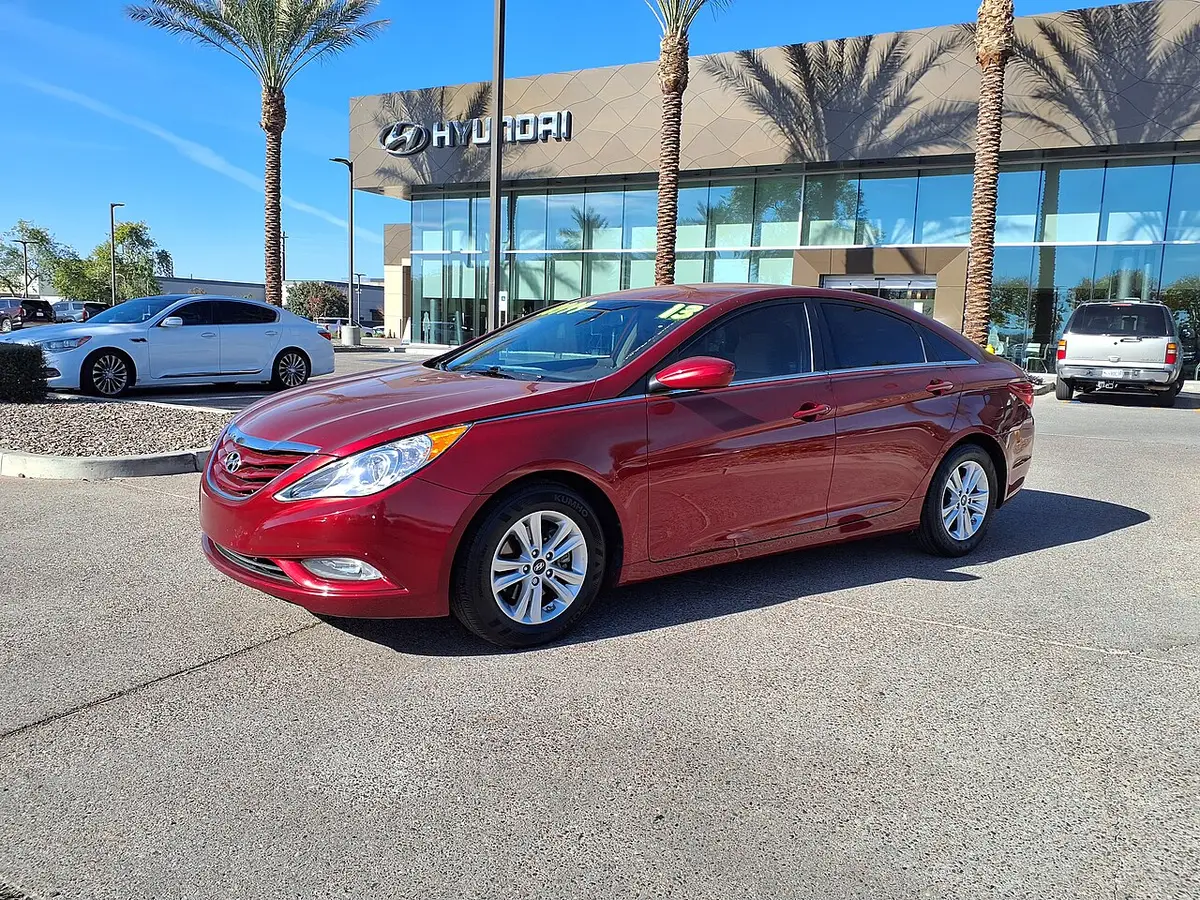
The 2014 Hyundai Sonata has 722 owner complaints on file with NHTSA, 2.3 times the median of 318 for 2014 sedans on this site. Of the 12 Sonata model years since 2014, it has the 4th most complaints. Complaint counts rise with sales as well as faults, so read what owners report below before deciding.
At a glance
Next to other model years
Complaints filed before 2015 aren't in the files this site reads, so the 2014 count runs short and isn't compared with the model years next to it.
Top problem
Two problems run close. Stalling has 141 complaints and engine failure has 136, out of 722 in all. A quarter of the 89 owners who gave a mileage for stalling saw it by about 64,000 miles, and half by about 85,000.
Crash, fire and injury reports
72 of the 722 complaints (10%) report a crash, a fire or an injury. The typical vehicle on this site sits at 6%, so this one runs well above it. Counted separately (one report can carry more than one), 26 reports mention a crash, 40 mention a fire and 31 people were hurt. The most crash reports, 11 of 26, fall under airbag.
Recalls behind the top problems
stalling, engine failure and misfire all have recalls on the same system, and the same campaigns cover them: 17V-226 and 18V-934. A recall on the same system doesn't always cover the failure owners describe, so compare its summary with the complaints.
When owners filed
Filings peaked in 2022 at 101 (full calendar years only). In 2025 there were 50. So far in 2026, 23 more have come in. Filings on record start in 2015.
When each problem shows up
Each bar covers the middle half of the mileages owners reported for that problem. A quarter saw it earlier, a quarter later. The tick is the median. Most reported: engine stalls or loses power while driving, 141 complaints.
Loses power when accelerating12 reports1 firerecall
middle half of reports, median tick. The heavier grey bars have 75 or more reports.
Behind you
Around your mileage
Ahead of you
How this compares
2014 Hyundai Sonata722
Median 2014 model here (95 vehicles)304
Median 2014 sedan here (35)318
722 complaints is 2.4 times the median 2014 model on this site and 2.3 times the median 2014 sedan. Among the 11 Sonata model years here it ranks 4th for complaints. Counts follow sales volume as much as reliability, so a truck that sells 700,000 a year draws more reports than a sedan that sells 200,000.
Service bulletins for the 2014 Hyundai Sonata
Hyundai filed 178 bulletins and other notices with NHTSA that list the 2014 Hyundai Sonata. 19 of them deal with a problem owners have reported on this car, 2 of those a warranty extension. Newest first.
Federal rules make a manufacturer send NHTSA a copy of any notice about a defect that goes to more than one dealer or owner. Most of these are service bulletins, the repair instructions manufacturers send to dealers. NHTSA generally leaves safety recall bulletins out of this file, and recalls are listed separately.
If you are servicing a vehicle with a transmission slipping concern, follow the Service Procedure shown below and perform a stall test. This TSB provides a procedure to test each clutch in the transmission.
Applicable vehicles with 2.0L T-GDI and 2.4L GDI engines may experience the Check Engine warning lamp illuminated with DTC P1326 and/or engine may exhibit Abnormal Noise or No Crank/No Start condition.
Service bulletin20-01-004H-3Dec 21, 2020
Applicable vehicles with 2.0L Turbo and 2.4L GDI engines may experience the Check Engine warning lamp illuminated with DTC P1326.
Hyundai has launched a Service Campaign for applicable vehicles with 2.0L Turbo and 2.4L GDI engines that may experience the Check Engine warning lamp illuminated with DTC P1326.
Service bulletin20-AT-008HFeb 20, 2020
If you are servicing an applicable vehicle with a âCheck Engineâ light on and one or more of the DTC listed below, follow the repair procedure and replace the related solenoid and oil pressure harness.
4 more on this problem
Service bulletin19-AT-024HNov 15, 2019
If you are servicing a vehicle with the DTC or symptoms listed below, refer to the Service Procedure to diagnose the condition.
Service bulletinDTC P1326 from 9Apr 22, 2019
Hyundai has launched a Service Campaign for applicable vehicles with 2.0L Turbo and 2.4L engines that may experience the Check Engine warning lamp illuminated with DTC P1326.
Service bulletinT3G Dealer BestFeb 15, 2019
Applicable vehicles with 2.0L Turbo and 2.4L engines may experience the Check Engine warning lamp illuminated with DTC P1326.
Service bulletin5NP-V6G6F-10Sep 23, 2016
THIS BULLETIN PROVIDES INFORMATION RELATED TO THE ENGINE CONTROL MODULE (ECM) SOFTWARE UPDATE TO PREVENT AN INCREASE IN THE CATALYST TEMPERATURE WHICH MAY RESULT IN ILLUMINATION OF THE MALFUNCTION INDICATOR LIGHT WITH THE FOLLOWING DTC(S): H P0171 - SYSTEM ...
If you are servicing an applicable vehicle with a âCheck Engineâ light on and one or more of the DTC listed below, follow the repair procedure and replace the related solenoid and oil pressure harness.
Service bulletin14-BR-002Dec 1, 2014
HYUNDAI YF SONATA HYBRID: BULLETIN INFORMATION REGARDING NOISE WHEN APPLYING THE BRAKE PEDAL AND HAVING BREAK LINE INSTALLED ALONG WITH FLUID DAMPER TO ADDRESS NOISE. *LJ
Hyundai is conducting a product improvement campaign to enhance the knock sensor software to detect abnormal engine bearing noise before potentially severe engine damage occurs.
Service bulletinCampaign 953 DeaFeb 18, 2020
Hyundai has developed a new engine monitoring technology called a Knock Sensor Detection System (KSDS). The technology uses software innovations and leverages existing engine sensors to continuously monitor for symptoms that may precede an engine failure.
Some 2011-14MY Sonata (YF) vehicles may exhibit inoperative brake lights that may be caused by melting/deformation of the rear combination housing lamps.
Warranty extension24-01-073HSep 4, 2024
Some 2011-14MY Sonata (YF) vehicles may experience inoperative brake lights that may be caused by melting/deformation of the rear combination housing lamps.
Infotainment, screen or backup camera fails 2 bulletins · 18 complaints
Service bulletin20-BE-001HJan 16, 2020
This bulletin provides guidelines to inspect the USB, head unit, and multi-box for common connection conditions. 2. This bulletin presents guidelines to inspect for common Android Auto and Apple CarPlay connection conditions. 3.
Service bulletinCampaign T3G - SMar 13, 2019
Hyundai Motor America is conducting a Service Campaign to update the display audio software on certain 2019 Veloster vehicles. Service Campaign T3Q provides a procedure to update the display audio software for blank home screen.
Steering wheel clicks, clunks or grinds when I turn 2 bulletins · 14 complaints
Service bulletin5NP-B9V8T-09Aug 30, 2018
On some Sonata (YF, LF), Sonata Hybrid (YF HEV, LF HEV), Santa Fe (NC), and Azera (HG) vehicles, a yoke noise may develop in the steering rack. This bulletin provides information on how to diagnose the yoke noise and replace the rack support yoke assembly.
Service bulletin5NP-G5Z6W-03Feb 27, 2017
The MDPS (motor driven power steering) assembly contains a flexible rubber coupling which may wear over time resulting in a slight "clicking" or "thud" type noise when turning the steering wheel.
Complaints filed by year
101 complaints came in 2022. Owners file in waves when a problem gets press or an investigation, so a spike measures attention as much as failures.
The National Highway Traffic Safety Administration (NHTSA) received a letter dated July 13, 2022, petitioning the Agency to initiate a safety defect investigation into loss of motive power allegations attributed to oil drain pan assembly failures on certain Hyundai Motor America, Inc. and Kia America, Inc. vehicles spanning Model Years (MY) 2005-2021. The Petitioners cited examples of complaints indicating that the subject vehicles were experiencing rapid loss of engine oil due to oil drain plug back outs, resulting in loss of motive power and/or catastrophic engine damage. Additional complaints were provided which alleged that the oil drain pans lack sufficient structural integrity and are susceptible to cracking. The petition itself can be reviewed at NHTSA.gov under ODI number 11481745. On September 12, 2022, the Office of Defects Investigation (ODI) opened Defect Petition (DP22-003) to evaluate the Petitionersâ request. The Petitioners have provided additional complaints within four supplemental letters dated January 31, 2023, March 21, 2023, May 23, 2023, and August 4, 2023. ODIâs evaluation included the review and analysis of the complaints and supporting information submitted by the Petitioners, as well as additional complaints submitted directly to NHTSA which referenced either the oil drain plug or a crack in the oil pan. After reviewing the available data, ODI has not identified evidence that would support opening a defect investigation into the oil drain pan as
Engine fires. Closed feb 5, 2024, led to recall 23V-877.
NHTSA summary
On March 29, 2019, the Office of Defects Investigation (ODI) opened two Preliminary Evaluations (PE19-003 on Hyundai and PE19-004 on Kia) to broadly investigate incidents of non-crash fires (regardless of origin or operational status of the vehicle) on various model year Hyundai and Kia vehicles. During the PE investigations, Hyundai and Kia issued several recalls to address vehicle fires, including those due to engine failures involving various engine types. The remedies for the engine failure recalls typically involve engine inspection (to detect existing damage), and if necessary, engine replacement. Additionally, both manufacturers have been installing an engine control software modification known as Knock Sensor Detection Software (KSDS) which is intended to detect impending engine failure, alert the driver, and limit engine power (to lessen likelihood of engine failure).KSDS is being installed under recalls and non-safety field actions, and both companies have extended limited engine warranties (see recall files). On December 22, 2021, ODI upgraded PE19-003 and PE19-004 to this Engineering Analysis (EA21-003, covering both Hyundai and Kia) to evaluate the scope of the prior recalls related to engine failures/fires and the efficacy of the recall remedies for the recalls, as well as the long-term viability of related programs and non-safety field actions being conducted by Hyundai and Kia. The former issue involved approximately 550,000 MY 2013 Hyundai Elantra, MY
Throttle control system vulnerabilities. Closed jun 20, 2023.
NHTSA summary
The Office of Defects Investigation (ODI) of the National Highway Traffic Safety Administration (NHTSA) received a petition letter dated October 10, 2021, requesting an investigation of possible defects in the electronic throttle control (ETC) system on certain Kia vehicles resulting in the opening of DP21-003. Accordingly, Model Year (MY) 2005-2016 Kia Optima/K5, MY 2006-2015 Kia Sorento, MY 2007-2016 Hyundai Elantra, MY 2007-2016 Hyundai Santa Fe, MY 2006-2015 Hyundai Sonatas are all part of the subject population. The petition was originally filed as a Vehicle Owner Questionnaire that can be reviewed at NHTSA.gov under reference (ODI) number 11439675.On November 12, 2021, ODI opened Defect Petition DP21-003 to evaluate the petitioner?s request. ODI performed trend analyses of the VOQs related to vehicle speed control issues for all the subject vehicles and found that none of the 52 Model/Model Year Hyundai/Kia vehicles demonstrated any actionable trend that warranted an investigation.Petitioners submitted 1119 VOQs and non-VOQ cases in which sudden uncommanded acceleration (SUA) or loss of motive power (LOMP) incidents were alleged.For the 1119 reports, 220 were incidents involving crashes, from which 69 subject Hyundai-Kia vehicles were inspected by Hyundai/Kia dealer technicians, Hyundai/Kia engineers, and/or third-party representatives.ODI found the inspections identified no vehicle defects related to the ETC system.Of the 220 crash-involved reports, 13 Event Data Recor
Electrical overstress. Closed sep 19, 2024, led to recall 20V-024.
NHTSA summary
The Office of Defects Investigation (ODI) opened this investigation to determine if the failure of airbags to deploy during severe crashes, in certain vehicles, was the result of a safety related defect. During the investigation a complex failure was studied that can result in non-deployment of subject vehicle air bags and other restraint system devices in severe crash events. The subject vehicles may be equipped with an airbag control unit (ACU) for the supplemental restraint system (SRS) Electronic Control Unit (ECU) manufactured by ZF-TRW. The ECU receives signals from crash sensors mounted in the vehicle and deploys the vehicle air bags and seat belt pretensioners in accordance with manufacturer design specifications. The ECU in the subject vehicles contains a model DS84 application-specific integrated circuit (ASIC) which controls the communication of the crash sensor signal, firing commands (i.e., when to deploy the airbag(s) and/or pretensioners), and fault information (e.g., diagnostic trouble codes). In September 2016, FCA announced recall 16V-668 for certain model year (MY) 2010 to 2014 Chrysler, Dodge and Jeep products manufactured with the subject ZF-TRW ACU. In this recall, FCA discussed an EOS condition that resulted in a failure of the subject DS84 ASIC, which caused air bag non-deployment. FCA noted that the defect condition had only been observed in vehicles equipped with sensor harnessing routed across the front of the vehicle. Other FCA vehicles
Non-crash vehicle fires. Closed dec 22, 2021, led to recall 20V-061.
NHTSA summary
During this Preliminary Evaluation (PE), the Office of Defects Investigation (ODI) assessed the scope, frequency and potential safety-related consequences of non-crash vehicle fires caused by both engine failures and failures of other vehicle systems/components in model year (MY) 2011-2014 Hyundai Sonata and Santa Fe vehicles equipped with Theta II and Lambda II engines (approximately 1.3 million vehicles). ODI also reviewed field data of other Hyundai vehicles equipped with Theta II, Gamma, Nu and Lambda engines (approximately 4.8 million). As a result of this PE, Hyundai has issued NHTSA Recalls 20V-746 and 21V-727 to address potential engine failures and fires in certain Hyundai vehicles equipped with various engine types. Additional information on these and other related recall actions is available in the downloadable version of this resume available at NHTSA.gov. In addition, ODI has upgraded this PE to an Engineering Analysis (EA) 21-003 which will focus on potential recall scope concerns and recall remedy concerns related to the engine failure rewlated recalls mentioned above and conducted previously. See the EA21-003 Opening Resume available at NHTSA.gov for more information. Also available in the downloadable version of this resume is a list of the reference numbers for the 302 ODI reports, or Vehicle Owner Questionnaires (VOQs), cited above which ODI received through mid-November 2021. Note that the Manufacturer reports cited above are customer complaints received t
Non-crash vehicle fires. Closed may 10, 2019, led to recall 18V-907.
NHTSA summary
In a letter dated June 11, 2018, the Center for Auto Safety (CAS) petitioned the National Highway Traffic Safety Administration (NHTSA) to initiate a safety defect investigation into non-collision related fires on model year (MY) 2011-2014 Kia Optima and Sorento, and Hyundai Sonata and Santa Fe vehicles. In a letter dated July 24, 2018, CAS requested that MY 2010-2015 Kia Soul vehicles be added to the petition. CAS stated that there is a higher number of complaints to NHTSA regarding non-crash fires on these vehicles compared to other similar vehicles. The Office of Defects Investigation (ODI) had already opened Recall Queries (RQ17-003 and RQ17-004) on all Kia and Hyundai vehicles equipped with Theta II engines for engine failures that may cause stalling and fires.The queries cover most of the petition subject Optima, Sorento, Sonata, and Santa Fe vehicles but not any of the subject Soul vehicles.On August 21, 2018, ODI opened a Defect Petition (DP18-003) to evaluate whether to grant or deny the CAS petition. ODI sent Information Request letters to Kia and Hyundai (September and October 2018) requesting information on all engine and non-engine related fires in the petition vehicles.ODI performed extensive analysis on the information obtained from Kia and Hyundai. During the DP18-003 analysis, Kia and Hyundai each initiated three additional safety recalls related to engine compartment fires on certain petitioned and non-petitioned vehicles (nearly 740,000 total vehicles: Reca
Scope and timeliness. Closed dec 22, 2021, led to recall 17V-226.
NHTSA summary
NHTSA opened Recall Query (RQ) 17-004 to investigate the timeliness and scope of Hyundai?s Theta II GDI engine recalls (Recall Nos. 15V-568 and 17V-226), and Hyundai?s compliance with reporting requirements. On November 23, 2020, the Agency entered into a Consent Order with Hyundai to administratively resolve NHTSA?s assertions of violations of law in connection with RQ17-004. NHTSA?s assertions included that Hyundai may be liable for civil penalties on multiple grounds, including the untimeliness of Recall Nos. 15V-568 and 17V-226, inaccuracies in Hyundai?s recall reports, and that a required report describing potential safety-related issues contained certain inaccuracies or omissions.Under the Consent Order, Hyundai agreed to a total civil penalty of $140,000,000. The total civil penalty included payment of $54,000,000 as a Non-Deferred Amount. Hyundai also agreed to a sum of $46,000,000 as an Abeyance Amount to be deferred and held in abeyance pending its satisfactory completion, as reasonably determined by NHTSA, of the requirements of the Consent Order.Additionally, Hyundai agreed to a $40,000,000 Performance Obligation Amount to be expended by Hyundai to fulfill specified Safety Data Analytics Infrastructure obligations and Test and Inspection Laboratory obligations. The Consent Order also includes other terms designed to enhance Hyundai?s safety practices, and requires Hyundai to retain a Third-Party Auditor who directly reports to NHTSA.Other than RQ17-004, the Consen
Fuel System, Gasoline:Delivery:Hoses, Lines/Piping, And Fittings
Hyundai Motor America (Hyundai) is recalling certain 2013-2014 Sonata vehicles. The low pressure fuel hose that connects the low pressure fuel pump to the direct injection fuel pump may crack over time, due to heat generated within the engine compartment.
Risk and remedy
Risk: A cracked fuel hose may leak fuel, which can increase the risk of a fire. Remedy: Dealers will replace the low pressure fuel hose, free of charge. Owner notification letters were mailed October 10, 2022. Owners may contact Hyundai customer service at 1-855-371-9460. Hyundai's number for this recall is 227. This recall replaces NHTSA recall number 20V-121. Vehicles previously repaired under recall 20V-121 that did not receive a replacement fuel hose will need to have this new recall remedy performed.
20V-121Feb 28, 2020
Fuel System, Gasoline:Delivery:Hoses, Lines/Piping, And Fittings
Hyundai Motor America (Hyundai) is recalling certain 2013-2014 Sonata vehicles. The low pressure fuel hose that connects the low pressure fuel pump to the direct injection fuel pump may crack over time due to heat generated within the engine compartment.
Risk and remedy
Risk: If the fuel line cracks, a fuel leak can occur, increasing the risk of a fire. Remedy: Hyundai will notify owners, and dealers will inspect the low-pressure fuel hose for damage or leaking, replacing it as necessary. If no damage or leaking is found, heat-protective tape will be installed. Repairs will be performed free of charge. The recall began August 10, 2020. Owners may contact Hyundai customer service at 1-855-371-9460. Hyundai's number for this recall is 189. This recall has been replaced by NHTSA recall number 22V-314.
18V-934Dec 28, 2018
Engine
Hyundai Motor America (Hyundai) is recalling certain 2011-2014 Sonata and 2013-2014 Santa Fe Sport vehicles previously repaired under recall numbers 15V-568 and 17V-226. The high pressure fuel pipe that connects to the fuel pump outlet may have been damaged, misaligned, or improperly torqued during the engine replacement procedure, allowing fuel to leak from the pipe.
Risk and remedy
Risk: A fuel leak in the presence of an ignition source can increase the risk of a fire. Remedy: Hyundai will notify owners, and dealers will inspect and replace the fuel pipe, as necessary, free of charge. The recall began March 1, 2019. Owners may contact Hyundai customer service at 1-855-371-9460. Hyundai's recall number for this recall is 180.
17V-617Oct 4, 2017
Seat Belts:Pretensioner
Hyundai Motor America (Hyundai) is recalling certain 2011-2014 Sonata and 2011-2015 Sonata Hybrid vehicles previously repaired under recall campaign 17V-152. The seat belt linkages for both front seat belts may detach from the seat belt anchor pretensioners.
Risk and remedy
Risk: If the seat belt linkage detaches from the seat belt anchorage, it can not properly restrain the occupant in the event of a crash, increasing the risk of injury. Remedy: Hyundai will notify owners, and dealers will again verify the connection between the seat belt linkage and the pretensioner and additionally install a warning label to prevent future seat belt linkage detachment, free of charge. The recall began November 6, 2017. Owners may contact Hyundai customer service at 1-855-371-9460. Hyundai's number for this recall is 169.
17V-226Mar 31, 2017
Engine And Engine Cooling:Engine
Hyundai Motor America (Hyundai) is recalling certain 2013-2014 Sonata and Santa Fe Sport vehicles. Machining errors during the engine manufacturing process may cause premature bearing wear within the engine.
Risk and remedy
Risk: Bearing wear may result in the engine seizing, increasing the risk of a crash. Remedy: Hyundai will notify owners, and dealers will inspect the engine, replacing the engine short block, as necessary, free of charge. The recall began June 2017. Owners may contact Hyundai customer service at 1-800-633-5151. Hyundai's number for this recall is 162.
17V-152Mar 8, 2017
Seat Belts:Front:Anchorage
Hyundai Motor America (Hyundai) is recalling certain 2011-2014 Sonata and 2011-2015 Sonata Hybrid vehicles. In the affected vehicles, the seat belt linkages for both front seat belts may detach from the seat belt anchor pretensioners.
Risk and remedy
Risk: In the event of a crash, if the seat belts detach from the anchor pretensioners, it can increase the risk of injury. Remedy: Hyundai will notify owners and dealers will inspect the connection between the seat belt linkages and the seat belt anchor pretensioners, repairing them as necessary, free of charge. The recall is expected to begin April 7, 2017. Owner's may contact Hyundai customer service at 1-855-371-9460. Hyundai's number for the recall is 160.
14V-434Jul 18, 2014
Power Train:Automatic Transmission
Hyundai Motor Company (Hyundai) is recalling certain model year 2011-2014 Sonata vehicles manufactured December 11, 2009, through May 29, 2014. In the affected vehicles, the transmission shift cable may detach from from the shift lever pin.
Risk and remedy
Risk: If the transmission shift cable detaches, the transmission gear selection may not match the indicated gear and the vehicle may move in an unintended or unexpected direction, increasing the risk of a crash. Furthermore, when the driver parks the vehicle, despite selecting the 'PARK' position, the transmission may not be in 'PARK.' If the vehicle is not in the 'PARK' position and the parking brake is not applied, there is a risk the vehicle will roll away as the driver and other occupants exit the vehicle or anytime thereafter. A vehicle rollaway increases the risk of injury to exiting occupants and bystanders. Remedy: Hyundai will notify owners, and dealers will inspect and, as necessary, repair the connection between the shift cable and shift lever, free of charge. The recall began in September 2014. Owners may contact Hyundai customer service at 1-800-633-5151. Hyundai's number for this recall is 123.
What is the most common problem on the 2014 Hyundai Sonata?
Stalling, with 141 of the 722 complaints. Owners who gave a mileage for it put the median at about 85,000 miles.
At what mileage do 2014 Hyundai Sonata problems start?
Of the 389 complaints that give a mileage, a quarter came by about 45,000 miles and half by about 75,000.
How many 2014 Hyundai Sonata complaints involve a crash, fire or injury?
72 of them (10%). The typical vehicle on this site is at 6%.
Is there a recall for stalling on the 2014 Hyundai Sonata?
Yes, NHTSA lists 2 recalls on the same system: 17V-226 and 18V-934. Its summary says which failure it covers, and that isn't always the one owners describe.