Third generation (XU50)
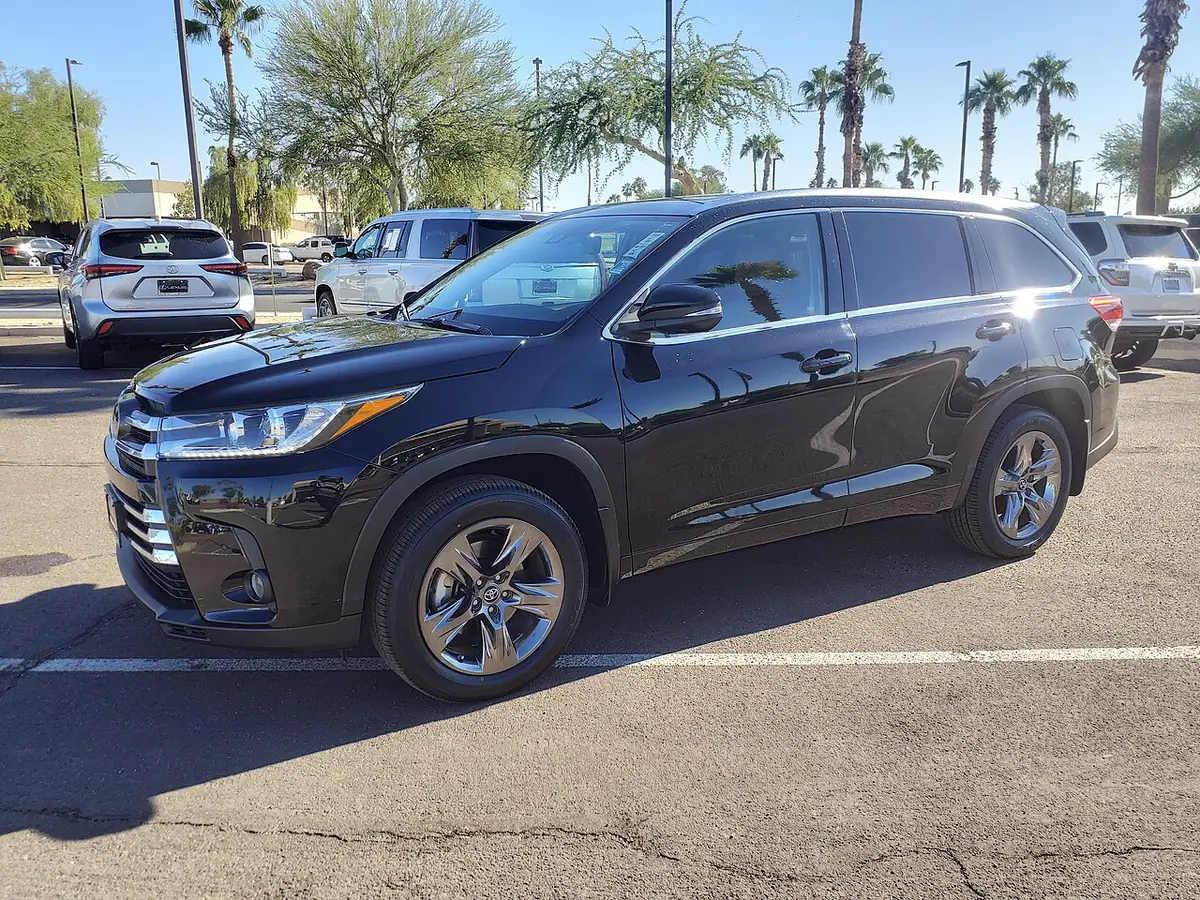
2017 Toyota Highlander
The most reported problem on the 2017 Toyota Highlander is stalling, with 48 complaints, usually around 44,000 miles.
- 267owner complaints
- 4recalls
- 18involved a crash
- 25,000median miles at failure
Newest report Sep 21, 2026 · checked Oct 2, 2026
What is your Highlander doing?
Each one opens a sheet built from the owner reports of that problem on the 2017 model year.
Is the 2017 Toyota Highlander reliable?
The 2017 Toyota Highlander has 267 owner complaints on file with NHTSA, close to the median of 307 for 2017 SUVs on this site. Of the 12 Highlander model years since 2014, it has the 4th most complaints. Complaint counts rise with sales as well as faults, so read what owners report below before deciding.
At a glance
- Next to the 2016 and 2018
- At 27 complaints for each year on the road, the 2017 runs 2.7 times the 2016 (10) and close to the 2018 (30).
- Top problem
- No problem dominates. The largest, stalling, covers 48 of the 267 complaints (18%), and brake wear is next with 29 (one complaint can fall under more than one problem, so these overlap). A quarter of the 27 owners who gave a mileage for stalling saw it by about 20,000 miles, and half by about 44,000.
- Crash, fire and injury reports
- 26 of the 267 complaints (10%) report a crash, a fire or an injury. The typical vehicle on this site sits at 6%, so this one runs well above it. Counted separately (one report can carry more than one), 18 reports mention a crash, 2 mention a fire and 26 people were hurt. The most crash reports, 6 of 18, fall under airbag.
- Recalls behind the top problems
- No recall on file is on the same system as stalling, brake wear and misfire. For those, the complaints are all there is.
- When owners filed
- Filings peaked in 2021 at 39 (full calendar years only). In 2025 there were 29. So far in 2026, 30 more have come in.
When each problem shows up
Each bar covers the middle half of the mileages owners reported for that problem. A quarter saw it earlier, a quarter later. The tick is the median. Most reported: engine stalls or loses power while driving, 48 complaints.
middle half of reports, median tick. The heavier grey bars have 75 or more reports.
Behind you
Around your mileage
Ahead of you
How this compares
267 complaints is about the median for a 2017 model on this site and about the median for a 2017 SUV. Among the 11 Highlander model years here it ranks 4th for complaints. Counts follow sales volume as much as reliability, so a truck that sells 700,000 a year draws more reports than a sedan that sells 200,000.
Service bulletins for the 2017 Toyota Highlander
Toyota filed 265 bulletins and other notices with NHTSA that list the 2017 Toyota Highlander. 30 of them deal with a problem owners have reported on this car. Newest first.
Federal rules make a manufacturer send NHTSA a copy of any notice about a defect that goes to more than one dealer or owner. Most of these are service bulletins, the repair instructions manufacturers send to dealers. NHTSA generally leaves safety recall bulletins out of this file, and recalls are listed separately.
Engine stalls or loses power while driving 1 bulletin · 48 complaints
TT: Some customers may experience several conditions caused by the Crank Position Sensor including, rough engine idle/running, MIL "ON", limp mode, a start and stop system failure to restart or stalling after starting.
Brakes grind, pulse or wear early 3 bulletins · 29 complaints
TT: Some Toyota vehicles installed with Toyota Complete Maintenance Care (TCMC) brake pads may exhibit a groan or squeak noise in various driving conditions.
Some 2014 ? 2019 model year Highlander vehicles may exhibit a vibration from the front brakes during light application of the brake pedal at highway speeds. Follow the Repair Procedure in this bulletin to address this condition.
1 more on this problem
Some 2015 ? 2018 model year Toyota vehicles may exhibit brake vibration due to improper lug nut torque. Brake vibration can occur at any time if improper torque is applied to lug nuts. Even one lug nut over or under torqued can cause vibration.
Check engine light or misfire 8 bulletins · 25 complaints
Some 2017 ? 2019 model year Highlander HV vehicles may exhibit a MIL ON condition with one or more of the following Diagnostic Trouble Codes (DTCs): ? P0301 ? Cylinder 1 Misfire Detected ? P0302 ? Cylinder 2 Misfire Detected ? P0303 ? Cylinder 3 Misfire ...
Customer Support Program Bulletin: Toyota has received reports indicating potential symptoms, such as a whine noise from the transmission while driving, harsh shifting, reduced power, and master warning light/check engine light illumination, in the subject ...
6 more on this problem
Some 2014 ? 2018 model year Highlander and Highlander Hybrid vehicles may exhibit one or more of the following conditions.
Region Email: Toyota has received reports about potential symptoms, such as a whine noise from the transmission while driving, harsh shifting, reduced power, and master warning light/check engine light illumination, in the subject vehicles that are equipped ...
Dealer Email: Toyota has received reports about potential symptoms, such as a whine noise from the transmission while driving, harsh shifting, reduced power, and master warning light/check engine light illumination, in the subject vehicles that are equipped ...
Dealer Packet: Toyota has received reports about potential symptoms, such as a whine noise from the transmission while driving, harsh shifting, reduced power, and master warning light/check engine light illumination, in the subject vehicles that are equipped ...
T-TT: Vehicles may experience various drivability concerns. Upon diagnosis, technicians commonly find no or low fuel pressure as well as a variety of DTCs (Commonly P1603, P1604, P1605, P0171, P0300, P0302, P0304, U0100).
TT: A vehicle may arrive to the dealer with a MIL ?ON? condition and P0A80 or P1AC000 stored in the memory. Some cases have been identified with internal modification done to the HV Battery. Modified or altered parts are not covered under warranty.
Battery dies or the car will not start 4 bulletins · 25 complaints
Some 2004 ? 2020 model year Hybrid vehicles may exhibit an excessive buildup of dust, lint, or debris in the HV battery intake filter or cooling fan. The condition could reduce the efficiency of the HV battery cooling system.
TT: Some Customers may complain about a Hybrid Vehicle Battery cooling system warning message. This warning message may appear when the HV Battery cooling system loses efficiency due to debris on the filter and or some object obstructing the air inlet.
2 more on this problem
A BATTERY IN A STORED VEHICLE IS SUBJECT TO CONDITIONS THAT CAN REDUCE ITS PERFORMANCE AND LIFE. THESE CONDITIONS INCLUDE STORAGE PERIOD, TEMPERATURE, PARASITIC DRAIN, AND BATTERY LOAD.
TT: HV Batteries have liquid filled cell modules, to prevent leakage from cells, it is very important to confirm the proper orientation mark of the DRC.
Transmission shudders, slips or shifts hard 2 bulletins · 21 complaints
Some 2017 ? 2018 model year Highlander and Sienna vehicles may exhibit a whine noise while driving, a harsh shift, MIL ON, or reduced power.
Some 2017 model year Highlander vehicles may exhibit the following conditions: ? Lack of power. ? High RPM shift point at the 2-3 shift ? Hesitation in low gears.
Infotainment, screen or backup camera fails 10 bulletins · 18 complaints
Some customers may experience echoing on the line calling the vehicle when using Bluetooth Hands Free. This is caused by the phone Hands Free volume being too low.
TT: Some customers may experience echoing on the line calling the vehicle when using Bluetooth Hands Free. This is caused by the phone Hands Free volume being too low.
8 more on this problem
TT: Some customers may encounter Bluetooth® connectivity concerns such as: ?Difficulty to pair the phone. ?Intermittent Bluetooth® failure to connect to the vehicle when first turning on the vehicle.
TT: Some customers who have upgraded their iPhone® to iOS13 are experiencing a condition where the Bluetooth connection disconnects and reconnects.
TT: Some customers may experience poor outgoing Bluetooth sound quality, this can occur for various reasons. Current multimedia systems are designed with the ability to adjust Bluetooth sound quality to compensate for echo or excessive background noise.
TT: For customer concerns of no or poor outgoing sound from the Bluetooth systems there are diagnostics in the repair manual which can be performed to diagnose the condition.
TT: Some vehicles may exhibit an error message when trying to perform a radio software update: "Unable to update the software. Please try again later." If the following screen is seen; follow the directions below.
TT: Some customers may experience greyed out buttons or inactive screens (lockouts) while driving. This is to promote safe driving practices and reduce the amount of distractions while driving.
TT: Some customers may experience Bluetooth disconnections or loss of SMS text message functionality on the navigation/audio system with Android phones running OS 4.4 or later.
TT: Some customers may encounter Bluetooth connectivity concerns such as: ? Difficulty pairing the phone. ? Intermittent Bluetooth failure to connect when first turning on the vehicle.
Fuel pump failure 1 bulletin · 15 complaints
Some 2016 ? 2017 model year Tacoma, 2017 model year Sienna and Highlander, and 2018 model year Camry vehicles equipped with a 2GR-FKS engine may exhibit a chirping noise from the high-pressure fuel pump.
Airbag warning light or recall 1 bulletin · 9 complaints
Some 2005 ? 2022 model year Toyota vehicles that have undergone water intrusion may exhibit a condition in which a musty smell is present. Follow the procedures in this bulletin to remediate the odor and address this condition.
Complaints filed by year
39 complaints came in 2021, 1.9 times the year before. Owners file in waves when a problem gets press or an investigation, so a spike measures attention as much as failures.
Recalls that include the 2017 Toyota Highlander
Whether your car is included depends on its VIN. Check yours at nhtsa.gov/recalls.
Toyota Motor Engineering & Manufacturing (Toyota) is recalling certain 2018-2019 4Runner, 2019-2020 Avalon, 2019 Corolla Hatchback, 2017-2019 Highlander, 2018-2020 Camry, 2020 Corolla, 2018-2019 Land Cruiser, 2017-2020 Tacoma, 2019-2020 RAV4, 2019-2020 Sequoia, 2017-2020 Sienna, 2019-2020 Tundra, 2018-2020 Lexus ES350, 2017 Lexus GS200t, 2017-2019 Lexus GS350, 2019 Lexus GS300, 2018-2020 Lexus LC500h, 2019-2020 Lexus LS500, 2018-2019 Lexus GX460, 2017 Lexus IS200t, 2019 Lexus IS300, 2019 Lexus IS350, 2018-2020 Lexus LC500, 2018 Lexus LS500, 2019 Lexus LS500h, 2018-2019 Lexus LX570, 2017 Lexus RC200t, 2019 Lexus RC300, RC350, 2017 and 2019-2020 Lexus RX350, 2018-2020 RX350L, 2019 Lexus UX200, 2018-2019 Lexus NX300 vehicles. The low-pressure fuel pump inside the fuel tank may fail.
Risk and remedy
Remedy: Toyota will notify owners, and dealers will replace the fuel pump assembly with an improved one, free of charge. Owners of specific models were notified that remedy parts were available starting January 21, 2021. Owners of other models will be notified as remedy parts become available. Remedy parts should be available for all affected vehicles by late March 2021. Owners may contact Toyota customer service at 1-888-270-9371 or Lexus customer service at 1-800-255-3987. Note: This recall is an expansion of recall 20V-012. Toyota's number for this recall is 20TA02. Lexus' number for this recall is 20LA01.
Fujian Wanda Automobile Glass Industry (Wanda) is recalling certain aftermarket Replacement Windshields sold for use in 2014-2018 Toyota Highlander vehicles. The windshields have an attached wire harness that water may leak into, possibly causing damage to the vehicle's Engine Control Module (ECM).
Risk and remedy
Remedy: Wanda will notify owners, and service centers will replace the windshields, and inspect the ECM for damage, having it replaced, as necessary, free of charge. The recall began January 29, 2019. Owners may contact Wanda customer service at 1-864-281-2760.
Gulf States Toyota, Inc. (GST) is recalling certain 2017 Toyota Highlander and Highlander Hybrid vehicles equipped with accessory roof rail cross bars. The fasteners for the roof rails may not be torqued properly.
Risk and remedy
Remedy: GST will notify owners, and dealers will inspect and properly torque the fasteners, free of charge. The recall began September 29, 2017. Owners may contact GST customer service at 1-800-444-1074. GST's number for this recall is 17R3.
Gulf States Toyota, Inc. (Gulf States) is recalling certain 2017 4Runner , 86, Avalon, Camry, Camry Hybrid, Corolla, Corolla iM, Highlander, Highlander Hybrid, Prius, Prius C, RAV4, RAV4 Hybrid, Sienna and Yaris vehicles. The spare tire air pressure was not adjusted to the proper pressure as stated on the Tire Pressure Label.
Risk and remedy
Remedy: Gulf States will notify owners, and dealers will inspect the spare tires, adjusting their pressure as necessary, free of charge. The recall began June 15, 2017. Owners may contact Gulf States customer service at 1-800-444-1074. Toyota's number for this recall is 17R2.
All 4 recalls on the 2017 Toyota Highlander, with the owner complaints on each recalled system
Guide Buying one used? How to research one car’s history before you pay
Questions
What is the most common problem on the 2017 Toyota Highlander?
Stalling, with 48 of the 267 complaints. Owners who gave a mileage for it put the median at about 44,000 miles.
At what mileage do 2017 Toyota Highlander problems start?
Of the 144 complaints that give a mileage, a quarter came by about 12,000 miles and half by about 25,000.
Is the 2017 Toyota Highlander better or worse than the 2016 and 2018?
Counted per year on the road, the 2017 has more complaints than the 2016 and about as many complaints as the 2018: 27 a year against 10 and 30.
How many 2017 Toyota Highlander complaints involve a crash, fire or injury?
26 of them (10%). The typical vehicle on this site is at 6%.
Is there a recall for stalling on the 2017 Toyota Highlander?
No recall on file for the 2017 Toyota Highlander is on the same system as stalling. Another recall may still cover your car, so check its VIN at nhtsa.gov/recalls.