Eleventh generation (E170)
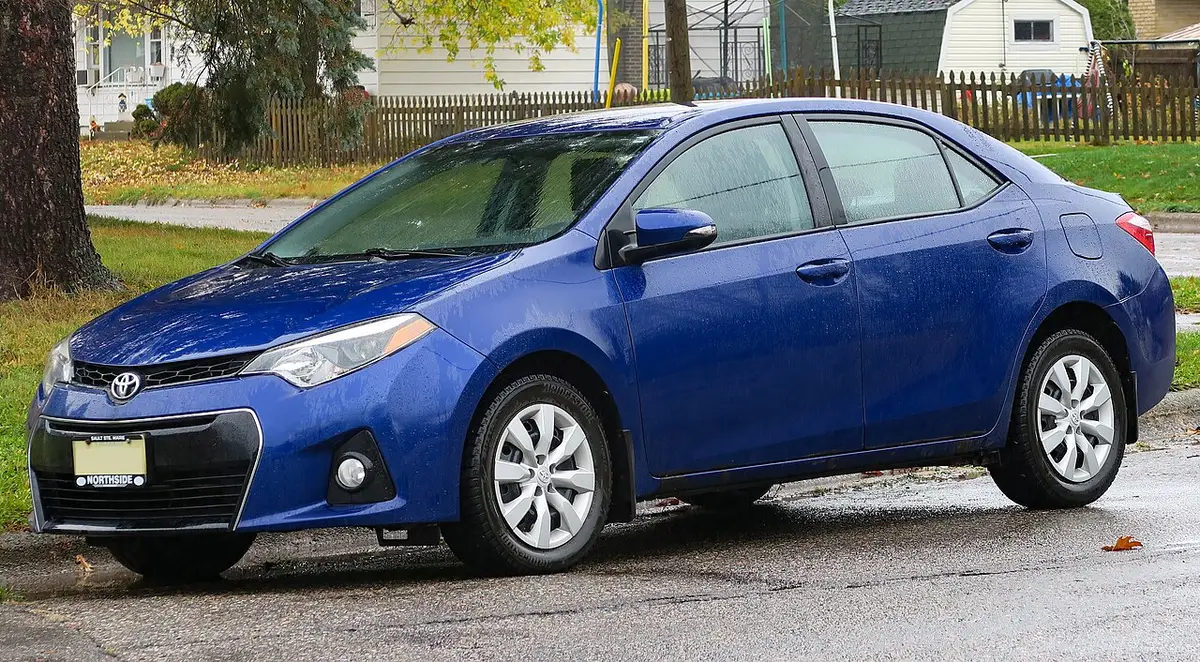
2018 Toyota Corolla
The most reported problem on the 2018 Toyota Corolla is airbag, with 36 complaints, usually around 15,000 miles.
- 134owner complaints
- 3recalls
- 26involved a crash
- 19,450median miles at failure
Newest report Sep 22, 2026 · checked Oct 2, 2026
What is your Corolla doing?
Each one opens a sheet built from the owner reports of that problem on the 2018 model year.
Is the 2018 Toyota Corolla reliable?
The 2018 Toyota Corolla has 134 owner complaints on file with NHTSA, below the median of 177 for 2018 sedans on this site. Of the 13 Corolla model years since 2014, it has the 8th most complaints. Complaint counts rise with sales as well as faults, so read what owners report below before deciding.
At a glance
- Next to the 2017 and 2019
- At 15 complaints for each year on the road, the 2018 runs below both the 2017 (18) and the 2019 (25).
- Top problem
- Airbag leads with 36 of the 134 complaints (27%), ahead of stalling at 22. A quarter of the 17 owners who gave a mileage for airbag saw it by about 7,000 miles, and half by about 15,000.
- Crash, fire and injury reports
- 32 of the 134 complaints (24%) report a crash, a fire or an injury. The typical vehicle on this site sits at 6%, so this one runs well above it. Counted separately (one report can carry more than one), 26 reports mention a crash, 5 mention a fire and 17 people were hurt. The reports record 1 death. The most crash reports, 17 of 26, fall under airbag.
- Recalls behind the top problems
- Airbag, the one problem here with enough reports to check, has a recall on the same system (20V-024). A recall on the same system doesn't always cover the failure owners describe, so compare its summary with the complaints.
- When owners filed
- Filings jumped in 2020, with 45 complaints, 2.0 times the next busiest year. So far in 2026, 6 more have come in.
When each problem shows up
Each bar covers the middle half of the mileages owners reported for that problem. A quarter saw it earlier, a quarter later. The tick is the median. Most reported: airbag warning light or recall, 36 complaints.
middle half of reports, median tick. The heavier grey bars have 75 or more reports.
Behind you
Around your mileage
Ahead of you
How this compares
134 complaints is 2.1 times fewer than the median 2018 model on this site and 1.3 times fewer than the median 2018 sedan. Among the 10 Corolla model years here it ranks 8th for complaints. Counts follow sales volume as much as reliability, so a truck that sells 700,000 a year draws more reports than a sedan that sells 200,000.
Service bulletins for the 2018 Toyota Corolla
Toyota filed 183 bulletins and other notices with NHTSA that list the 2018 Toyota Corolla. 5 of them deal with a problem owners have reported on this car. Newest first.
Federal rules make a manufacturer send NHTSA a copy of any notice about a defect that goes to more than one dealer or owner. Most of these are service bulletins, the repair instructions manufacturers send to dealers. NHTSA generally leaves safety recall bulletins out of this file, and recalls are listed separately.
Airbag warning light or recall 1 bulletin · 36 complaints
Some 2005 ? 2022 model year Toyota vehicles that have undergone water intrusion may exhibit a condition in which a musty smell is present. Follow the procedures in this bulletin to remediate the odor and address this condition.
Seat belt or seat problems 2 bulletins · 13 complaints
Some 2010 ? 2022 model year Toyota vehicles may exhibit paint stains after the removal of Rapgard?. The paint stains may appear to be under the clear coat but are usually under wrinkles in the Rapgard?.
Some 2010 ? 2021 model year Toyota vehicles may exhibit paint stains after the removal of Rapgard?. The paint stains may appear to be under the clear coat but are usually under wrinkles in the Rapgard?.
Brakes grind, pulse or wear early 2 bulletins · 11 complaints
TT: Some Toyota vehicles installed with Toyota Complete Maintenance Care (TCMC) brake pads may exhibit a groan or squeak noise in various driving conditions.
Some 2015 ? 2018 model year Toyota vehicles may exhibit brake vibration due to improper lug nut torque. Brake vibration can occur at any time if improper torque is applied to lug nuts. Even one lug nut over or under torqued can cause vibration.
Complaints filed by year
45 complaints came in 2020, 2.0 times the year before. Owners file in waves when a problem gets press or an investigation, so a spike measures attention as much as failures.
NHTSA investigations
Desiccated air bag inflator rupture. Open.
NHTSA summary
Electrical overstress. Closed sep 19, 2024, led to recall 20V-024.
NHTSA summary
Recalls that include the 2018 Toyota Corolla
Whether your car is included depends on its VIN. Check yours at nhtsa.gov/recalls.
Toyota Motor Engineering & Manufacturing (Toyota) is recalling certain 2011-2019 Corolla, 2011-2013 Matrix, 2012-2018 Avalon, and 2013-2018 Avalon Hybrid vehicles. During certain crashes, the air bag electronic control unit (ECU) may malfunction, possibly disabling the deployment of the air bags and/or seat belt pretensioners.
Risk and remedy
Remedy: Toyota will notify owners, and dealers will inspect the ECU and install a noise filter between the air bag control module and its wire harness, as necessary, free of charge. Owners were notified of the safety risk beginning March 2, 2020. A second letter notifying owners of the remedy repair will be mailed between March 16, 2020 and June 27, 2020. Owners may contact Toyota customer service at 1-888-270-9371. Toyota's numbers for this recall are 20TB03, 20TA03 and 20TA05.
Toyota Motor Engineering & Manufacturing (Toyota) recalled certain 2018-2019 4Runner, Highlander, Camry, Land Cruiser, Sequoia, Sienna, Tacoma and Tundra, and Lexus RC 300, RC 350, GS 350, GX 460, IS 300, LC 500, LS 500, LX 570, RX 350L, and 2019 Toyota Avalon and Corolla, and certain Lexus NX 300, and ES 350 vehicles on January 13, 2020. On March 4, 2020, Toyota expanded the recall to include certain 2014-2015 Toyota 4Runner and Land Cruiser, 2018 Avalon, Corolla, 2014 FJ Cruiser, 2017 Sienna and Lexus 2018 ES 350, 2018-2019 GS 300, 2013-2014 GS350, 2014-2015 GX 460, IS 350 and LX 570, 2014 IS F, 2018-2019 IS 350, LC 500H and LS 500H, 2013-2015 LS 460, 2015 NX 200T and RC350, 2017 RC 200T and RX 350. Toyota also removed the 2018-2019 Toyota 4Runner and Land Cruiser and 2018-2019 Lexus GX 460 and LX 570 and 2019 NX300 from inclusion in this recall. On March 19, 2020, Toyota expanded the recall to include 2015 Lexus GS350 vehicles. The low-pressure fuel pump inside the fuel tank may fail.
Risk and remedy
Remedy: Toyota will notify owners, and dealers will replace the fuel pump, free of charge. The recall began May 4, 2020. Owners may contact Toyota customer service at 1-888-270-9371 or Lexus customer service at 1-800-255-3987. Toyota's numbers for this recall are 20TB02 and 20TA02 for Toyota vehicles and 20LB01 and 20LA01 for Lexus vehicles.
Southeast Toyota Distributors, LLC (SET) is recalling certain 2017-2019 Toyota Camry, Corolla, Rav4, Sienna, and Yaris iA vehicles equipped with factory-installed floor mats. The load carrying capacity modification label may be incorrect. As such, these vehicles fail to comply with the requirements of Federal Motor Vehicle Safety Standard (FMVSS) number 110, "Tire Selection and Rims."
Risk and remedy
Remedy: SET will notify owners and provide a corrected label for placement over the inaccurate label, free of charge. The recall began August 23, 2019. Owners may contact Toyota customer service at 1-888-270-9371. SET's number for this recall is SET19A.
All 3 recalls on the 2018 Toyota Corolla, with the owner complaints on each recalled system
Guide NHTSA has an open investigation on this car. What the investigation stages mean
Questions
What is the most common problem on the 2018 Toyota Corolla?
Airbag, with 36 of the 134 complaints. Owners who gave a mileage for it put the median at about 15,000 miles.
At what mileage do 2018 Toyota Corolla problems start?
Of the 70 complaints that give a mileage, a quarter came by about 8,000 miles and half by about 19,000.
Is the 2018 Toyota Corolla better or worse than the 2017 and 2019?
Counted per year on the road, the 2018 has fewer complaints than both the 2017 and the 2019: 15 a year against 18 and 25.
How many 2018 Toyota Corolla complaints involve a crash, fire or injury?
32 of them (24%). The typical vehicle on this site is at 6%.
Is there a recall for airbag on the 2018 Toyota Corolla?
Yes, NHTSA lists a recall on the same system: 20V-024. Its summary says which failure it covers, and that isn't always the one owners describe.