Diagsheet

First generation (Highland refresh) · first-year watch

2026 Tesla Model 3, day 259

  • 25complaints since Jan 16, 2026
  • 1recalls
  • 9involved a crash

Newest report Sep 26, 2026 · checked Oct 2, 2026

Changed since August

  • 6 new complaints in September, mostly about collision avoidance, speed control and steering.
  • Nothing filed yet on sticky steering, transmission failure, engine failure or fire.
  • 35th most complaints of the 79 2026 models on this site.
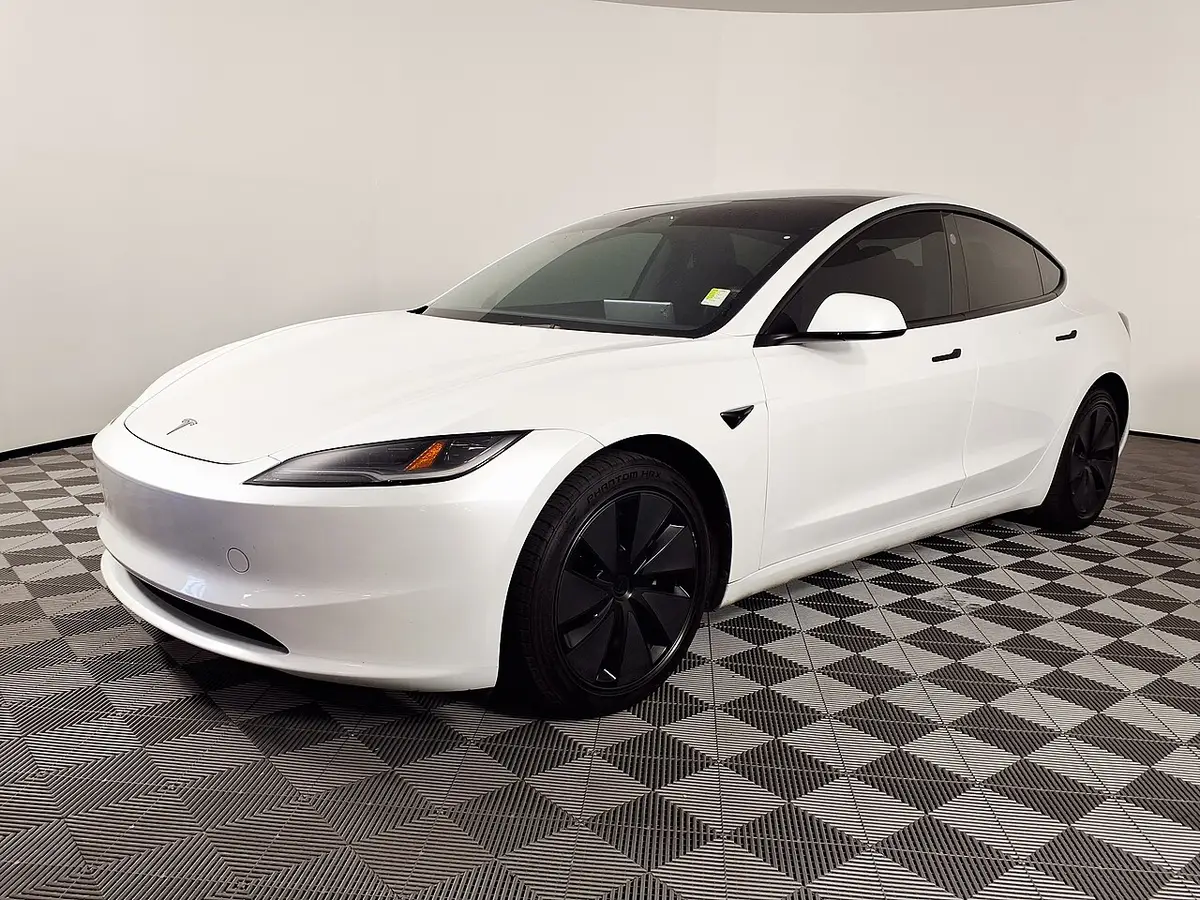
2026 Tesla Model 3
Photo: HJUdall, Wikimedia Commons, CC0

What's been reported

NHTSA's own component codes. One report can cite several.

  • Other
    9
  • Collision avoidance
    8
  • Steering
    5
  • Lane keeping
    5
  • Backup camera
    4
  • Structure
    2
  • Speed control
    2
  • Suspension
    2

Problems so far

  • Full Self-Driving (FSD) does something unsafe 11 reports

Recent reports

“I was using the self driving feature and all of a sudden the steering wheel went haywire and was spinning. the car was swerving very aggressively in between lanes. putting my foot on the brake and hands on the wheel did not do anything.”

Filed Sep 18, 2026

“The front windshield camera for FSD gets hazed and obstructs the front camera. Tesla say it’s from the gases that come from the interior from the vehicle being hot temperatures. My problem why did they not design the cameras like they did in the side puller protecting it from the interior gases. Now Tesla says they’ll clean it for 65.00. I just bought the car in March”

Filed Sep 18, 2026

“My Tesla was operating under FSD at 9pm on a dark country road. I was traveling at 45mph and vehicle randomly applied hard emergency braking and I had to take over. It appeared that the vehicle may have been responding to a dark oil stain or possibly a mailbox. Had another vehicle been closely behind me, there would’ve been a collision.”

Filed Sep 5, 2026

““The affected system was Tesla Full Self-Driving (FSD) (Supervised). FSD correctly selected the northbound left-turn lane but, while executing the left turn to westbound Pecan Street, intermittently directed the vehicle into the eastbound lanes carrying opposing traffic.””

Filed Aug 31, 2026

At a glance

Next to the 2024
The 2026 is too new for a fair per-year comparison. It has 25 complaints so far; the 2024, on sale longer, has 218.
Top problem
FSD problems is the one problem with a cluster of reports here: 11 of the 25 complaints (44%). Too few of the FSD problems reports give a mileage to say when it starts.
Crash, fire and injury reports
10 of the 25 complaints (40%) report a crash, a fire or an injury. The typical vehicle on this site sits at 6%, so this one runs well above it. Counted separately (one report can carry more than one), 9 reports mention a crash and 3 people were hurt. The most crash reports, 5 of 9, fall under FSD problems.
Recalls behind the top problems
1 recall is on file, but no problem here has enough reports to set against it.
When owners filed
Every complaint so far came in during 2026.

NHTSA investigations

EA26-002opened Mar 18, 2026
Electrical · model years 2017 to 2026

Fsd collisions in reduced roadway visibility conditions. Open.

NHTSA summary
The Office of Defects Investigation (ODI) is opening this Engineering Analysis to evaluate Tesla’s Full Self Driving Beta and Full Self Driving (Supervised) (collectively, FSD) degradation detection system. The focus of this investigation will be to assess the system’s ability, when encountering reduced roadway visibility conditions, to detect degradation and alert the driver with sufficient time to respond. ODI will evaluate the performance of FSD in degraded roadway conditions and the updates or modifications by Tesla to the degradation detection system, including the timing, purpose, and capabilities of the updates, and Tesla’s assessment of their safety impact. Tesla’s FSD is an advanced driver assistance system (ADAS) that relies exclusively on vision-based cameras and the related FSD software to detect and respond to the roadway ahead, projecting a path forward based on traffic control devices, vehicles, pedestrians, and the roadway itself. When Tesla began transitioning away from using both cameras and radars to an exclusively camera-based approach, known as Tesla Vision, in mid-2021, it developed and implemented a degradation detection system that it deployed by a software update to existing and new Tesla vehicles. On June 28, 2024, the day after Tesla submitted the SGO report of the November 28, 2023 fatal crash listed in this document, Tesla began developing an update to the degradation detection system. At this time, ODI does not have information on when th
PE25-012opened Oct 7, 2025
Electrical · model years 2017 to 2026

Traffic safety violations while full self driving ("fsd") is engaged. Open.

NHTSA summary
The Office of Defects Investigation (“ODI”) is opening this Preliminary Evaluation (PE) to assess the scope, frequency, and potential safety consequences of FSD executing driving maneuvers that constitute traffic safety violations. This investigation concerns versions of FSD that Tesla has labeled as "FSD (Supervised)" and "FSD (Beta)." Tesla characterizes FSD as an SAE Level 2 partial automation system requiring a fully attentive driver who is engaged in the driving task at all times. Level 2 partial automation systems are designed to support and assist the driver in performing certain aspects of the driving task, requiring a driver to supervise and intervene as necessary. The driver remains fully responsible at all times for driving the vehicle, including complying with applicable traffic laws. ODI’s investigation will therefore focus, in particular, on whether certain driving inputs within the control authority of FSD forestall the driver’s supervision when they are unexpectedly performed. ODI has identified a number of incidents in which the inputs to the dynamic driving task commanded by FSD induced vehicle behavior that violated traffic safety laws. Although reports of this nature span a variety of behaviors, the reports appear to most commonly involve two types of scenarios. The first type of scenario involves a vehicle operating with FSD proceeding into an intersection in violation of a red traffic signal. The second type of scenario involves FSD commandin
AQ25-002opened Aug 20, 2025
Electrical · model years 2017 to 2026

Compliance with standing general order 2021-01 reporting requirements. Open.

NHTSA summary
The Office of Defects Investigation (“ODI”) has identified numerous incident reports submitted by Tesla, Inc. (“Tesla”) in response to Standing General Order 2021-01 (the “SGO”), in which the reported crashes occurred several months or more before the dates of the reports. The majority of these reports involved crashes in which the Standing General Order in place at the time required a report to be submitted within one or five days of Tesla receiving notice of the crash. When the reports were submitted, Tesla submitted them in one of two ways. Many of the reports were submitted as part of a single batch, while others were submitted on a rolling basis. Preliminary engagement between ODI and Tesla on the issue indicates that the timing of the reports was due to an issue with Tesla’s data collection, which, according to Tesla, has now been fixed. NHTSA is opening this Audit Query, a standard process for reviewing compliance with legal requirements, to evaluate the cause of the potential delays in reporting, the scope of any such delays, and the mitigations that Tesla has developed to address them. As part of this review, NHTSA will assess whether any reports of prior incidents remain outstanding and whether the reports that were submitted include all of the required and available data. The SGO reports cited in the Opening Resume, can be found at NHTSA.gov/SGOCrashReporting under the following SGO 2021-01 report IDs: 13781-11020-1 13781-10844-1 13781-10843-1 13781-1

Recalls

Whether your car is included depends on its VIN. Check yours at nhtsa.gov/recalls.

25V-410Jun 18, 2025
Seats:Critical Fasteners

Tesla, Inc. (Tesla) is recalling certain 2026 Model 3 and Model Y vehicles. The fasteners attaching the seat back to the seat bottom may have been improperly tightened.

Risk and remedy
Risk: The seat may not properly restrain the occupant, increasing the risk of injury during a crash.
Remedy: Tesla Service Centers will inspect and tighten or replace the seat assembly fasteners as necessary, free of charge. Owner notification letters were mailed August 16, 2025. Owners may contact Tesla customer service at 1-877-798-3752. Tesla's number for this recall is SB-25-13-003.

The recall on the 2026 Tesla Model 3, with the owner complaints on each recalled system

Guide Seeing this on your own car? How to file a complaint with NHTSA

The log

Complaints by the month NHTSA received them, newest first. Blue bars mark a month with a recall or an investigation.

Sep 2026
6Collision avoidance, Speed control
Aug 2026
6Steering, Collision avoidance
Jul 2026
6Lane keeping, Collision avoidance
Jun 2026
2Structure
May 2026
1
Apr 2026
3Backup camera, Steering
Mar 2026
0 investigation EA26002
Feb 2026
0
Jan 2026
1Structure, Collision avoidance

Questions

What is the most common problem on the 2026 Tesla Model 3?

FSD problems, with 11 of the 25 complaints.

How many 2026 Tesla Model 3 complaints involve a crash, fire or injury?

10 of them (40%). The typical vehicle on this site is at 6%.

Other model years