First generation (Highland refresh) · first-year watch
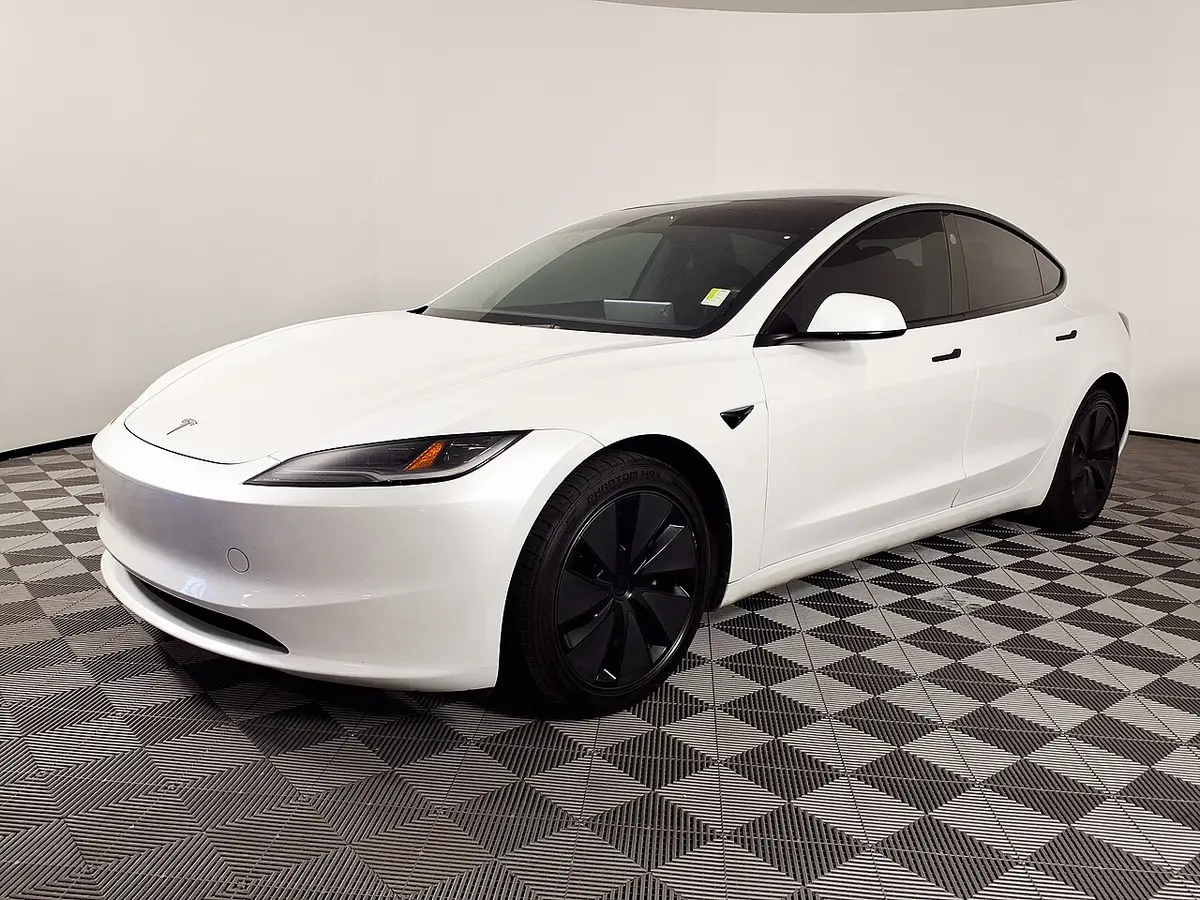
2025 Tesla Model 3, day 695
- 117complaints since Nov 6, 2024
- 3recalls
- 25involved a crash
- 10,100median miles at failure
Newest report Sep 19, 2026 · checked Oct 2, 2026
Changed since August
- 4 new complaints in September, mostly about collision avoidance, lane keeping and seats.
- Nothing filed yet on sticky steering, transmission failure, engine failure or fire.
- 19th most complaints of the 36 2025 models on this site.
What's been reported
NHTSA's own component codes. One report can cite several.
- Other36
- Collision avoidance35
- Steering25
- Lane keeping24
- Electrical21
- Speed control14
- Brakes12
- Exterior Lighting7
Problems so far
- Full Self-Driving (FSD) does something unsafe 16 reports
- Infotainment, screen or backup camera fails 12 reports
- Brakes grind, pulse or wear early 12 reports
- Power steering cuts out or goes heavy 8 reports
- Brakes on its own (automatic emergency braking) 8 reports
- Suspension noise, struts or alignment 5 reports
- Wheel bearing, tires or wheels 5 reports
- Adaptive cruise or lane keeping misbehaves 5 reports
Recent reports
“FSD Malfunction, inspection available. Yellow double lines were not recognized around a turn, causing the car to steer towards oncoming traffic. UNKNOWN. Vehicle was declared fully functional by Tesla Dealership. No warnings, vehicle had many symptoms prior to the last event in which I decided to service the vehicle. First critical malfunction May 21, 2025.”
Filed Jun 3, 2025
“I was using full self driving (FSD) and there was no one directly in front of me and thankfully no one behind me when it engaged its emergency brakes and came to an abrupt stop for no reason.”
Filed May 13, 2025
“Steering assist reduced, traction control disabled, stability control disabled. When trying to drive steering heavy and car coasts unless holding brake pedal, which is unusual for a Tesla at it normally auto holds. Traction control and stability control also disabled, unsafe to drive.”
Filed Apr 4, 2025
“Turn indicator not working. I was in a highway and when I pressed turn indicator button, nothing happened. Multiple presses with varying pressure had no effect”
Filed Feb 23, 2025
At a glance
- Next to the 2024
- The 2025 is too new for a fair per-year comparison. It has 117 complaints so far; the 2024, on sale longer, has 218.
- Top problem
- No problem dominates. The largest, FSD problems, covers 16 of the 117 complaints (14%), and infotainment is next with 12 (one complaint can fall under more than one problem, so these overlap). Too few of the FSD problems reports give a mileage to say when it starts.
- Crash, fire and injury reports
- 26 of the 117 complaints (22%) report a crash, a fire or an injury. The typical vehicle on this site sits at 6%, so this one runs well above it. Counted separately (one report can carry more than one), 25 reports mention a crash and 9 people were hurt.
- Recalls behind the top problems
- 3 recalls are on file, but no problem here has enough reports to set against them.
- When owners filed
- Complaints are still climbing. 2025 brought 81, the most of any year so far. So far in 2026, 33 more have come in.
Service bulletins for the 2025 Tesla Model 3
Tesla filed 4 bulletins and other notices with NHTSA that list the 2025 Tesla Model 3. 2 of them deal with a problem owners have reported on this car. Newest first.
Federal rules make a manufacturer send NHTSA a copy of any notice about a defect that goes to more than one dealer or owner. Most of these are service bulletins, the repair instructions manufacturers send to dealers. NHTSA generally leaves safety recall bulletins out of this file, and recalls are listed separately.
Suspension noise, struts or alignment 1 bulletin · 5 complaints
A firmware diagnosis feature is being introduced on Model 3 and Model Y vehicles that monitors wheel alignment over time.
Wheel bearing, tires or wheels 1 bulletin · 5 complaints
On certain Model 3 and Model Y vehicles, the tire pressure monitoring system (TPMS) sensor battery may drain at an accelerated rate. Identify and replace the affected TPMS sensor.
NHTSA investigations
Fsd collisions in reduced roadway visibility conditions. Open.
NHTSA summary
Traffic safety violations while full self driving ("fsd") is engaged. Open.
NHTSA summary
Compliance with standing general order 2021-01 reporting requirements. Open.
NHTSA summary
Actually smart summon sessions resulting in low-speed impacts.. Closed apr 3, 2026.
NHTSA summary
Recalls
Whether your car is included depends on its VIN. Check yours at nhtsa.gov/recalls.
Tesla, Inc. (Tesla) is recalling certain 2025 Model 3 and 2026 Model Y vehicles. The battery pack contactors may fail, causing a loss of drive power.
Risk and remedy
Remedy: Tesla Service will replace the battery pack contactors, free of charge. Owner notification letters were mailed December 9, 2025. Owners may contact Tesla customer service at 1-877-798-3752. Tesla's number for this recall is SB-25-16-005.
Tesla, Inc. (Tesla) is recalling certain 2024-2025 Model 3, Model S, 2023-2025 Model X, and Model Y vehicles. The computer circuit board may short, resulting in the loss of the rearview camera image. As such, these vehicles fail to comply with the requirements of Federal Motor Vehicle Safety Standard (FMVSS) number 111, "Rear Visibility."
Risk and remedy
Remedy: Tesla released an over-the-air (OTA) software update, free of charge. Tesla will also identify any vehicles that experienced a circuit board failure, or stress that may lead to a circuit board failure, and replace the affected computers, free of charge. Owner notification letters were mailed March 7, 2025. Owners may contact Tesla customer service at 1-877-798-3752. Tesla's number for this recall is SB-25-00-001.
Tesla, Inc. (Tesla) is recalling certain 2024 Cybertruck, 2017-2025 Model 3, and 2020-2025 Model Y vehicles. The tire pressure monitoring system (TPMS) warning light may not remain illuminated between drive cycles, failing to warn the driver of low tire pressure. As such, these vehicles fail to comply with the requirements of Federal Motor Vehicle Safety Standard number 138, "Tire Pressure Monitoring Systems."
Risk and remedy
Remedy: Tesla released an over-the-air (OTA) software update, free of charge. Owner notification letters were mailed February 15, 2025. Owners may contact Tesla customer service at 1-877-798-3752. Tesla's number for this recall is SB-24-00-018.
All 3 recalls on the 2025 Tesla Model 3, with the owner complaints on each recalled system
Guide Seeing this on your own car? How to file a complaint with NHTSA
The log
Complaints by the month NHTSA received them, newest first. Blue bars mark a month with a recall or an investigation.
Questions
What is the most common problem on the 2025 Tesla Model 3?
FSD problems, with 16 of the 117 complaints.
At what mileage do 2025 Tesla Model 3 problems start?
Of the 11 complaints that give a mileage, a quarter came by about 8,000 miles and half by about 10,000.
How many 2025 Tesla Model 3 complaints involve a crash, fire or injury?
26 of them (22%). The typical vehicle on this site is at 6%.