Fifth generation
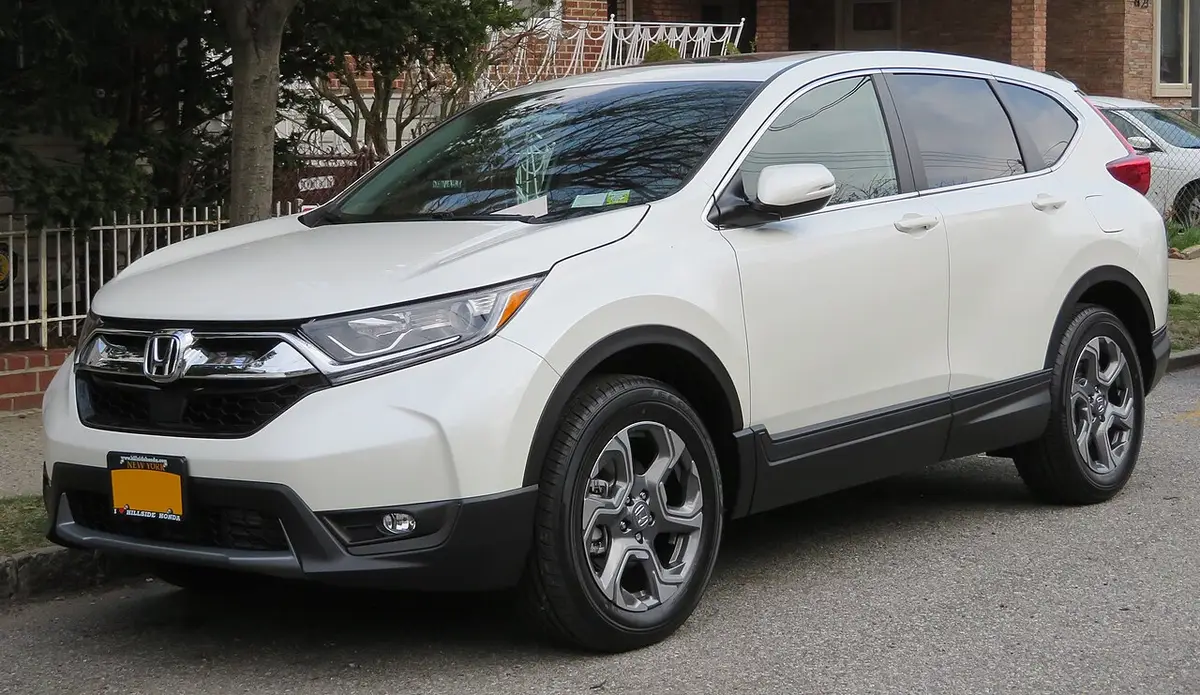
2020 Honda CR-V Hybrid
The most reported problem on the 2020 Honda CR-V Hybrid is brake wear, with 18 complaints, usually around 33,000 miles.
- 82owner complaints
- 5recalls
- 4involved a crash
- 36,000median miles at failure
Newest report Sep 20, 2026 · checked Oct 2, 2026
Problem sheets
No single problem on the 2020 Honda CR-V Hybrid has enough owner reports for a sheet of its own yet. The counts below still cover every complaint on file.
Is the 2020 Honda CR-V Hybrid reliable?
The 2020 Honda CR-V Hybrid has 82 owner complaints on file with NHTSA, less than half the median of 233 for 2020 SUVs on this site. Of the 6 CR-V Hybrid model years since 2020, it has the 4th most complaints. Complaint counts rise with sales as well as faults, so read what owners report below before deciding.
At a glance
- Next to the 2021
- At 12 complaints for each year on the road, the 2020 runs below the 2021 (17). That's the only adjacent model year with enough complaints to set beside it.
- Top problem
- Brake wear leads with 18 of the 82 complaints (22%), ahead of stalling at 12. A quarter of the 10 owners who gave a mileage for brake wear saw it by about 20,000 miles, and half by about 33,000.
- Crash, fire and injury reports
- 5 of the 82 complaints (6%) report a crash, a fire or an injury, about the 6% typical of vehicles on this site. Counted separately (one report can carry more than one), 4 reports mention a crash and 3 people were hurt.
- Recalls behind the top problems
- 5 recalls are on file, but no problem here has enough reports to set against them.
- When owners filed
- Filings peaked in 2024 at 32 (full calendar years only). In 2025 there were 19. So far in 2026, 9 more have come in.
When each problem shows up
Each bar covers the middle half of the mileages owners reported for that problem. A quarter saw it earlier, a quarter later. The tick is the median. Most reported: brakes grind, pulse or wear early, 18 complaints.
middle half of reports, median tick. The heavier grey bars have 75 or more reports.
Behind you
Around your mileage
Ahead of you
How this compares
82 complaints is 2.7 times fewer than the median 2020 model on this site and 2.8 times fewer than the median 2020 SUV. Among the 5 CR-V Hybrid model years here it ranks 4th for complaints. Counts follow sales volume as much as reliability, so a truck that sells 700,000 a year draws more reports than a sedan that sells 200,000.
Service bulletins for the 2020 Honda CR-V Hybrid
Honda filed 29 bulletins and other notices with NHTSA that list the 2020 Honda CR-V Hybrid. 1 of them deal with a problem owners have reported on this car. Newest first.
Federal rules make a manufacturer send NHTSA a copy of any notice about a defect that goes to more than one dealer or owner. Most of these are service bulletins, the repair instructions manufacturers send to dealers. NHTSA generally leaves safety recall bulletins out of this file, and recalls are listed separately.
Check engine light or misfire 1 bulletin · 11 complaints
Under certain conditions, the cylinder head gasket effectiveness may be reduced which may cause vehicles to experience overheating, coolant loss, misfire and/or DTCs P0300 thru P0304 stored.
Complaints filed by year
32 complaints came in 2024, 6.4 times the year before. Owners file in waves when a problem gets press or an investigation, so a spike measures attention as much as failures.
NHTSA investigations
Loss of motive power. Open.
NHTSA summary
Inadvertent automatic emergency braking. Open.
NHTSA summary
Pedestrian alert sounds. Closed aug 7, 2023, led to recall 22V-063.
NHTSA summary
Recalls that include the 2020 Honda CR-V Hybrid
Whether your car is included depends on its VIN. Check yours at nhtsa.gov/recalls.
Honda (American Honda Motor Co.) is recalling certain 2018-2021, 2023 Acura TLX, 2019-2024 RDX, 2017-2020, 2022-2026 MDX, 2017-2021, 2023, 2025 Honda Ridgeline, 2017-2022 Pilot, 2019-2021 Passport, 2018-2026 Odyssey, 2019-2022 Insight, 2019-2021 HR-V, 2018-2020 Fit, 2020-2022 CR-V Hybrid, 2017-2022 CR-V, 2017-2018, 2021 Civic Type R, 2017-2021 Civic hatchback, 2016-2020 Civic coupe, 2016-2022 Civic, 2017-2022 Accord Hybrid, and 2016-2022 Accord vehicles. The front passenger seat weight sensor may crack and short circuit, which can cause the air bags to deploy unintentionally during a crash.
Risk and remedy
Remedy: Dealers will replace the seat weight sensors, free of charge. Owner notification letters were mailed July 7, 2026. Owners may contact Honda's customer service at 1-888-234-2138. Honda's numbers for this recall are BOL, WO9, OOA, WOM, XOH, NOC, POD, BOE, UOF, POB, EOG, AOI, QO8, TOJ, DO7, and SOK. This recall expands previous NHTSA recall number 24V064. Vehicle Identification Numbers (VINs) involved in this recall will be searchable on NHTSA.gov beginning May 29, 2026.
Honda (American Honda Motor Co.) is recalling certain 2020-2022 Pilot, Accord, Civic sedan, HR-V, Odyssey, 2020 Civic coupe, Fit, 2021-2022 Civic hatchback, 2021 Civic Type R, Insight, 2020-2021 CR-V, CR-V Hybrid, Passport, Ridgeline, Accord Hybrid, 2020 Acura MDX, 2022 Acura MDX, 2020-2022 Acura RDX, and 2020-2021 Acura TLX vehicles. The front passenger seat weight sensor may crack and short circuit, failing to suppress the air bag as intended.
Risk and remedy
Remedy: Dealers will replace the seat weight sensors, free of charge. Owner notification letters were mailed March 28, 2024. This is a phased recall. Owners may contact Honda customer service at 1-888-234-2138. Honda's numbers for these recalls are XHP and VHQ.
Honda (American Honda Motor Co.) is recalling certain 2013-2023 Honda Accord, Civic Coupe, Civic Sedan, Civic Hatchback, Civic Type R, CR-V, HR-V, Ridgeline, Odyssey, Acura ILX, MDX, MDX Hybrid, RDX, RLX, TLX, 2019-2022 Honda Insight, Passport, 2020 Honda CR-V Hybrid, 2018-2019 Honda Clarity PHEV, Fit, and 2015-2020 Honda Accord Hybrid, Pilot, Acura NSX vehicles. The fuel pump inside the fuel tank may fail.
Risk and remedy
Remedy: Dealers will replace the fuel pump module, free of charge. Owner letters were mailed September 6, 2024. Owners may contact Honda customer service at 1-888-234-2138. Honda's numbers for this recall are KGC and KGD. This recall is an expansion of NHTSA recall numbers 21V-215 and 20V-314.
Honda (American Honda Motor Co.) is recalling certain 2020-2022 CR-V Hybrid vehicles. The 12-Volt battery cable routed outside of the body frame is missing a fuse on the power circuit, which can allow the battery cable to short circuit or overheat during a crash.
Risk and remedy
Remedy: Dealers will replace the battery cable, free of charge. Owner notification letters were mailed January 29, 2024. Owners may contact Honda customer service at 1-888-234-2138. Honda's number for this recall is FGB.
Honda (American Honda Motor Co.) is recalling certain 2020 CR-V Hybrid, Accord Hybrid, and 2020-2021 Insight vehicles. The DC-DC converter may shut down and prevent the 12-volt battery from recharging, possibly resulting in a loss of drive power.
Risk and remedy
Remedy: Honda will notify owners, and dealers will update the power converter unit (PCU) software, free of charge. The recall began February 12, 2021. Owners can contact Honda customer service at 1-888-234-2138. Honda's number for this recall is K9E.
All 5 recalls on the 2020 Honda CR-V Hybrid, with the owner complaints on each recalled system
Guide NHTSA has an open investigation on this car. What the investigation stages mean
Questions
What is the most common problem on the 2020 Honda CR-V Hybrid?
Brake wear, with 18 of the 82 complaints. Owners who gave a mileage for it put the median at about 33,000 miles.
At what mileage do 2020 Honda CR-V Hybrid problems start?
Of the 26 complaints that give a mileage, a quarter came by about 15,000 miles and half by about 36,000.
Is the 2020 Honda CR-V Hybrid better or worse than the 2021?
Counted per year on the road, the 2020 has fewer complaints than the 2021: 12 a year against 17.
How many 2020 Honda CR-V Hybrid complaints involve a crash, fire or injury?
5 of them (6%). The typical vehicle on this site is at 6%.
Is there a recall for brake wear on the 2020 Honda CR-V Hybrid?
No recall on file for the 2020 Honda CR-V Hybrid is on the same system as brake wear. Another recall may still cover your car, so check its VIN at nhtsa.gov/recalls.