Ninth generation
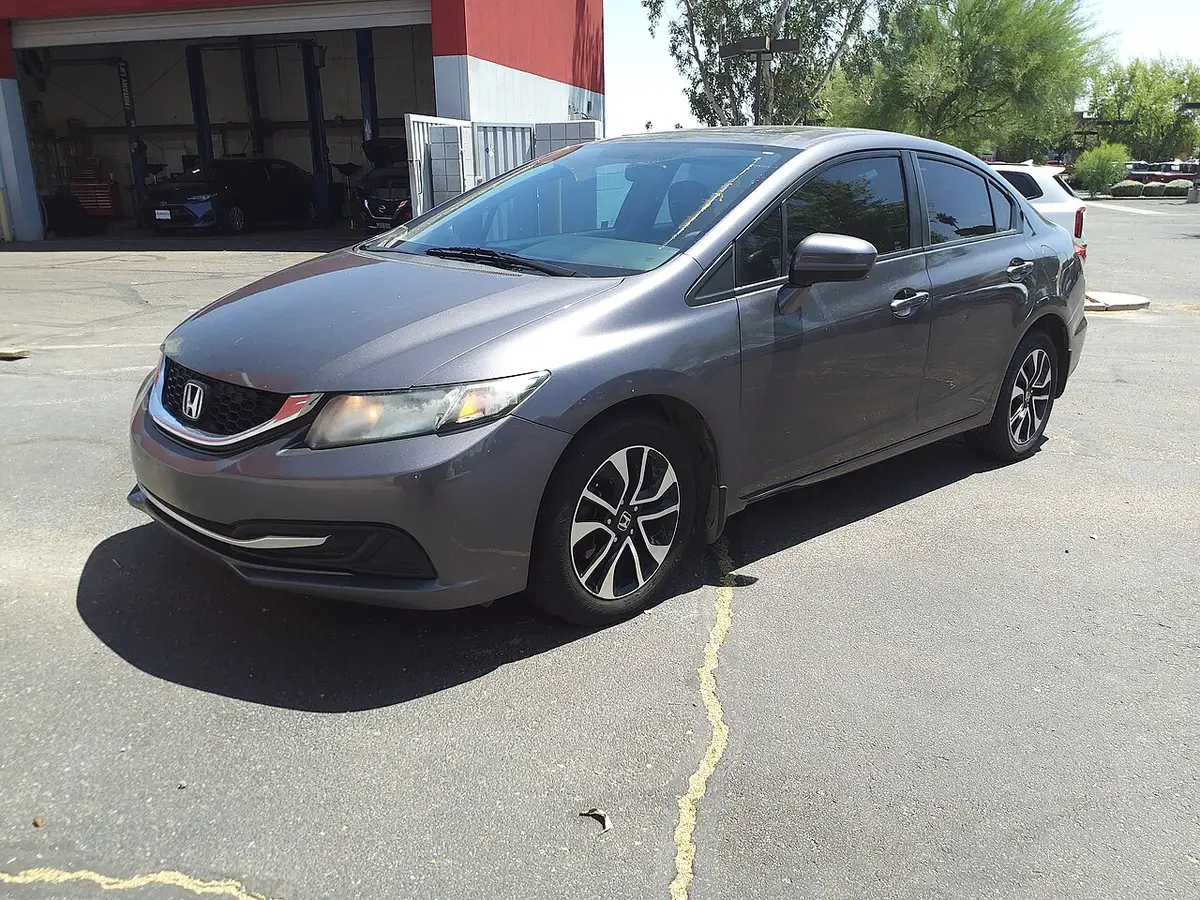
2015 Honda Civic
The most reported problem on the 2015 Honda Civic is airbag, with 58 complaints, usually around 45,000 miles.
- 380owner complaints
- 1recalls
- 37involved a crash
- 61,000median miles at failure
Newest report Sep 15, 2026 · checked Oct 2, 2026
What is your Civic doing?
Each one opens a sheet built from the owner reports of that problem on the 2015 model year.
Is the 2015 Honda Civic reliable?
The 2015 Honda Civic has 380 owner complaints on file with NHTSA, 1.4 times the median of 270 for 2015 sedans on this site. Of the 13 Civic model years since 2014, it has the 6th most complaints. Complaint counts rise with sales as well as faults, so read what owners report below before deciding.
At a glance
- Next to other model years
- Complaints filed before 2015 aren't in the files this site reads, so the 2015 count runs short and isn't compared with the model years next to it.
- Top problem
- Two problems run close. Airbag has 58 complaints and transmission failure has 53, out of 380 in all. A quarter of the 40 owners who gave a mileage for airbag saw it by about 24,000 miles, and half by about 45,000.
- Crash, fire and injury reports
- 40 of the 380 complaints (11%) report a crash, a fire or an injury. The typical vehicle on this site sits at 6%, so this one runs well above it. Counted separately (one report can carry more than one), 37 reports mention a crash, 2 mention a fire and 23 people were hurt. The most crash reports, 22 of 37, fall under airbag.
- Recalls behind the top problems
- Transmission failure and transmission shudder share a recall on the same system (15V-574). Airbag has none. A recall on the same system doesn't always cover the failure owners describe, so compare its summary with the complaints.
- When owners filed
- Filings peaked in 2022 at 51 and have dropped every year since, to 25 in 2025. So far in 2026, 12 more have come in. Filings on record start in 2015.
When each problem shows up
Each bar covers the middle half of the mileages owners reported for that problem. A quarter saw it earlier, a quarter later. The tick is the median. Most reported: airbag warning light or recall, 58 complaints.
middle half of reports, median tick. The heavier grey bars have 75 or more reports.
Behind you
Around your mileage
Ahead of you
How this compares
380 complaints is 1.4 times the median 2015 model on this site and 1.4 times the median 2015 sedan. Among the 13 Civic model years here it ranks 6th for complaints. Counts follow sales volume as much as reliability, so a truck that sells 700,000 a year draws more reports than a sedan that sells 200,000.
Service bulletins for the 2015 Honda Civic
Honda filed 62 bulletins and other notices with NHTSA that list the 2015 Honda Civic. 7 of them deal with a problem owners have reported on this car. Newest first.
Federal rules make a manufacturer send NHTSA a copy of any notice about a defect that goes to more than one dealer or owner. Most of these are service bulletins, the repair instructions manufacturers send to dealers. NHTSA generally leaves safety recall bulletins out of this file, and recalls are listed separately.
Airbag warning light or recall 1 bulletin · 58 complaints
THIS COMMUNICATION IS INFORMING HONDA OF A DELAMINATION ISSUES WITHIN AN I.C. PRODUCED BY NXP AND ASSEMBLED INTO AIRBAG SENSOR SUPPLIED BY DENSO INTERNATIONAL AMERICA, INC.
Infotainment, screen or backup camera fails 4 bulletins · 12 complaints
Servicenews article - Are any customers complaining about any of the following issues between their iPhone running iOS 12 when it's connected to their vehicle? ? You can't view or listen to videos, music, etc., when using a HDMI output.
SERVICE BULLETIN THE AUDIO UNIT SOFTWARE IS MALFUNCTIONING. SYMPTOM THE AUDIO UNIT BACK LIGHT FLICKERS. UPPER DISPLAY IS BLANK AT STARTUP. VOL/SELECTOR KNOB OR HARD KEYS DO NOT WORK. MULTIPLE SOURCES APPEAR ON THE INFORMATION DISPLAY.
2 more on this problem
SERVICE BULLETIN THE CHECK SYSTEM MESSAGE IS DISPLAYED WITH THE MIL ON AND DTC P16F7 (STARTER INHIBITOR RELAY STUCK ON). THE CLUTCH IS PARTIALLY PRESSED, CAUSING A MISDETECTION OF P16F7.
HONDA: CERTAIN FUNCTIONAL ANOMALIES ENCOUNTER, INTERMITTENTLY, WITH REAR VIEW CAMERA DISPLAYING LANE WATCH, AND LANEWATCH DISPLAYING REAR VIEW CAMERA, OR AUDIO UNIT IN SOME VEHICLES.
Seat belt or seat problems 2 bulletins · 12 complaints
EDITOR?S NOTE: This article replaces the one posted in December 2015 to extend the article?s shelf life. The issues covered are still being addressed.
TECHLINE SUMMARY ARTICLE EDITORS NOTE: THIS ARTICLE REPLACES THE ONE POSTED IN AUGUST 2015 TO EXTEND THAT ARTICLES SHELF LIFE. THE ISSUES COVERED ARE STILL BEING ADDRESSED.
Complaints filed by year
51 complaints came in 2022. Owners file in waves when a problem gets press or an investigation, so a spike measures attention as much as failures.
NHTSA investigations
Desiccated air bag inflator rupture. Open.
NHTSA summary
Electrical overstress. Closed sep 19, 2024, led to recall 20V-024.
NHTSA summary
Recalls that include the 2015 Honda Civic
Whether your car is included depends on its VIN. Check yours at nhtsa.gov/recalls.
Honda (American Honda Motor Co.) is recalling certain model year 2014-2015 Civic vehicles manufactured January 16, 2014, to November 6, 2014 and 2015 Fit vehicles manufactured March 12, 2014, to May 12, 2015. The software settings that control the transmission operation may result in damage to the transmission drive pulley shaft.
Risk and remedy
Remedy: Honda will notify owners, and dealers will update the software for the transmission, free of charge. The recall is expected to begin October 30, 2015. Owners may contact Honda customer service at 1-888-234-2138. Honda's numbers for this recall are JU2 (Civic) and JU3(Fit).
The recall on the 2015 Honda Civic, with the owner complaints on each recalled system
Guide NHTSA has an open investigation on this car. What the investigation stages mean
Questions
What is the most common problem on the 2015 Honda Civic?
Airbag, with 58 of the 380 complaints. Owners who gave a mileage for it put the median at about 45,000 miles.
At what mileage do 2015 Honda Civic problems start?
Of the 221 complaints that give a mileage, a quarter came by about 28,000 miles and half by about 61,000.
How many 2015 Honda Civic complaints involve a crash, fire or injury?
40 of them (11%). The typical vehicle on this site is at 6%.
Is there a recall for airbag on the 2015 Honda Civic?
No recall on file for the 2015 Honda Civic is on the same system as airbag. Another recall may still cover your car, so check its VIN at nhtsa.gov/recalls.