Second generation
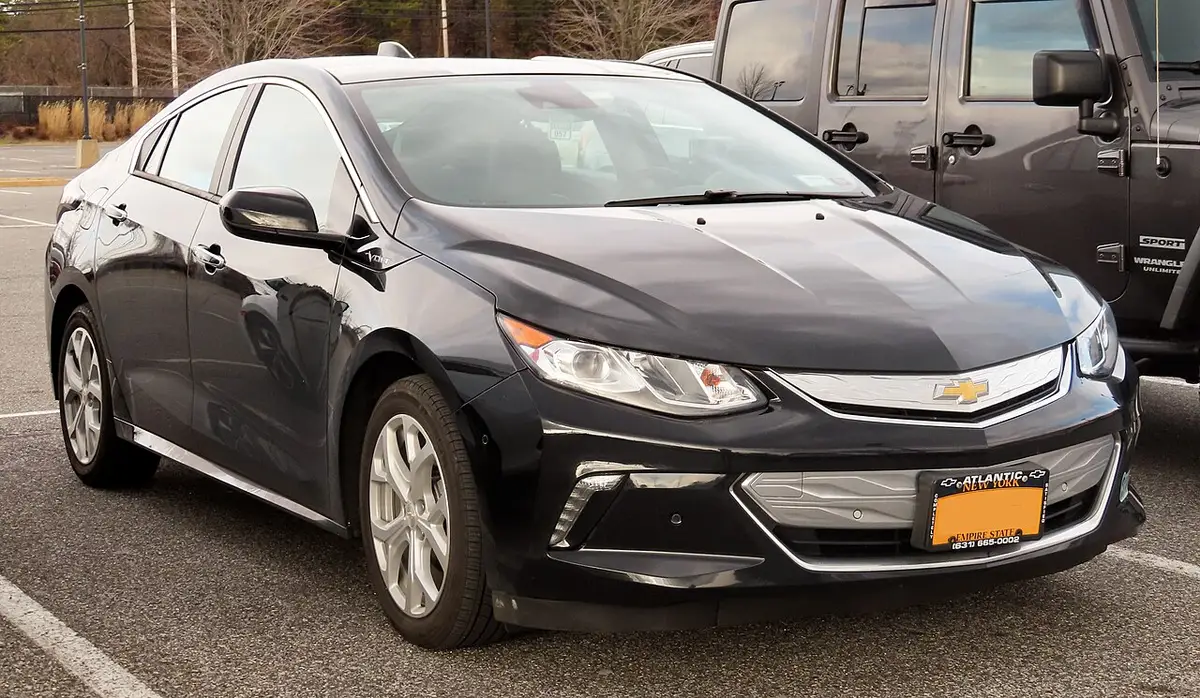
2018 Chevrolet Volt
The most reported problem on the 2018 Chevrolet Volt is shift to park warning, with 58 complaints, usually around 25,000 miles.
- 225owner complaints
- 2recalls
- 4involved a crash
- 30,000median miles at failure
Newest report Sep 29, 2026 · checked Oct 2, 2026
What is your Volt doing?
Each one opens a sheet built from the owner reports of that problem on the 2018 model year.
Is the 2018 Chevrolet Volt reliable?
The 2018 Chevrolet Volt has 225 owner complaints on file with NHTSA, close to the median of 221 for 2018 hatchbacks on this site. Of the 6 Volt model years since 2014, it has the 2nd most complaints. Complaint counts rise with sales as well as faults, so read what owners report below before deciding.
At a glance
- Next to the 2017 and 2019
- Complaints ease off across these three model years. Counted per year on the road, the 2017 draws 70, the 2018 25 and the 2019 4.
- Top problem
- Two problems run close. Shift to park warning has 58 complaints and stalling has 56, out of 225 in all. A quarter of the 20 owners who gave a mileage for shift to park warning saw it by about 17,000 miles, and half by about 25,000.
- Crash, fire and injury reports
- Only 4 of the 225 complaints (2%) report a crash, a fire or an injury, well under the 6% typical of vehicles on this site. Counted separately (one report can carry more than one), 4 reports mention a crash and 1 person was hurt.
- Recalls behind the top problems
- No recall on file is on the same system as shift to park warning, stalling and infotainment. For those, the complaints are all there is.
- When owners filed
- Filings peaked in 2024 at 43 (full calendar years only). In 2025 there were 37. So far in 2026, 18 more have come in.
When each problem shows up
Each bar covers the middle half of the mileages owners reported for that problem. A quarter saw it earlier, a quarter later. The tick is the median. Most reported: "shift to park" or "service shifter" warning comes on, 58 complaints.
middle half of reports, median tick. The heavier grey bars have 75 or more reports.
Behind you
Around your mileage
Ahead of you
How this compares
225 complaints is 1.2 times fewer than the median 2018 model on this site and about the median for a 2018 hatchback. Among the 3 Volt model years here it ranks 2nd for complaints. Counts follow sales volume as much as reliability, so a truck that sells 700,000 a year draws more reports than a sedan that sells 200,000.
Service bulletins for the 2018 Chevrolet Volt
Chevrolet filed 850 bulletins and other notices with NHTSA that list the 2018 Chevrolet Volt. 43 of them deal with a problem owners have reported on this car. Newest first.
Federal rules make a manufacturer send NHTSA a copy of any notice about a defect that goes to more than one dealer or owner. Most of these are service bulletins, the repair instructions manufacturers send to dealers. NHTSA generally leaves safety recall bulletins out of this file, and recalls are listed separately.
"Shift to Park" or "Service Shifter" warning comes on 4 bulletins · 58 complaints
This service bulletin provides repair information to correct a customer concern of seeing an intermittent Shift to Park message displayed while vehicle is in Park.
This technical bulletin provides repair information to correct a customer concern of seeing an intermittent Shift to Park message displayed while vehicle is in park.
2 more on this problem
This technical bulletin provides repair information to correct a customer concern of message displaying shift to park when in park.
This Preliminary Information communication provides information to the technician about vehicles that have a Shift to Park message on the Driver Information Center. Technician will find Diagnostic Trouble Codes P1AEE, P1AEF, P1AF0, P1AF2, and P1E22.
Engine stalls or loses power while driving 1 bulletin · 56 complaints
N192259800 Customer Satisfaction Program - Certain vehicles may have a condition in which the drive motor power inverter module is susceptible to a thermal over-stress failure.
Infotainment, screen or backup camera fails 12 bulletins · 38 complaints
This service bulletin provides diagnostic information to correct customer concerns of Speed Limited Message or Reduced Propulsion Power Message Displayed on Driver Information Center (DIC) with no DTCs Set.
This technical bulletin provides repair information to correct a customer concern of seeing an intermittent Shift to Park message displayed while vehicle is in park.
10 more on this problem
This Preliminary Information communication provides information to the technician about vehicles that the Navigation radio does not have a global positioning system location but OnStar is able to accurately locate the vehicle.
This Preliminary Information communication advises the technician on the steps to diagnose the concern and the steps to repair the concern. Customer states that they are unable to select delayed or delayed/rate based charging.
This Preliminary Information communication provides information to the technician about vehicles that may have an issue when using Bluetooth voice recognition with an iPhone.
This technical bulletin provides a procedure to replace the HMI module to correct a condition of Radio Control (ICS) Display Does Not Remain Off at Times after it Has Been Turned Off in the Radio Settings Menu due to a software concern.
This informational bulletin provides information for the technicians on multi-media infotainment tester (MIT), does not function properly when diagnosing infotainment complaints, which may lead to mis-diagnosis.
This technical bulletin provides a procedure to clear the codes and re-evaluate the XM radio channels to correct a condition of audio muting when listening to some Sirius XM channels but if they change channels they will find others that experience normal ...
This preliminary information bulletin provides a procedure on how to check for the customer concern of a blank radio with/without audio, by checking the the wiring harness, ECU and reprograming the HMI software update, if the wiring or ECU are not the cause.
This technical bulletin provides repair information for repairing the IP to body harness connector to correct a customer concern for intermittent Malfunction Indicator Lamp (MIL) illuminated with Reduced Engine Power displayed and DTC P2138 set.
This Preliminary Information communication provides information to the technician about customers that may complain of various concerns when using Bluetooth components.
This informational bulletin provides information on On rare occasions, a security code input message with SPS error code E5659, M5304, and/or M5530 may be displayed in TIS2web when the technician is programming any module.
Check engine light or misfire 16 bulletins · 36 complaints
This service bulletin advises the tech to check the wiring harness to validate that the harness is not the cause of the check engine light and to replace the EGR to correct a customer concern of MIL Illuminated.
This Preliminary information communicates information that will need to be provided to TAC to aid in diagnosing if a vehicle comes in with misfire and DTC Codes P0300 - P0308 and/or P050D
14 more on this problem
This service bulletin provides diagnostic tips/steps on testing for possible EVAP leaks in the system to correct a customer concern of an MIL Illuminated with DTCs P0442 and/or P0455 Set.
This service bulletin provides repair information to correct a customer concern of a Check Engine Light Illuminated, No Start/ No Propulsion, DTC P0A0C.
This Preliminary Information communication provides information to the technician about engine block of possible cylinder bore damage, scoring or out of round as the possible cause of engine oil consumption, misfire, cylinder leakage or blow by.
This informational bulletin advises of a new fuel injection cleaner kit used for decarbonizing the intake valves to correct conditions of rough idle, Crank no start, extended crank or misfire, MIL with DTCs, and explains how Top Tier fuels should be used to ...
This Preliminary information communicates the possibility of a misfire occuring due to a broken center insulator on the spark plug.
This Preliminary Information communication provides information to the technician related to vehicles that have a Malfunction Indicator Lamp on. A technician may find Diagnostic Trouble Code P050D set as current or history.
Emissions Recall. General Motors has decided to conduct a Voluntary Emission Recall involving certain vehicles, equipped with 4-cylinder engines (RPO LHN, LEX, L3A, LYX, LKN, LE2, LCV or LTG).
This Preliminary information communicates the possibility of the PCV orifice in the valve cover being plugged and causing the check engine lamp to illuminate and set dtc P00C7 and P0106.
This Preliminary Information communication provides information to the technician about the difficulty in detecting internal combustion engine misfires with a fully charged high voltage battery.
18239 - Emissions Recall - General Motors has decided to conduct a Voluntary Emission Recall involving certain 2018 model year vehicles, equipped with 4-cylinder engines (RPO LHN, LEX, L3A, LYX, LKN, LE2, LCV or LTG).
Plus 4 older ones not listed here.
Battery dies or the car will not start 2 bulletins · 33 complaints
Customer Satisfaction program - certain vehicles may have a condition related to the high voltage battery which could gradually lose the ability to maintain voltage.
This Preliminary Information communication provides information to the technician about vehicles that have the high voltage battery the tabs on X3 could become damaged during service.
Hybrid or EV system warning, loss of power 2 bulletins · 13 complaints
This Bulletin provides T6 Power Inverter Module reprogramming information to correct DTC P3260.
This Preliminary Information communication provides the technician with inspection and repair instructions for vehicles with a no start/no propulsion condition that is setting a DTC P0A0C for the high voltage interlock circuit.Technician will reprogram the ...
Brakes grind, pulse or wear early 3 bulletins · 9 complaints
This service bulletin provides information for tire pressure monitoring (TPM) system concerns.
This technical bulletin provides repair information to correct a customer concern of intermittent click noise at front of vehicle, ABS, Traction Control System (TCS)/Stabilitrak lamps may illuminate intermittently and/or deactivate for ignition cycle with ...
1 more on this problem
This Bulletin provides information, tips and graphics regarding specific Hybrid vehicle hydraulic brake system failures, emphasizing disc brake caliper guide pin failures.
A/C blows warm or the compressor fails 3 bulletins · 6 complaints
PI to help diagnose A/C concern
This Preliminary Information communication provides information to the technician about vehicles that the Heater-Vent-Air Conditioning blows warm air.
1 more on this problem
Emissions - General Motors has decided to conduct a voluntary emissions recall involving certain 2016-2019 model year Chevrolet Volt vehicles.
Complaints filed by year
43 complaints came in 2024. Owners file in waves when a problem gets press or an investigation, so a spike measures attention as much as failures.
NHTSA investigations
Loss of motive power due to the battery energy control module. Closed mar 3, 2025.
NHTSA summary
Pedestrian alert sounds. Closed aug 7, 2023, led to recall 22V-063.
NHTSA summary
Recalls that include the 2018 Chevrolet Volt
Whether your car is included depends on its VIN. Check yours at nhtsa.gov/recalls.
General Motors LLC (GM) is recalling certain 2018-2019 Cadillac CT6, Escalade ESV, Chevrolet Suburban, Volt, and GMC Yukon XL vehicles. Certain second-row or third-row rear seatbelts retractor assemblies may not automatically lock when the seatbelt is fully pulled out of the retractor, possibly preventing a child seat from being properly secured. As such, these vehicles fail to comply with the requirements of Federal Motor Vehicle Safety Standard (FMVSS) number 208, "Occupant Crash Protection."
Risk and remedy
Remedy: GM will notify owners, and dealers will inspect the rear seatbelt retractors and replace them if necessary, free of charge. The recall began November 7, 2018. Owners may contact Cadillac customer service at 1-800-458-8006, Chevrolet customer service at 1-800-222-1020 or GMC customer service at 1-800-462-8782. GM's number for this recall is 18315.
General Motors LLC (GM) is recalling certain 2018-2019 Chevrolet Equinox, Impala, Cruze, Volt and Bolt EV vehicles, GMC Terrain vehicles, Buick Lacrosse and Regal vehicles, Cadillac XTS and XTS Professional vehicles and 2018 Chevrolet Malibu vehicles. The rear brake caliper pistons may have an insufficient coating causing gas pockets to form, potentially reducing rear brake performance.
Risk and remedy
Remedy: GM will notify owners, and dealers will bleed the vehicle's brake system, free of charge. The recall began October 11, 2018. Owners may contact Buick customer service at 1-800-521-7300, Cadillac customer service at 1-800-458-8006, Chevrolet customer service at 1-800-222-1020, or GMC customer service at 1-800-462-8782. GM's number for this recall is 18279.
All 2 recalls on the 2018 Chevrolet Volt, with the owner complaints on each recalled system
Guide Buying one used? How to research one car’s history before you pay
Questions
What is the most common problem on the 2018 Chevrolet Volt?
Shift to park warning, with 58 of the 225 complaints. Owners who gave a mileage for it put the median at about 25,000 miles.
At what mileage do 2018 Chevrolet Volt problems start?
Of the 63 complaints that give a mileage, a quarter came by about 15,000 miles and half by about 30,000.
Is the 2018 Chevrolet Volt better or worse than the 2017 and 2019?
Counted per year on the road, the 2018 has fewer complaints than the 2017 and more complaints than the 2019: 25 a year against 70 and 4.
How many 2018 Chevrolet Volt complaints involve a crash, fire or injury?
4 of them (2%). The typical vehicle on this site is at 6%.
Is there a recall for shift to park warning on the 2018 Chevrolet Volt?
No recall on file for the 2018 Chevrolet Volt is on the same system as shift to park warning. Another recall may still cover your car, so check its VIN at nhtsa.gov/recalls.