First generation
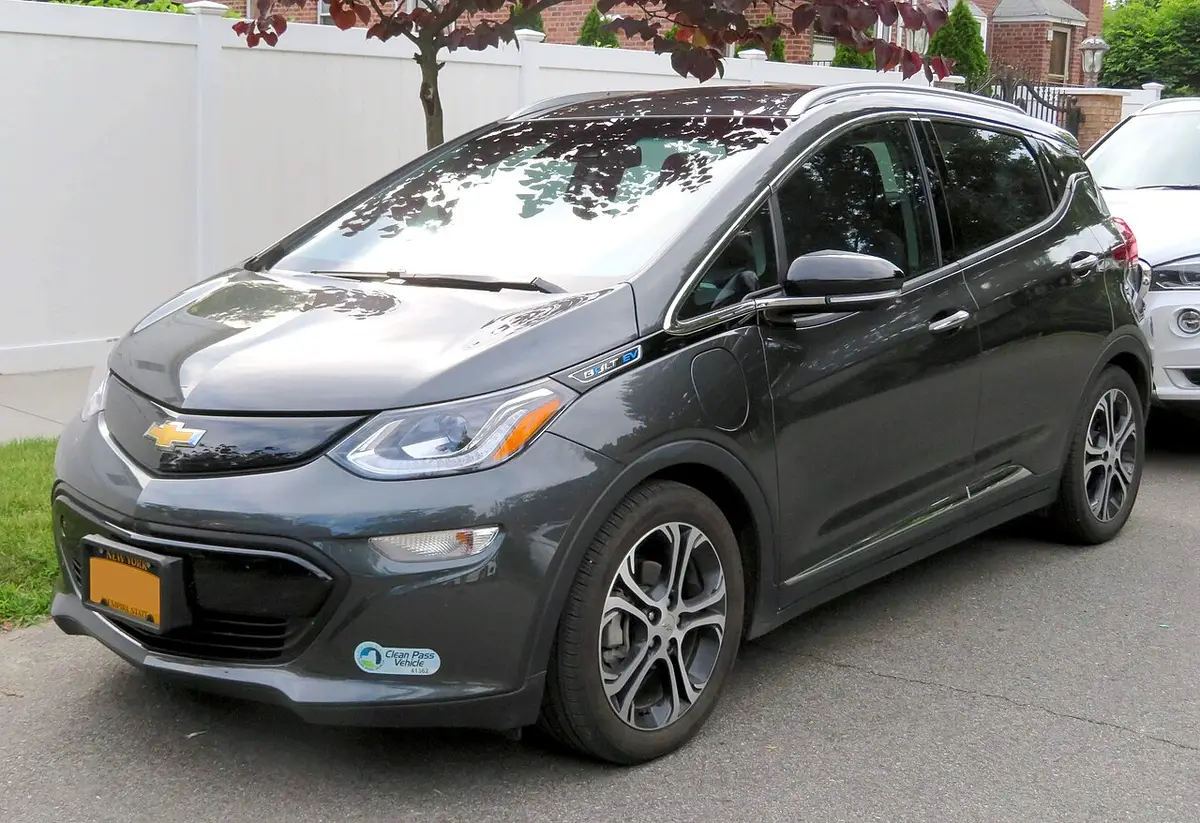
2020 Chevrolet Bolt EV
The most reported problem on the 2020 Chevrolet Bolt EV is dead battery, with 37 complaints.
- 174owner complaints
- 8recalls
- 7involved a crash
- 20,000median miles at failure
Newest report Sep 16, 2026 · checked Oct 2, 2026
What is your Bolt EV doing?
Each one opens a sheet built from the owner reports of that problem on the 2020 model year.
Is the 2020 Chevrolet Bolt EV reliable?
The 2020 Chevrolet Bolt EV has 174 owner complaints on file with NHTSA, close to the median of 174 for 2020 hatchbacks on this site. Of the 7 Bolt EV model years since 2017, it has the 3rd most complaints. Complaint counts rise with sales as well as faults, so read what owners report below before deciding.
At a glance
- Next to the 2019 and 2021
- At 25 complaints for each year on the road, the 2020 runs close to the 2019 (22) and 2.2 times the 2021 (11).
- Top problem
- Dead battery leads with 37 of the 174 complaints (21%), ahead of infotainment at 21. Too few of the dead battery reports give a mileage to say when it starts.
- Crash, fire and injury reports
- 11 of the 174 complaints (6%) report a crash, a fire or an injury, about the 6% typical of vehicles on this site. Counted separately (one report can carry more than one), 7 reports mention a crash and 4 mention a fire. The most crash reports, 3 of 7, fall under airbag.
- Recalls behind the top problems
- Dead battery, the one problem here with enough reports to check, has a recall on the same system (21V-650, 24V-481 and 24V-812). A recall on the same system doesn't always cover the failure owners describe, so compare its summary with the complaints.
- When owners filed
- Filings peaked in 2023 at 41 and have dropped every year since, to 18 in 2025. So far in 2026, 16 more have come in.
When each problem shows up
Each bar covers the middle half of the mileages owners reported for that problem. A quarter saw it earlier, a quarter later. The tick is the median. Most reported: battery dies or the car will not start, 37 complaints.
middle half of reports, median tick. The heavier grey bars have 75 or more reports.
Behind you
Around your mileage
Ahead of you
How this compares
174 complaints is 1.3 times fewer than the median 2020 model on this site and about the median for a 2020 hatchback. Among the 3 Bolt EV model years here it ranks 3rd for complaints. Counts follow sales volume as much as reliability, so a truck that sells 700,000 a year draws more reports than a sedan that sells 200,000.
Service bulletins for the 2020 Chevrolet Bolt EV
Chevrolet filed 601 bulletins and other notices with NHTSA that list the 2020 Chevrolet Bolt EV. 18 of them deal with a problem owners have reported on this car. Newest first.
Federal rules make a manufacturer send NHTSA a copy of any notice about a defect that goes to more than one dealer or owner. Most of these are service bulletins, the repair instructions manufacturers send to dealers. NHTSA generally leaves safety recall bulletins out of this file, and recalls are listed separately.
Battery dies or the car will not start 5 bulletins · 37 complaints
Service Update - Certain vehicles may have a condition where the advanced diagnostic software recall remedy in NHTSA Recall 21V650 may not have been correctly installed in this vehicle population.
This Preliminary Information communication provides information to the technician about vehicles that have an intermittent no crank, no start, or start stall concern with the security light coming on.
3 more on this problem
Service Update - Certain vehicles may have a condition in which the internal mileage counter has been reset with a subsequent Hybrid/EV Powertrain Control Module 2 reprogramming event causing the HV Battery SOC to be limited to 80% beyond the required 6,213mi ...
This Preliminary information communicates to the dealers on the process to be able to order a replacement High Voltage battery pack for a vehicle that has a High Voltage battery battery concern and is not on the current open recall list.
This bulletin provides information on conditions that may cause EV Range Loss and for dealers/technicians to determine/differentiate items which require battery repair versus which items are normal for the vehicle.
Infotainment, screen or backup camera fails 1 bulletin · 21 complaints
This Preliminary information communicates a cocnern where a flashing spot can intermittently show up on the radio display while in reverse. The PI advises that engineering is investigating the concern.
Hybrid or EV system warning, loss of power 7 bulletins · 11 complaints
Service update - certain vehicles may have a condition where a false diagnostic trouble code (DTC) is set. Dealers are to reprogram the Hybrid Powertrain Control Module 2.
Certain vehicles are to receive a software update to improve the original Advanced Diagnostic Software. This software update reduces false diagnostic activation in certain vehicles under certain driving conditions, and prevents diagnostic data loss.
5 more on this problem
This Preliminary Information communication advises the technician to a possible Drive Unit fluid plug leak that a dealer may find, it also addresses the locations of the plugs that the technician may need to inspect for the possible leak.
Customer Satisfaction Program. Certain vehicles may have oil leaking from one or more of the plugs on the drive unit assembly.
This Preliminary information communicates that Engineering is currently investigating the cause of P0A3F. Advising the dealers to check connections. If nothing less found replace the power inverter module, the under-hood "engine" harness, and the transmission
This engineering information (EI) closure ends the need for information from the field on charge port receptacle Melting on the Vehicle condition.
This engineering information (EI) is requesting information from the field on charge port receptacle Melting on the Vehicles Concerns. Engineering is determining a root cause and needs to gather information that will be used to develop/validate a Field Fix.
Seat belt or seat problems 1 bulletin · 6 complaints
This informational bulletin provides information on Surface Rust on Front Seat Bottom Frames.
Backup camera goes black or freezes 2 bulletins · 6 complaints
This service bulletin provides repair information to correct a customer concern of Rear View Camera Issues - DTCs B395A, B395B, B395C, B101E, B101D.
This service bulletin provides repair information to correct a customer concern of Rear View Camera Coaxial Related Issues - DTCs B395A, B395B, B395C, B101E, B101D.
Infotainment screen freezes or goes black 2 bulletins · 5 complaints
This service bulletin provides repair information to correct a customer concern of Blue or Black Screen and Service Rear Vision System Message on Radio Display Shifting into Reverse.
This technical bulletin provides repair information to correct a customer concern of Blue or Black Screen and Service Rear Vision System Message on Radio Display Shifting into Reverse.
Complaints filed by year
41 complaints came in 2023. Owners file in waves when a problem gets press or an investigation, so a spike measures attention as much as failures.
NHTSA investigations
Pedestrian alert sounds. Closed aug 7, 2023, led to recall 22V-063.
NHTSA summary
Electric vehicle battery fires. Closed feb 7, 2022, led to recall 20V-701.
NHTSA summary
Recalls that include the 2020 Chevrolet Bolt EV
Whether your car is included depends on its VIN. Check yours at nhtsa.gov/recalls.
General Motors, LLC (GM) is recalling certain 2020-2022 Chevrolet Bolt EV and 2022 Bolt EUV vehicles previously repaired under Recall 21V-650. The installation of advanced diagnostic software may have failed. As such, the high voltage battery could catch fire when charged to full or nearly full capacity.
Risk and remedy
Remedy: Owners are advised to take the following interim steps: Set the Target Charge Level feature in their vehicle to limit the charge level to 90%, charge their vehicle more frequently, avoid depleting the battery to 70 miles range remaining, park outside after charging, and do not charge the vehicle indoors overnight. Dealers will reinstall advanced diagnostic software, free of charge. Owner notification letters were mailed December 3, 2024. Owners may contact the Bolt EV Concierge Team at 1-833-382-4389. GM's number for this recall is N242470160.
General Motors, LLC (GM) is recalling certain 2020-2022 Chevrolet Bolt EV and 2022 Chevrolet Bolt EUV vehicles that were previously remedied under recall number 21V-650. The advanced diagnostic software may have been incorrectly installed and fail to detect defective battery modules, possibly resulting in a battery fire.
Risk and remedy
Remedy: Owners are advised to take the following interim steps: Set the Target Charge Level feature in their vehicle to limit the charge level to 90%, charge their vehicle more frequently, avoid depleting the battery to 70 miles range remaining, park outside after charging, and do not charge the vehicle indoors overnight. Dealers will reinstall the advanced diagnostic software, free of charge. Owner notification letters were mailed on August 1, 2024. Owners may contact the Bolt EV Concierge Team at 1-833-382-4389. GM's numbers for this recall are N242443000 and N242443002.
General Motors, LLC (GM) is recalling certain 2017-2023 Chevrolet Bolt EV vehicles. This recall includes certain vehicles previously repaired incorrectly under NHTSA recall number 22V-930. After a crash with seat belt pretensioner deployment, the pretensioner exhaust may ignite carpet fibers near the B-pillar, causing a fire.
Risk and remedy
Remedy: Dealers will inspect both front seat belt pretensioners and, if necessary, install metal foil at the carpet near the pretensioner exhaust. Certain vehicles will also need a pretensioner cover installed. Repairs will be performed free of charge. Owner notification letters were mailed January 24, 2024. These vehicles were previously recalled for this same issue under recall number 22V-930 and will need to have the new remedy performed. Owners may contact GM EV Concierge at 1-833-EVCHEVY (1-833-382-4389) (TTY 711 / 1-800-833-2438) or Customer Service at 1-800-222-1020. GM's number for this recall is N232421970.
General Motors, LLC (GM) is recalling certain 2017-2023 Chevrolet Bolt EV vehicles. After a crash with seat belt pretensioner deployment, the pretensioner exhaust may ignite carpet fibers near the B-pillar, causing a fire.
Risk and remedy
Remedy: Dealers will install metal foil at the carpet near the pretensioner exhaust, and install a pretensioner cover as necessary, free of charge. Owner notification letters were mailed between January 23, 2023 and April 25, 2023. Owners may contact Chevrolet customer service at 1-800-222-1020. GM's number for this recall is N222383790.
General Motors, LLC (GM) is recalling certain 2020-2022 Chevrolet Bolt EV and 2022 Chevrolet Bolt EUV vehicles. The high voltage battery could catch fire when charged to full or nearly full capacity.
Risk and remedy
Remedy: Owners are advised to take the following interim steps: Set the Target Charge Level feature in their vehicle to limit the charge level to 90%, charge their vehicle more frequently, avoid depleting the battery to 70 miles range remaining, park outside after charging, and do not charge the vehicle indoors overnight. Defective battery modules will be replaced by GM, free of charge. Owner notification letters were mailed on October 1, 2021 and June 23, 2023. Owners may contact the Bolt EV Concierge Team at 1-833-382-4389. This recall is an expansion of NHTSA recall 21V-560. GM's number for this recall is N212345940.
General Motors, LLC (GM) is recalling certain 2020 Chevrolet Bolt EV and 2021 GMC Canyon and Sierra 1500, 2500 and 3500, Yukon, Yukon XL, Cadillac Escalade and Escalade ESV and Chevrolet Blazer, Camaro, Colorado, Equinox, Silverado 1500, 2500 and 3500, Suburban and Tahoe vehicles. Incorrect bolts may have been used at one or more fastening locations to secure the seat belts to the vehicle. If an incorrect bolt was used, the seat belt may not be properly attached to the vehicle.
Risk and remedy
Remedy: GM will notify owners, and dealers will replace the suspect bolts, free of charge. The recall began January 29, 2021. Owners may contact GMC customer service at 1-800-462-8785, Cadillac customer service at 1-800-458-8006, or Chevrolet customer service at 1-800-222-1020. GM's number for this recall is N202322230.
General Motors, LLC (GM) is recalling certain 2020 Chevrolet Bolt EV vehicles. These vehicles may have an improperly cast front left brake caliper that can fracture during a high-pressure braking event.
Risk and remedy
Remedy: GM will notify owners, and dealers will inspect the casting lot number on the front left brake caliper and replace it if necessary, free of charge. The recall began January 29, 2021. Owners may contact Chevrolet customer service at 1-800-222-1020. GM's number for this recall is N202321400.
General Motors LLC (GM) is recalling certain 2019-2020 Chevrolet Bolt EV vehicles. The door-handle cable inside the rear doors may be too long, allowing contact with the window when it is opened, possibly damaging the cable. A damaged cable may cause the rear door to open unintentionally when the rear window is opened. Additionally, it may cause the rear inside door handle to not work.
Risk and remedy
Remedy: GM will notify owners, and dealers will replace the rear inside door-handle cables, free of charge. The recall began April 17, 2020. Owners may contact Chevrolet customer service at 1-800-222-1020. GM's number for this recall is A202298320.
All 8 recalls on the 2020 Chevrolet Bolt EV, with the owner complaints on each recalled system
Guide Buying one used? How to research one car’s history before you pay
Questions
What is the most common problem on the 2020 Chevrolet Bolt EV?
Dead battery, with 37 of the 174 complaints.
At what mileage do 2020 Chevrolet Bolt EV problems start?
Of the 32 complaints that give a mileage, a quarter came by about 3,000 miles and half by about 20,000.
Is the 2020 Chevrolet Bolt EV better or worse than the 2019 and 2021?
Counted per year on the road, the 2020 has about as many complaints as the 2019 and more complaints than the 2021: 25 a year against 22 and 11.
How many 2020 Chevrolet Bolt EV complaints involve a crash, fire or injury?
11 of them (6%). The typical vehicle on this site is at 6%.
Is there a recall for dead battery on the 2020 Chevrolet Bolt EV?
Yes, NHTSA lists 3 recalls on the same system: 21V-650, 24V-481 and 24V-812. Its summary says which failure it covers, and that isn't always the one owners describe.