First generation
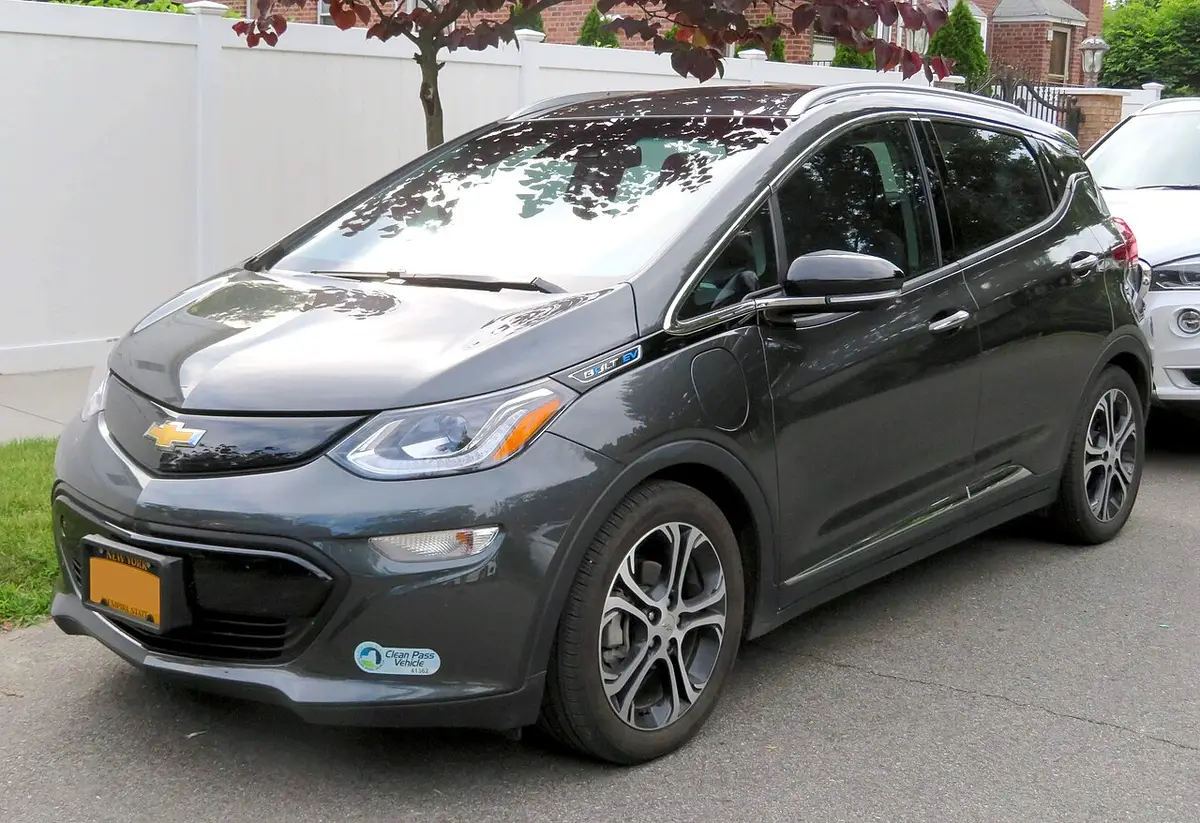
2019 Chevrolet Bolt EV
The most reported problem on the 2019 Chevrolet Bolt EV is dead battery, with 46 complaints, usually around 15,000 miles.
- 178owner complaints
- 6recalls
- 2involved a crash
- 18,106median miles at failure
Newest report Sep 21, 2026 · checked Oct 2, 2026
What is your Bolt EV doing?
Each one opens a sheet built from the owner reports of that problem on the 2019 model year.
Is the 2019 Chevrolet Bolt EV reliable?
The 2019 Chevrolet Bolt EV has 178 owner complaints on file with NHTSA, close to the median of 178 for 2019 hatchbacks on this site. Of the 7 Bolt EV model years since 2017, it has the 2nd most complaints. Complaint counts rise with sales as well as faults, so read what owners report below before deciding.
At a glance
- Next to the 2018 and 2020
- At 22 complaints for each year on the road, the 2019 runs 2.2 times the 2018 (10) and close to the 2020 (25).
- Top problem
- Dead battery leads with 46 of the 178 complaints (26%), ahead of hybrid system at 22. A quarter of the 11 owners who gave a mileage for dead battery saw it by about 7,000 miles, and half by about 15,000.
- Crash, fire and injury reports
- 12 of the 178 complaints (7%) report a crash, a fire or an injury, about the 6% typical of vehicles on this site. Counted separately (one report can carry more than one), 2 reports mention a crash, 10 mention a fire and 5 people were hurt.
- Recalls behind the top problems
- Dead battery, the one problem here with enough reports to check, has a recall on the same system (20V-701 and 21V-560). A recall on the same system doesn't always cover the failure owners describe, so compare its summary with the complaints.
- When owners filed
- Filings jumped in 2021, with 77 complaints, 3.3 times the next busiest year. So far in 2026, 14 more have come in.
When each problem shows up
Each bar covers the middle half of the mileages owners reported for that problem. A quarter saw it earlier, a quarter later. The tick is the median. Most reported: battery dies or the car will not start, 46 complaints.
middle half of reports, median tick. The heavier grey bars have 75 or more reports.
Behind you
Around your mileage
Ahead of you
How this compares
178 complaints is 1.3 times fewer than the median 2019 model on this site and about the median for a 2019 hatchback. Among the 3 Bolt EV model years here it ranks 2nd for complaints. Counts follow sales volume as much as reliability, so a truck that sells 700,000 a year draws more reports than a sedan that sells 200,000.
Service bulletins for the 2019 Chevrolet Bolt EV
Chevrolet filed 630 bulletins and other notices with NHTSA that list the 2019 Chevrolet Bolt EV. 15 of them deal with a problem owners have reported on this car. Newest first.
Federal rules make a manufacturer send NHTSA a copy of any notice about a defect that goes to more than one dealer or owner. Most of these are service bulletins, the repair instructions manufacturers send to dealers. NHTSA generally leaves safety recall bulletins out of this file, and recalls are listed separately.
Battery dies or the car will not start 4 bulletins · 46 complaints
This Preliminary Information communication provides information to the technician about vehicles that have an intermittent no crank, no start, or start stall concern with the security light coming on.
Certain vehicles may have a condition in which fasteners used to secure an external connector to the high voltage battery pack may not have been torqued to specification. Dealers will secure all suspect connections to the appropriate torque specification.
2 more on this problem
This Preliminary information communicates to the dealers on the process to be able to order a replacement High Voltage battery pack for a vehicle that has a High Voltage battery battery concern and is not on the current open recall list.
This bulletin provides information on conditions that may cause EV Range Loss and for dealers/technicians to determine/differentiate items which require battery repair versus which items are normal for the vehicle.
Hybrid or EV system warning, loss of power 4 bulletins · 22 complaints
This service bulletin provides repair information to correct a customer concern of Vehicle Unable to Charge, Charge Port Lock Actuator Engaged and Will Not Unlock with DTCs P3014 and/or P302D Set.
This Preliminary information communicates that Engineering is currently investigating the cause of P0A3F. Advising the dealers to check connections. If nothing less found replace the power inverter module, the under-hood "engine" harness, and the transmission
2 more on this problem
This engineering information (EI) closure ends the need for information from the field on charge port receptacle Melting on the Vehicle condition.
This engineering information (EI) is requesting information from the field on charge port receptacle Melting on the Vehicles Concerns. Engineering is determining a root cause and needs to gather information that will be used to develop/validate a Field Fix.
Infotainment, screen or backup camera fails 5 bulletins · 12 complaints
This service bulletin provides a procedure to check the rearview mirror coax connector for looseness by disconnecting and reconnecting the electrical connector to correct the customers concern for the rearview mirror video screen displaying blue.
This service bulletin provides repair information to correct a customer concern of Rear View Camera Issues - DTCs B395A, B395B, B395C, B101E, B101D.
3 more on this problem
This service bulletin provides repair information to correct a customer concern of Rear View Camera Coaxial Related Issues - DTCs B395A, B395B, B395C, B101E, B101D.
This informational bulletin provides information for dealers/technicians on locating and repairing water leaks in the rear cargo area, rear compartment well, possible loss of chime and/or radio functions.
This technical bulletin provides a procedure to check the rearview mirror coax connector for looseness by disconnecting and reconnecting the electrical connector and to correct the customers concern for the rearview mirror video screen displaying blue.
Brakes grind, pulse or wear early 2 bulletins · 5 complaints
This service bulletin provides information for tire pressure monitoring (TPM) system concerns.
This service bulletin provides a procedure to correct a customer concern of a Clicking Type Noise Heard Near Brake Pedal and/or I-Booster Under the Hood.
Complaints filed by year
77 complaints came in 2021, 5.9 times the year before. Owners file in waves when a problem gets press or an investigation, so a spike measures attention as much as failures.
NHTSA investigations
Pedestrian alert sounds. Closed aug 7, 2023, led to recall 22V-063.
NHTSA summary
Electric vehicle battery fires. Closed feb 7, 2022, led to recall 20V-701.
NHTSA summary
Recalls that include the 2019 Chevrolet Bolt EV
Whether your car is included depends on its VIN. Check yours at nhtsa.gov/recalls.
General Motors, LLC (GM) is recalling certain 2017-2023 Chevrolet Bolt EV vehicles. This recall includes certain vehicles previously repaired incorrectly under NHTSA recall number 22V-930. After a crash with seat belt pretensioner deployment, the pretensioner exhaust may ignite carpet fibers near the B-pillar, causing a fire.
Risk and remedy
Remedy: Dealers will inspect both front seat belt pretensioners and, if necessary, install metal foil at the carpet near the pretensioner exhaust. Certain vehicles will also need a pretensioner cover installed. Repairs will be performed free of charge. Owner notification letters were mailed January 24, 2024. These vehicles were previously recalled for this same issue under recall number 22V-930 and will need to have the new remedy performed. Owners may contact GM EV Concierge at 1-833-EVCHEVY (1-833-382-4389) (TTY 711 / 1-800-833-2438) or Customer Service at 1-800-222-1020. GM's number for this recall is N232421970.
General Motors, LLC (GM) is recalling certain 2017-2023 Chevrolet Bolt EV vehicles. After a crash with seat belt pretensioner deployment, the pretensioner exhaust may ignite carpet fibers near the B-pillar, causing a fire.
Risk and remedy
Remedy: Dealers will install metal foil at the carpet near the pretensioner exhaust, and install a pretensioner cover as necessary, free of charge. Owner notification letters were mailed between January 23, 2023 and April 25, 2023. Owners may contact Chevrolet customer service at 1-800-222-1020. GM's number for this recall is N222383790.
General Motors LLC (GM) is recalling certain 2017-2019 Chevrolet Bolt EV vehicles previously recalled under NHTSA recall number 20V-701. The high voltage battery could catch fire when charged to full or nearly full capacity.
Risk and remedy
Remedy: Owners are advised to take the following interim steps: Activate either the Hill Top Reserve (2017 and 2018 models) or Target Charge Level (2019 models) feature in their vehicle to limit the charge level to 90%, charge their vehicle more frequently, avoid depleting the battery to 70 miles range remaining, park outside after charging, and do not charge the vehicle indoors overnight. Defective battery modules will be replaced by GM, free of charge. Interim notification letters notifying owners of the safety risk were mailed on August 13, 2021. Owner notification letters were mailed on August 13, 2021. Owners may contact the Bolt EV Concierge Team at 1-833-382-4389. GM's number for this recall is N212343880.
General Motors LLC (GM) is recalling all 2017-2018 and certain 2019 Chevrolet Bolt EV vehicles. The high voltage battery could catch fire when charged to full or nearly full capacity.
Risk and remedy
Remedy: This recall has been superseded by recall number 21V-560. Vehicles previously repaired under 20V-701 will still need to have the new remedy under recall 21V-560. GM will notify owners, and as an interim repair, beginning on November 17, 2020, dealers will reprogram the hybrid propulsion control module 2 (HPCM2) to limit the full charge to 90%, free of charge. Owners are advised to activate either the Hill Top Reserve (2017 and 2018 models) or Target Charge Level (2019 models) feature in their vehicle to limit the charge level to 90%, or park outside, until the software update is completed. Owners were notified of the interim repair beginning November 17, 2020. The second notice was mailed on May 11, 2021. Owners may contact the Bolt EV Concierge Team at 1-833-382-4389. GM's number for this recall is N202311730.
General Motors LLC (GM) is recalling certain 2019-2020 Chevrolet Bolt EV vehicles. The door-handle cable inside the rear doors may be too long, allowing contact with the window when it is opened, possibly damaging the cable. A damaged cable may cause the rear door to open unintentionally when the rear window is opened. Additionally, it may cause the rear inside door handle to not work.
Risk and remedy
Remedy: GM will notify owners, and dealers will replace the rear inside door-handle cables, free of charge. The recall began April 17, 2020. Owners may contact Chevrolet customer service at 1-800-222-1020. GM's number for this recall is A202298320.
General Motors LLC (GM) is recalling certain 2018-2019 Chevrolet Equinox, Impala, Cruze, Volt and Bolt EV vehicles, GMC Terrain vehicles, Buick Lacrosse and Regal vehicles, Cadillac XTS and XTS Professional vehicles and 2018 Chevrolet Malibu vehicles. The rear brake caliper pistons may have an insufficient coating causing gas pockets to form, potentially reducing rear brake performance.
Risk and remedy
Remedy: GM will notify owners, and dealers will bleed the vehicle's brake system, free of charge. The recall began October 11, 2018. Owners may contact Buick customer service at 1-800-521-7300, Cadillac customer service at 1-800-458-8006, Chevrolet customer service at 1-800-222-1020, or GMC customer service at 1-800-462-8782. GM's number for this recall is 18279.
All 6 recalls on the 2019 Chevrolet Bolt EV, with the owner complaints on each recalled system
Guide Buying one used? How to research one car’s history before you pay
Questions
What is the most common problem on the 2019 Chevrolet Bolt EV?
Dead battery, with 46 of the 178 complaints. Owners who gave a mileage for it put the median at about 15,000 miles.
At what mileage do 2019 Chevrolet Bolt EV problems start?
Of the 47 complaints that give a mileage, a quarter came by about 7,000 miles and half by about 18,000.
Is the 2019 Chevrolet Bolt EV better or worse than the 2018 and 2020?
Counted per year on the road, the 2019 has more complaints than the 2018 and about as many complaints as the 2020: 22 a year against 10 and 25.
How many 2019 Chevrolet Bolt EV complaints involve a crash, fire or injury?
12 of them (7%). The typical vehicle on this site is at 6%.
Is there a recall for dead battery on the 2019 Chevrolet Bolt EV?
Yes, NHTSA lists 2 recalls on the same system: 20V-701 and 21V-560. Its summary says which failure it covers, and that isn't always the one owners describe.