Second generation (A61)
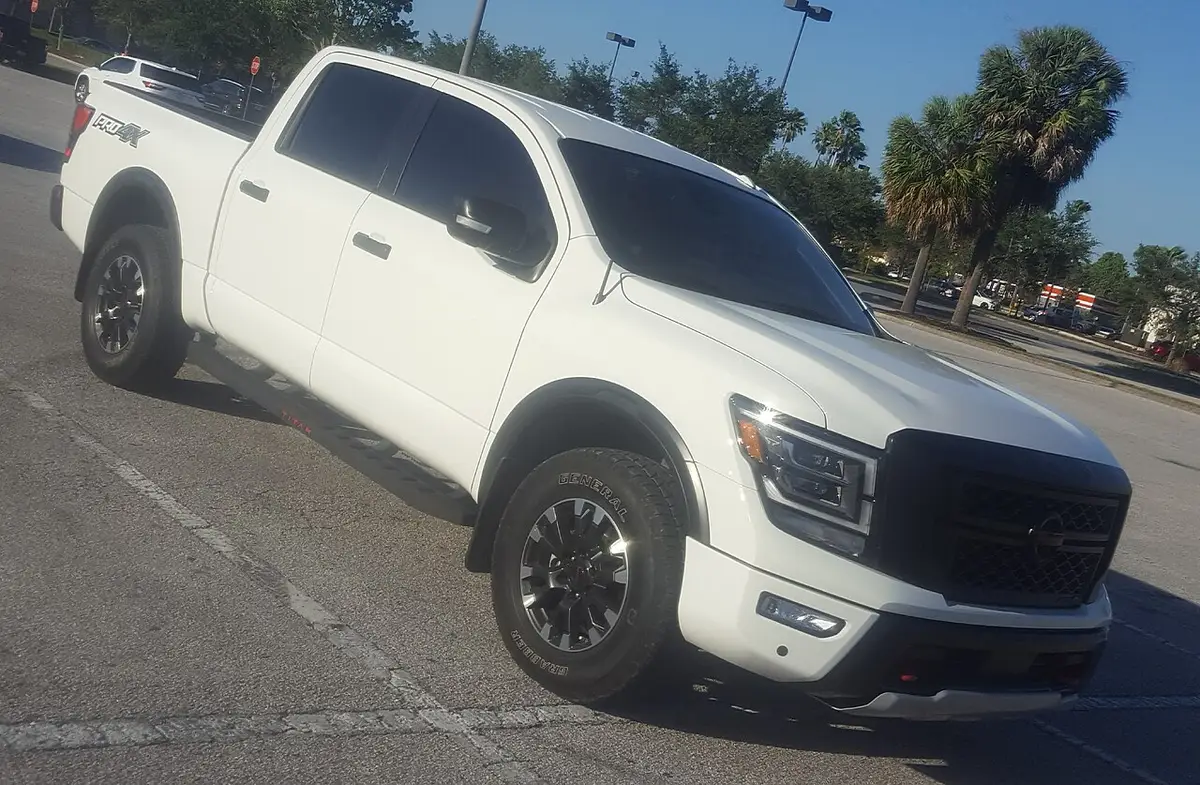
2017 Nissan Titan
The most reported problem on the 2017 Nissan Titan is stalling, with 39 complaints, usually around 57,000 miles.
- 187owner complaints
- 3recalls
- 5involved a crash
- 43,000median miles at failure
Newest report Aug 29, 2026 · checked Oct 2, 2026
What is your Titan doing?
Each one opens a sheet built from the owner reports of that problem on the 2017 model year.
Is the 2017 Nissan Titan reliable?
The 2017 Nissan Titan has 187 owner complaints on file with NHTSA, less than half the median of 463 for 2017 pickups on this site. Of the 10 Titan model years since 2014, it has the most complaints. Complaint counts rise with sales as well as faults, so read what owners report below before deciding.
At a glance
- Next to the 2018
- At 19 complaints for each year on the road, the 2017 runs 1.9 times the 2018 (10). That's the only adjacent model year with enough complaints to set beside it.
- Top problem
- Two problems run close. Stalling has 39 complaints and engine failure has 38, out of 187 in all. A quarter of the 17 owners who gave a mileage for stalling saw it by about 18,000 miles, and half by about 57,000.
- Crash, fire and injury reports
- 15 of the 187 complaints (8%) report a crash, a fire or an injury, a little above the 6% typical of vehicles on this site. Counted separately (one report can carry more than one), 5 reports mention a crash, 9 mention a fire and 5 people were hurt. The most crash reports, 3 of 5, fall under airbag.
- Recalls behind the top problems
- No recall on file is on the same system as stalling and engine failure. For those, the complaints are all there is.
- When owners filed
- Filings peaked in 2024 at 37 (full calendar years only). In 2025 there were 21. So far in 2026, 9 more have come in.
When each problem shows up
Each bar covers the middle half of the mileages owners reported for that problem. A quarter saw it earlier, a quarter later. The tick is the median. Most reported: engine stalls or loses power while driving, 39 complaints.
middle half of reports, median tick. The heavier grey bars have 75 or more reports.
Behind you
Around your mileage
Ahead of you
How this compares
187 complaints is 1.4 times fewer than the median 2017 model on this site and 2.5 times fewer than the median 2017 pickup. Among the 1 Titan model years here it ranks 1st for complaints. Counts follow sales volume as much as reliability, so a truck that sells 700,000 a year draws more reports than a sedan that sells 200,000.
Service bulletins for the 2017 Nissan Titan
Nissan filed 249 bulletins and other notices with NHTSA that list the 2017 Nissan Titan. 35 of them deal with a problem owners have reported on this car. Newest first.
Federal rules make a manufacturer send NHTSA a copy of any notice about a defect that goes to more than one dealer or owner. Most of these are service bulletins, the repair instructions manufacturers send to dealers. NHTSA generally leaves safety recall bulletins out of this file, and recalls are listed separately.
Check engine light or misfire 16 bulletins · 18 complaints
SERVICE INFORMATION FOR FUEL GAUGE INACCURATE WITH DTCS STORED IN ECM SERVICE INFORMATION If a fuel level sensor has been diagnosed as sending an incorrect level signal, and one or more of the following DTCs are stored in the ECM, do not replace the entire âFuel Level Sensor Unit, Fuel Filter and Fuel Pump Assemblyâ (fuel pump assembly).
DTC P0456 CAUSED BY EVAP LEAK AT VENT CONTROL VALVE O-RING
14 more on this problem
EVAP LEAK DTC P0442, P0455, P0456 INFORMATION
MIL ON WITH DTC P0174
MIL ON WITH DTC P062F AND/OR P0603 STORED IF YOU CONFIRM The MIL is ON and DTC P062F (EEPROM) and/or P0603 (ECM BACK UP/CIRCUIT) is stored, And The customer stated the vehicle was recently started after sitting for an extended period of time (i.e., the battery voltage was low while attempting to start the engine).
2016-2019 TITAN XD DIESEL; MIL ON WITH DTC P226C STORED IF YOU CONFIRM The MIL is ON and DTC P226C (TC BOOST CONTROL SLOW RESPONSE) IS stored, And DTC P00AF (BOOST PRESSURE CONTROL) is NOT stored in the ECM, And Binding and/or resistance is observed when the rotary turbine control valve is moved from one stop to the other (full ...
2016-2019 TITAN; MIL ON WITH DTC P0448 AND WATER IN EVAP FILTER
2016-2019 TITAN; MIL ON WITH DTC P0448 AND WATER IN EVAP FILTER IF YOU CONFIRM The MIL is ON with DTC P0448 (EVAP canister vent control valve close) stored in the ECM and water is found in the EVAP filter, canister, or vent control valve ACTION Remove and replace the: - Fuel filler tube. - EVAP filter. - EVAP canister.
NISSAN; P0171 AND P0174 SERVICE INFORMATION SERVICE INFORMATION Diagnosis for DTCs P0171 (FUEL SYS LEAN B1) and P0174 (FUEL SYS LEAN B2) have been revised for the APPLIED VEHICLES listed above. When performing diagnosis for either of these DTCs, start by using the SERVICE PROCEDURE section of this bulletin.
ALL MODEL YEAR 2012 AND NEWER NISSAN VEHICLES; EVAP LEAK DTC P0442, P0455, P0456 INFORMATION This bulletin does NOT apply to LEAF vehicles and Titan XD vehicles with V8 diesel engine.
NISSAN; DTC P0456 CAUSED BY EVAP LEAK AT VENT CONTROL VALVE O-RING This bulletin does NOT apply to LEAF vehicles and Titan XD vehicles with V8 diesel engine.
2016-2019 TITAN XD DIESEL; FUEL FILTER MAINTENANCE This bulletin applies only to vehicles equipped with a Cummins 5.0L V8 diesel engine. SERVICE INFORMATION The Stage 1 and Stage 2 fuel filters must be replaced every 10,000 miles or a restriction may develop.
Plus 4 older ones not listed here.
Airbag warning light or recall 3 bulletins · 11 complaints
DTC B00A0-00 STORED IF YOU CONFIRM DTC B00A0-00 (OCCUPANT DETECTION SENSOR UNIT) is stored, AND OCS zero point reset cannot be performed,
DTC B00A0-00 STORED
1 more on this problem
AIR BAG WARNING LIGHT FLASHING INDICATING SYSTEM DIAGNOSTIC MODE IF YOU CONFIRM The air bag warning light is flashing slowly (repeating 2 seconds ON, 2 seconds OFF). NOTE: If this should occur, the Air Bag Diagnosis Sensor Unit is in Diagnostic Mode and needs to be returned to User Mode. ACTION 1.
Engine knocking or ticking 2 bulletins · 10 complaints
ENGINE KNOCK OR TICK NOISE
ENGINE KNOCK OR TICK NOISE IF YOU CONFIRM A knock or tick noise is coming from the engine Or The customer states a knock or tick noise is heard from the engine area. ACTION Refer to REPAIR OVERVIEW on page 3.
Infotainment, screen or backup camera fails 5 bulletins · 7 complaints
DTC B00A0-00 STORED IF YOU CONFIRM DTC B00A0-00 (OCCUPANT DETECTION SENSOR UNIT) is stored And OCS zero point reset cannot be performed And The following screen displays: ACTION 1.
2016-2018 TITAN XD; DTC P207F AND DEF SYSTEM ERROR IS DISPLAYED ON THE VEHICLE INFORMATION DISPLAY This bulletin applies only to vehicles equipped with a Cummins 5.0L V8 Diesel engine. The Applied Vehicles section, Table A on page 7, and the DTC Confirmation procedure have been revised. No other changes have been made.
3 more on this problem
2016-2018 NISSAN CONNECT NAVIGATION SYSTEM SOFTWARE UPDATE TO RESOLVE SEVERAL ISSUES This bulletin applies only to vehicles equipped with navigation system. IF YOU CONFIRM One or more of the following is occurring: - The navigation unit intermittently reboots: - At random or while listening to SXM or on a Bluetooth hands-free phone call.
2016-2017 TITAN XD; DTC P207F AND DEF SYSTEM ERROR IS DISPLAYED ON THE VEHICLE INFORMATION DISPLAY This bulletin applies to vehicles equipped with a Cummins 5.0L V8 Diesel engine. The Title and all sections on page 1 have been updated. Table A has also been updated.
2016 ? 2017 TITAN AND TITAN XD IGNITION WILL NOT TURN OFF This bulletin applies to vehicles not equipped with remote start.
Seat belt or seat problems 4 bulletins · 6 complaints
2016-2018 TITAN/TITAN XD; VISIBLE VIBRATION IN FRONT PASSENGER SEAT AT 60-80 MPH WHEN UNOCCUPIED IF YOU CONFIRM The front passenger seat has a visible vibration/movement that only occurs at speeds between 60 mph and 80 mph And Vibration/movement can be reproduced while driving on smooth roads (vibration/movement not caused by road surface) And All tires are in balance ...
2015-2019 MURANO AND 2016-2019 TITAN; CLIMATE CONTROLLED SEAT INOPERATIVE IF YOU CONFIRM The driver or passenger side climate controlled seat: - Heating and cooling features do not operate And - The harness connector or control unit of the climate controlled seat appears as shown in Figure 3 or Figure 5.
2 more on this problem
2016 - 2018 TITAN AND TITAN XD; CLIMATE CONTROLLED HEATED AND COOLED SEATS POOR OR NO OPERATION This bulletin applies only to vehicles equipped with climate controlled seats. The APPLIED VEHICLES section and pages 17 and 18 have changed. No other changes have been made.
2016 - 2017 TITAN AND TITAN XD; CLIMATE CONTROLLED HEATED AND COOLED SEATS POOR OR NO OPERATION This bulletin applies to Titan and Titan XD vehicles equipped with climate controlled seats. IF YOU CONFIRM The Climate Controlled (Heated and Cooled) seats do not heat or cool well, or do not work at all.
Transmission shudders, slips or shifts hard 1 bulletin · 5 complaints
VIBRATION DURING LIGHT OR MODERATE THROTTLE INPUT IF YOU CONFIRM A vibration during light or moderate throttle input between 20 â 40 mph, OR RPM flare / slip feeling / vibration during or immediately after a 2 â 3 upshift or 3 â 4 upshift with light or ...
A/C blows warm or the compressor fails 4 bulletins · 5 complaints
2016-2018 TITAN XD DIESEL; AIR CONDITIONING BLOWS HOT AIR AFTER EXTENDED IDLING OVER 100°F This bulletin applies only to vehicles equipped with a Cummins 5.0L V8 Diesel engine. No other changes have been made.
2017-2018 TITAN; AIR CONDITIONING BLOWS HOT AIR AFTER EXTENDED IDLING OVER 100°F No other changes have been made.
2 more on this problem
2017-2018 TITAN; AIR CONDITIONING BLOWS HOT AIR AFTER EXTENDED IDLING OVER 100°F IF YOU CONFIRM Hot air starts to blow from the dash vents while the Air Conditioning is ON, under the following conditions: - After the engine has idled for an extended period ...
2016-2017 TITAN AND TITAN XD; EXCESSIVE VENT TEMPERATURE DIFFERENCE IN DUAL CLIMATE CONTROL MODE WITH THE SAME TEMPERATURE SETTING This bulletin applies only to vehicles equipped with dual climate control air conditioning. APPLIED VINs and DATES have been added, and ACTION has been edited. No other changes have been made. Discard all previous versions of this bulletin.
Complaints filed by year
37 complaints came in 2024. Owners file in waves when a problem gets press or an investigation, so a spike measures attention as much as failures.
NHTSA investigations
Loss of motive power due to broken crankshaft with no ability to restart.. Closed jun 27, 2025.
NHTSA summary
Desiccated air bag inflator rupture. Open.
NHTSA summary
Recalls that include the 2017 Nissan Titan
Whether your car is included depends on its VIN. Check yours at nhtsa.gov/recalls.
Nissan North America, Inc. (Nissan) is recalling certain 2017-2019 gasoline, light duty, Titan vehicles. The alternator harness may have been damaged during the engine installation process, possibly resulting in an electrical short.
Risk and remedy
Remedy: Nissan will notify owners, and dealers will inspect the alternator harness for the proper routing and any damage. The harness will be clipped into the correct position or replaced as necessary, free of charge. The recall began August 8, 2019. Owners may contact Nissan customer service at 1-800-867-7669.
Nissan North America, Inc. (Nissan) is recalling certain 2016-2018 Nissan Titan, 2016 and 2018 Nissan Titan XD vehicles. Accessories installed on these vehicles reduced the load carrying capacity, however, a Load Carrying Capacity modification label was not installed, possibly allowing the vehicle to be overloaded. As such, these vehicles fail to comply with the requirements of Federal Motor Vehicle Safety Standard (FMVSS) number 110, "Tire Selection and Rims."
Risk and remedy
Remedy: Nissan will notify owners and provide a new modification label, with installation instructions, free of charge. The recall began on June 4, 2018. Owners may contact Nissan customer service at 1-800-867-7669.
Nissan North America, Inc. (Nissan) is recalling certain 2016-2017 Nissan Titan Crew Cab and Titan XD Crew Cab vehicles. In the event of a crash, the rear seatbelt assembly may not adequately protect the occupant's head, allowing it to contact the D-ring bolt trim cap. As such, these vehicles fail to conform to Federal Motor Vehicle Safety Standard (FMVSS) number 201, "Occupant Protection in Interior Impact."
Risk and remedy
Remedy: Nissan will notify owners, and dealers will install energy absorbing material to the C-Pillar Finishers and replace the Seatbelt Bolt and Bolt Cap, free of charge. The recall began September 19, 2017. Owners may contact Nissan customer service at 1-800-647-7261.
All 3 recalls on the 2017 Nissan Titan, with the owner complaints on each recalled system
Guide NHTSA has an open investigation on this car. What the investigation stages mean
Questions
What is the most common problem on the 2017 Nissan Titan?
Stalling, with 39 of the 187 complaints. Owners who gave a mileage for it put the median at about 57,000 miles.
At what mileage do 2017 Nissan Titan problems start?
Of the 106 complaints that give a mileage, a quarter came by about 14,000 miles and half by about 43,000.
Is the 2017 Nissan Titan better or worse than the 2018?
Counted per year on the road, the 2017 has more complaints than the 2018: 19 a year against 10.
How many 2017 Nissan Titan complaints involve a crash, fire or injury?
15 of them (8%). The typical vehicle on this site is at 6%.
Is there a recall for stalling on the 2017 Nissan Titan?
No recall on file for the 2017 Nissan Titan is on the same system as stalling. Another recall may still cover your car, so check its VIN at nhtsa.gov/recalls.