First generation
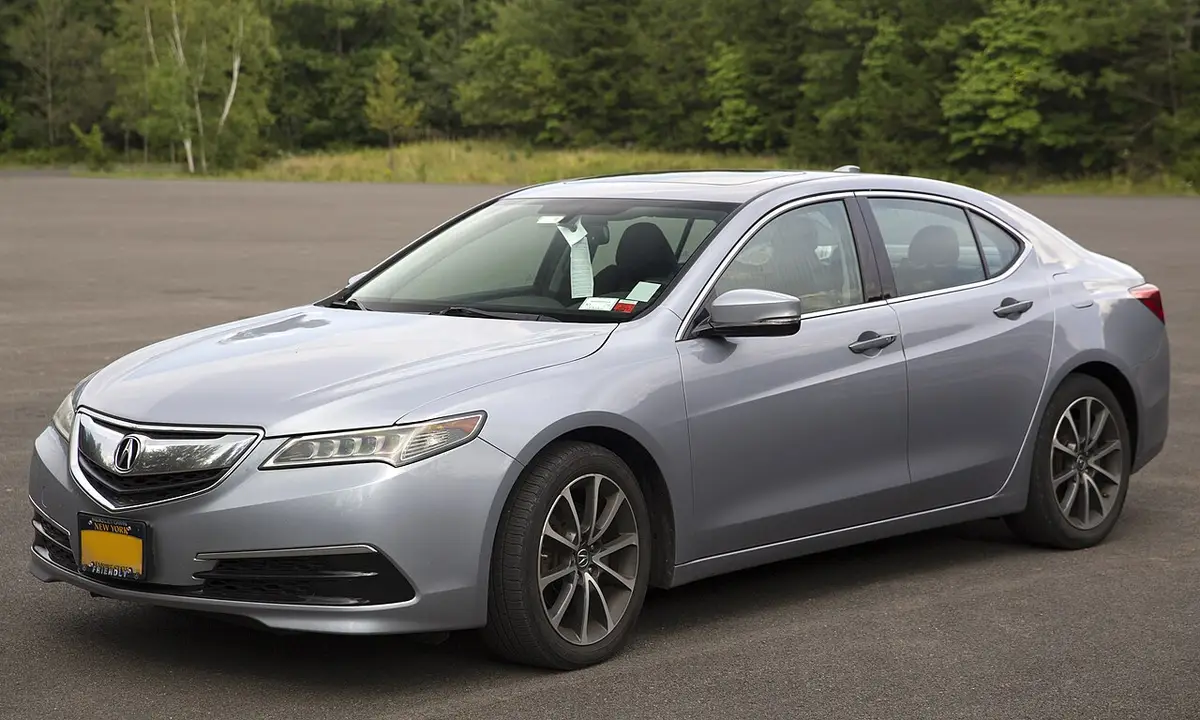
2016 Acura TLX
The most reported problem on the 2016 Acura TLX is stalling, with 19 complaints, usually around 83,000 miles.
- 110owner complaints
- 3recalls
- 5involved a crash
- 43,610median miles at failure
Newest report Jul 18, 2026 · checked Oct 2, 2026
Problem sheets
No single problem on the 2016 Acura TLX has enough owner reports for a sheet of its own yet. The counts below still cover every complaint on file.
Is the 2016 Acura TLX reliable?
The 2016 Acura TLX has 110 owner complaints on file with NHTSA, less than half the median of 232 for 2016 sedans on this site. Of the 9 TLX model years since 2015, it has the 2nd most complaints. Complaint counts rise with sales as well as faults, so read what owners report below before deciding.
At a glance
- Next to the 2017
- At 10 complaints for each year on the road, the 2016 runs above the 2017 (7). That's the only adjacent model year with enough complaints to set beside it.
- Top problem
- No problem dominates. The largest, stalling, covers 19 of the 110 complaints (17%), and engine failure is next with 11 (one complaint can fall under more than one problem, so these overlap). A quarter of the 11 owners who gave a mileage for stalling saw it by about 35,000 miles, and half by about 83,000.
- Crash, fire and injury reports
- 8 of the 110 complaints (7%) report a crash, a fire or an injury, about the 6% typical of vehicles on this site. Counted separately (one report can carry more than one), 5 reports mention a crash and 6 people were hurt.
- Recalls behind the top problems
- 3 recalls are on file, but no problem here has enough reports to set against them.
- When owners filed
- Filings peaked in 2024 at 21 (full calendar years only). In 2025 there were 12. So far in 2026, 7 more have come in.
When each problem shows up
Each bar covers the middle half of the mileages owners reported for that problem. A quarter saw it earlier, a quarter later. The tick is the median. Most reported: engine stalls or loses power while driving, 19 complaints.
middle half of reports, median tick. The heavier grey bars have 75 or more reports.
Behind you
Around your mileage
Ahead of you
How this compares
110 complaints is 2.3 times fewer than the median 2016 model on this site and 2.1 times fewer than the median 2016 sedan. Among the 2 TLX model years here it ranks 2nd for complaints. Counts follow sales volume as much as reliability, so a truck that sells 700,000 a year draws more reports than a sedan that sells 200,000.
Service bulletins for the 2016 Acura TLX
Acura filed 248 bulletins and other notices with NHTSA that list the 2016 Acura TLX. 23 of them deal with a problem owners have reported on this car. Newest first.
Federal rules make a manufacturer send NHTSA a copy of any notice about a defect that goes to more than one dealer or owner. Most of these are service bulletins, the repair instructions manufacturers send to dealers. NHTSA generally leaves safety recall bulletins out of this file, and recalls are listed separately.
Engine failure, knocking or rod bearing 1 bulletin · 11 complaints
The water pump seized or the drive belt shredded. The water pump bearing is out of specification.
Battery dies or the car will not start 3 bulletins · 9 complaints
American Honda Motor Co., Inc. (AHM) is investigating certain 2015-2016 TLX V6s & 2016 MDXs with a client complaint of a no-start condition that requires the 12V battery to be replaced.
Servicenews article - We're currently looking into a no-start issue requiring 12-volt battery replacement. To fully understand what's causing this issue, we need to collect failed batteries from vehicles that meet these criteria.
1 more on this problem
Techline summary article - American Honda Motor Co., Inc. (AHM) is investigating certain 2015-2016 TLX V6s & 2016 MDXs with a client complaint of a no-start condition that requires the 12V battery to be replaced.
Check engine light or misfire 11 bulletins · 7 complaints
Under certain circumstances, after coming to a stop and engaging idle stop the vehicle may not restart automatically due to excessive cylinder pressure and/or low cranking torque.
American Honda Motor Co., Inc. (AHM) is searching for certain 2016-2020 MDXs, RLXs & TLXs with a client complaint of the Malfunction Indicator Light (MIL) on with the DTC P030X (Cylinder Misfire Detected), P0171 & P0174 (Rear/Front Bank Fuel System Too Lean), ...
9 more on this problem
American Honda Motor Co., Inc. (AHM) is searching for certain 2016-2020 MDXs, RDXs & TLXs with a client complaint of the Malfunction Indicator Light (MIL) on with the DTC P030X (Cylinder Misfire Detected), P0171 & P0174 (Rear/Front Bank Fuel System Too Lean), ...
During a downshift from 9th or 8th gear to 7th gear or lower, a miscalculation in the TCM software causes the MIL to come on with DTC P0716 (input shaft [mainshaft] speed sensor [range/performance]).
The MIL comes on with DTC P0420 (rear bank catalyst system efficiency below threshold [bank 1]).
American Honda Motor Co., Inc. (AHM) is investigating certain 2015-2019 TLXs with a client complaint of the Malfunction Indicator Lamp (MIL) on with DTC P0420 (Rear Bank Catalyst System Efficiency Below Threshold [Bank 2]) and/or P0430 (Front Bank Catalyst ...
The MIL comes on with DTC P0430 (front bank catalyst system efficiency below threshold [Bank 2]). The PCM software may misinterpret sensor inputs as a deteriorated catalytic converter.
The MIL comes on with DTC P0430 (front bank catalyst system efficiency below threshold [Bank 2]).
DEALER MESSAGE AMERICAN HONDA (AHM) IS INVESTIGATING CERTAIN 2015-2017 TLXS WITH A CLIENT COMPLAINT OF THE MALFUNCTION INDICATOR LAMP (MIL) ON WITH THE DTC P16E5 (LIN COMMUNICATION ERROR [PCM-DC-DC CONVERTER]), P0A11 (DC-DC CONVERTER ACTIVATION CIRCUIT MALFUNCTION) AND/OR ...
ENGINEERING REQUEST FOR INVESTIGATION AMERICAN HONDA (AHM) IS INVESTIGATING CERTAIN 2015-2017 TLXS WITH A CLIENT COMPLAINT OF THE MALFUNCTION INDICATOR LAMP (MIL) ON WITH THE DTC P16E5 (LIN COMMUNICATION ERROR [PCM-DC-DC CONVERTER]), P0A11 (DC-DC CONVERTER ACTIVATION CIRCUIT MALFUNCTION) AND/OR ...
American Honda (AHM) is investigating certain 2015-2017 TLXs with a client complaint of the Malfunction Indicator Lamp (MIL) On with the DTC P16E5 (LIN Communication Error [PCM-DC-DC Converter]), P0A11 (DC-DC Converter Activation Circuit Malfunction) and/or ...
Infotainment, screen or backup camera fails 2 bulletins · 7 complaints
SERVICE BULLETIN THE NAV, AUDIO, DAY/NIGHT AND SETTINGS BUTTONS ON THE AUDIO-NAVIGATION UNIT ARE STICKING. THE CLEARANCE BETWEEN THE AUDIO-NAVIGATION UNIT AND THE ODMD AND CLIMATE CONTROL SWITCH PANEL MAY BE TOO TIGHT CAUSING THE PANEL TO CONTACT THE BUTTONS AND STICK.
SERVICE BULLETIN THE CLEARANCE BETWEEN THE AUDIO-NAVIGATION UNIT AND THE ODMD AND CLIMATE CONTROL SWITCH PANEL MAY BE TOO TIGHT CAUSING THE PANEL TO CONTACT THE BUTTONS AND STICK.
Fuel pump failure 4 bulletins · 5 complaints
Drivers may experience a chirping sound coming from the engine area with the engine warmed up due to the high pressure fuel pump is making a chirp.
The high pressure fuel pump area chirps after the engine is warm. The high pressure fuel pump is making a chirp noise. NOTE: This noise does not impact the pump, engine function, or reliability.
2 more on this problem
SYMPTOM The high pressure fuel pump area chirps after the engine is warm. POSSIBLE CAUSES The high pressure fuel pump is making a chirp.
SERVICE BULLETIN THERE IS A CHIRPING COMING FROM THE ENGINE AREA WITH THE ENGINE WARMED UP. REPLACE THE HIGH PRESSURE FUEL PUMP TO REMEDY THIS CONDITION.
Brakes grind, pulse or wear early 1 bulletin · 5 complaints
Replacement TCMs don?t come with trim data. After installation, you need to run a teach-in (hydraulic pressure characteristic calibration) procedure with the HDS.
Traction control or StabiliTrak light comes on 1 bulletin · 5 complaints
ServiceNews Article - When removing and installing a cable reel, you need to keep both the cable reel and the steering angle sensor in position. If you don't, the VSA indicator may come on along with one or more VSA DTCs.
Complaints filed by year
21 complaints came in 2024, 3.0 times the year before. Owners file in waves when a problem gets press or an investigation, so a spike measures attention as much as failures.
NHTSA investigations
No restart after auto start/stop engages. Open.
NHTSA summary
Electrical overstress. Closed sep 19, 2024, led to recall 20V-024.
NHTSA summary
Recalls that include the 2016 Acura TLX
Whether your car is included depends on its VIN. Check yours at nhtsa.gov/recalls.
Honda (American Honda Motor Co.) is recalling certain 2013-2023 Honda Accord, Civic Coupe, Civic Sedan, Civic Hatchback, Civic Type R, CR-V, HR-V, Ridgeline, Odyssey, Acura ILX, MDX, MDX Hybrid, RDX, RLX, TLX, 2019-2022 Honda Insight, Passport, 2020 Honda CR-V Hybrid, 2018-2019 Honda Clarity PHEV, Fit, and 2015-2020 Honda Accord Hybrid, Pilot, Acura NSX vehicles. The fuel pump inside the fuel tank may fail.
Risk and remedy
Remedy: Dealers will replace the fuel pump module, free of charge. Owner letters were mailed September 6, 2024. Owners may contact Honda customer service at 1-888-234-2138. Honda's numbers for this recall are KGC and KGD. This recall is an expansion of NHTSA recall numbers 21V-215 and 20V-314.
Honda (American Honda Motor Co.) is recalling certain 2015-2020 Acura TLX, 2016-2020 Acura MDX, 2016 and 2018-2019 Pilot, 2017 and 2019 Ridgeline, and 2018-2019 Odyssey vehicles. Due to a manufacturing error, the connecting rod bearing in the engine may wear and seize, damaging the engine.
Risk and remedy
Remedy: Dealers will inspect and repair, or replace the engine as necessary, free of charge. Owner letters were mailed March 28, 2024. 2016-2017 Acura MDX owner letters were mailed November 1, 2024. 2016-2020 Acura MDX owner letters are expected to be mailed in mid-December 2024. Honda began mailing owner notification letters as of March 18, 2024. 2015-2016 Acura owner letters are expected to be mailed mid-December 2024, 2018 Acura TLX owner letters are expected to be mailed the end of March/early April 2024, 2019 Acura TLX owner letters are expected to be mailed mid-May 2024, 2020 Acura TLX owner letters are expected to be mailed mid-June 2024, and 2016-2020 Acura MDX owner letters are expected to be mailed January 27, 2025. Owners may contact Honda customer service at 1-888-234-2138. Honda's numbers for these recalls are XG1 and GG0.
Honda (American Honda Motor Co.) is recalling certain 2016-2018 Acura MDX, 2015-2019 Acura TLX and 2015-2017 Honda Accord vehicles, equipped with a 3.5L V6 engine. Particulates in fuel may adhere to the internal components of the fuel pump, reducing its performance.
Risk and remedy
Remedy: Honda will notify owners, and dealers will update the fuel injection engine control unit (FI-ECU) software and, if necessary, replace the fuel pump, free of charge. The recall began March 25, 2019. Owners may contact customer service at 1-888-234-2138. Acura's recall number for this recall is P3W. Honda's recall number for this recall is N3X.
All 3 recalls on the 2016 Acura TLX, with the owner complaints on each recalled system
Guide NHTSA has an open investigation on this car. What the investigation stages mean
Questions
What is the most common problem on the 2016 Acura TLX?
Stalling, with 19 of the 110 complaints. Owners who gave a mileage for it put the median at about 83,000 miles.
At what mileage do 2016 Acura TLX problems start?
Of the 57 complaints that give a mileage, a quarter came by about 17,000 miles and half by about 44,000.
Is the 2016 Acura TLX better or worse than the 2017?
Counted per year on the road, the 2016 has more complaints than the 2017: 10 a year against 7.
How many 2016 Acura TLX complaints involve a crash, fire or injury?
8 of them (7%). The typical vehicle on this site is at 6%.
Is there a recall for stalling on the 2016 Acura TLX?
Yes, NHTSA lists a recall on the same system: 23V-751. Its summary says which failure it covers, and that isn't always the one owners describe.